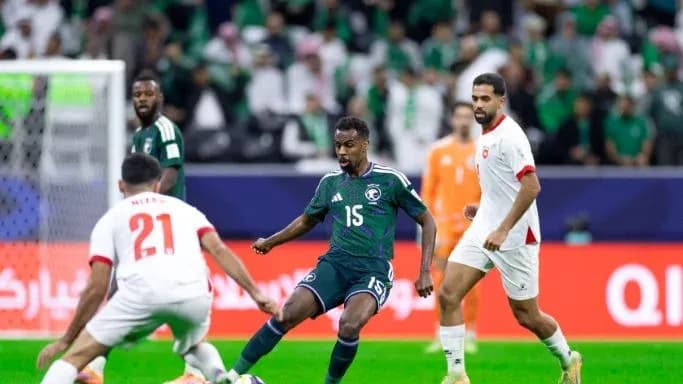
Al-Juwair's Absence: Donis Faces Tactical and Mental Battles Ahead of Gulf Cup 27
The tactical problem for Georgios Donis is clear. Losing Al-Juwair is not just a missing name on the squad list; it rips out one of the few players capable of dictating Saudi Arabia’s rhythm from midfield. He was the connector, the one who stitched lines together and stepped forward to give the build-up an extra passing angle.
Mukhtar Ali’s call-up fills the vacancy on paper. It does not replicate the role. The two midfielders bring different qualities, and that forces Donis to redraw parts of his system, shuffle responsibilities and rethink how his side will control games in a tournament that offers no time for trial and error.
The real danger, though, sits away from the tactics board.
Players read everything. They hear everything. The constant noise around their excluded team-mate, the official statements, the reactions to those statements – all of it risks dragging attention away from the only thing that matters in a short tournament: the next 90 minutes. When the storm hits before a ball is kicked, focus becomes fragile.
For Donis and the federation staff, managing this crisis is now as important as managing the press. A successful camp is never just about fitness levels and training-ground drills. It needs calm. It needs clarity. It needs an environment where every player understands his job is to train, to prepare and to play – not to scroll through comments or track every twist in a disciplinary saga.
Saudi Arabia arrive at Gulf Cup 27 needing more than a trophy chase. They need to repair an image, rebuild confidence and correct a course that has looked uncertain in recent times. That mission becomes far more complicated when the pre-tournament conversation drifts from how to develop the national team to who mishandled the Al-Juwair situation and who leaked what, and when.
The risk is obvious: every new statement can widen the crack.
Hazazi has already criticised the way the case was handled, calling what is happening “a distraction” for the national team. Al-Mefreg, on the other hand, has underlined that the regulations must apply to everyone and warned that backing away from them could create chaos in camp. Between those two firm positions sits a squad preparing for a regional tournament with a disciplinary issue taking up far more space than its sporting weight.
Left to fester, a contained incident can grow teeth.
Close the matter internally, secure respect for the decision and push all attention back to the pitch, and the story shrinks into a footnote – an episode that simply preceded the tournament. Let it drag on, and it mutates into something else entirely. The size of the crisis will not decide that on its own. The handling of the next few hours will.
The schedule offers no mercy.
Saudi Arabia open against Kuwait on 23 September, meet Oman on 26 September and finish the group against Iraq on 29 September. Three games in six days. No room for long meetings, no space for emotional hangovers. Donis and his players will barely have time to breathe between fixtures, never mind revisit old arguments.
Those matches will probe something deeper than shape or selection. They will test the squad’s ability to live with pressure and block out the echo around them. A strong start could smother much of the debate, at least temporarily. One early stumble, though, and every unresolved question returns, louder than before, with the Al-Juwair case folded into a broader inquest about mentality and resilience.
The answer will not come at a microphone. It will come in midfield duels, in second balls won or lost, in how this team reacts when the first setback arrives.
It would be wrong to claim Saudi Arabia have already thrown away their Gulf Cup 27 campaign because of this crisis. The tournament has not even started. The path out of the group remains wide open.
What is certain is that they cannot afford to let this issue grow day by day while publicly insisting the goal is to fight for the title. That contradiction would eat away at any dressing room.
If the players manage to separate the incident from the task in front of them, the crisis may simply fade into the background. If they do not, if the controversy keeps rumbling through the camp and beyond it, Saudi Arabia may find themselves waging a mental war long before they face their first real opponent.