2026 World Cup: A Continental Festival Unfolds
The biggest World Cup ever has finally landed in North America, and it feels less like a tournament and more like a continental festival.
From Mexico City’s high-altitude sprawl to the glass and steel of New York and the lakeside chill of Toronto, 48 national teams are about to stretch the World Cup into new territory. The old 32-team format is gone. In its place: an expanded, sprawling competition shared by three countries for the first time in history.
The numbers are huge. So is the noise.
Three hosts, three opening acts
This World Cup doesn’t ease into view. It explodes with three separate opening ceremonies, three different stages, three different moods.
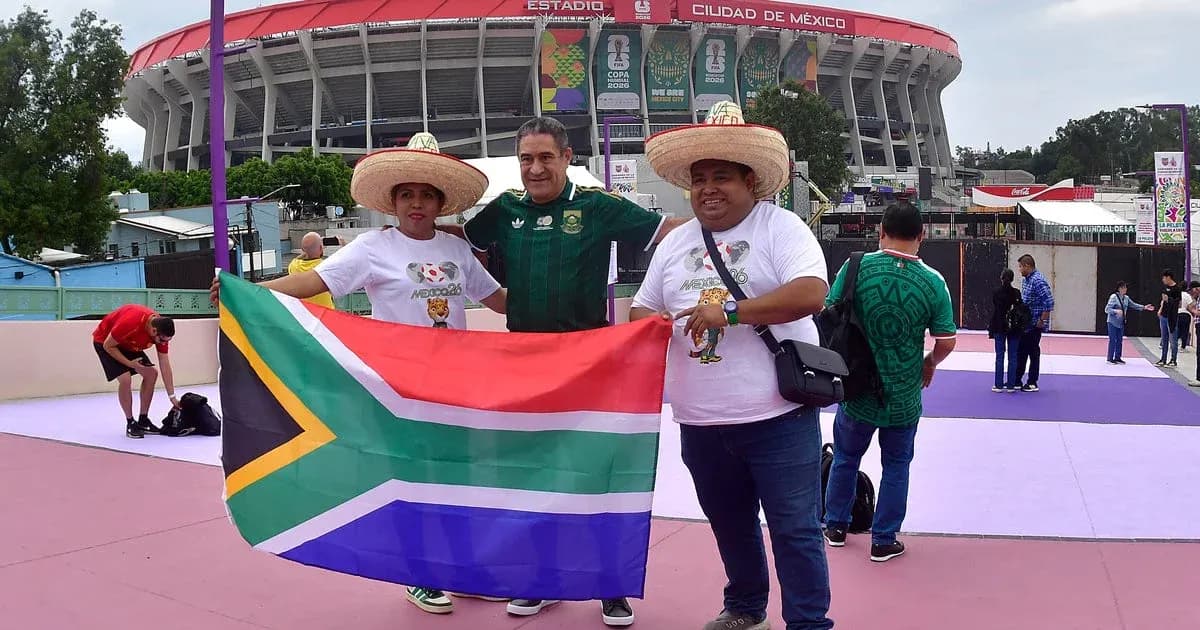
The first curtain lifts in Mexico City on Thursday, where the Estadio Azteca — a cathedral of the sport — gets the honor of launching Group A. Before Mexico meet South Africa, Shakira and Burna Boy will take the stage to perform “Dai Dai,” the official song of the 2026 FIFA World Cup. The show starts at 11:30 a.m. local time (1:30 p.m. ET), with a lineup built to match the stadium’s history and the city’s energy.
Alejandro Fernández, Belinda, Danny Ocean, J Balvin, Lila Downs, Los Ángeles Azules, Maná and Tyla are all scheduled to appear, part of the first-ever official World Cup album project, according to FIFA. It’s a bold way to open a tournament that wants to be bigger, louder, and more global than any that came before it.
On Friday, the spotlight shifts north. Toronto steps forward as Canada hosts its first-ever men’s World Cup match on home soil, against Bosnia and Herzegovina at a freshly bulked-up BMO Field. The stadium has swelled from 28,000 seats to 45,000, a physical statement of intent from a country that has spent decades on the game’s margins and now wants a central role.
Ninety minutes before the 3 p.m. ET kickoff, the Great White North gets its own ceremony, with Alanis Morissette, Alessia Cara, Jessie Reyez, Michael Bublé and others set to perform. For Canadian fans who once treated World Cups as distant TV events, this is the moment the screen finally gives way to real life.
Then comes Los Angeles.
At SoFi Stadium on Friday, the United States opens its campaign against Paraguay, and with it, its own World Cup party. The U.S. ceremony is locked in for 4:30 p.m. local time (7:30 p.m. ET), with Katy Perry, Future, Anitta, LISA, Rema and Tyla headlining a show that leans hard into the country’s cultural clout.
“The lineup of artists reflects the cultural diversity of the United States and the vibrancy of its many diasporas, highlighting the nation's rich influence on music, entertainment and pop culture, while showcasing the power of music to bring people together across the country,” FIFA President Gianni Infantino said.
Three hosts. Three ceremonies. One message: this World Cup intends to own the stage.
Mexico–South Africa: a date with déjà vu
Once the fireworks fade in Mexico City, the football takes over.
At 2 p.m. local time (3 p.m. ET) on Thursday, Mexico and South Africa walk out at the Azteca for the first match of Group A — and it comes with a twist of nostalgia. The two sides met on June 11 back in 2010, when South Africa hosted the World Cup and the tournament opened in Johannesburg. That day ended 1-1.
Fourteen years later, the date is the same. The setting is not. This time, Mexico enjoy the roar of their own crowd, in their own legendary stadium, with the weight and expectation that always follows El Tri at home.
Later that night, at Akron Stadium in Zapopan near Guadalajara, South Korea face Czechia at 9 p.m. local time (11 p.m. ET) to complete the first round of Group A fixtures. Different styles, different continents, same early tension: in a 48-team field, the margin for error may be wider, but the fight to control a group starts immediately.
On Friday, Canada finally steps into the light. The national team kicks off against Bosnia and Herzegovina at 3 p.m. ET in the first Group B match, a landmark moment for a country that has waited generations to hear its own anthem at a home World Cup.
In Los Angeles, the U.S. Men’s National Team meet Paraguay at SoFi Stadium at 6 p.m. local time (9 p.m. ET). The last time the Americans played a World Cup match on home soil was July 4, 1994 — a 1-0 defeat to eventual champions Brazil in the Round of 16. That game helped ignite a generation of interest. This one arrives in a very different soccer landscape, with a more established domestic league, a more ambitious fan base, and a squad eager to show it belongs deeper in the tournament.
The U.S. will do it in new kits that nod to the past. Nike says the designs draw inspiration from previous jerseys, including the striped look from 32 years ago. It’s a visual reminder that the country’s World Cup story didn’t start yesterday.
A bigger stage, a heavier security net
With 16 stadiums involved and millions of fans on the move, the World Cup has become not just a sporting event but a massive security operation.
The FBI has deployed tactical teams to Atlanta, Boston, Dallas, Houston, Kansas City, Los Angeles, Miami, New York, New Jersey, Philadelphia, the San Francisco Bay Area and Seattle. FBI Director Kash Patel said the units — crisis response specialists — will “help support the massive security work involved in protecting players, fans, and visitors.”
For supporters heading to venues like Gillette Stadium in Foxborough, Massachusetts, that means longer lines and earlier arrivals. CBS Boston reported that fans may need to be at the stadium more than an hour before kickoff just to clear security.
Marlo Graham, the special agent in charge of the FBI’s Atlanta field office, told CBS Atlanta that the approach mirrors other major events, with one key difference: the length. This World Cup stretches over 39 days.
“Our tactical teams have been practicing commingled with other tactical teams from other agencies for months leading up to this,” Graham said.
Immigration and Customs Enforcement will also be part of the security web. White House border czar Tom Homan told CBS News that ICE’s “primary focus” around the tournament will be national security, not immigration enforcement.
That pledge comes against the backdrop of a more-than-yearlong push by the Trump administration to tighten entry into the U.S., a policy shift that has already brushed up against the tournament. Over the weekend, Customs and Border Protection blocked Somali referee Omar Abdulkadir Artan from entering the country, citing “vetting concerns.” A FIFA spokesperson confirmed he had been denied entry but did not reveal the specific reason.
The message is clear: the world is welcome, but it will be checked at the door.
What fans can (and can’t) bring
The stadium experience comes with its own rulebook.
FIFA’s stadium code of conduct bans nontransparent bags and hazardous items such as weapons, body protection gear, helmets, umbrellas, strollers and chairs. Initially, that strictness extended to almost any closed container — “bottles, cups, jars, cans or any other form of closed or capped receptacle that may be thrown or cause injury” — and even branded water bottles.
That last point hit a nerve.
With matches scheduled in the middle of summer across North America, where temperatures can soar, the idea of banning reusable water bottles drew immediate backlash. The fan group Free Lions, which represents English supporters, voiced the frustration on X: “What next? Suncream banned and fans forced to buy it in stadiums? Naturally, the immediate thought from supporters is this is just the latest money-grab.”
The pressure told. FIFA World Cup 2026 Chief Operating Officer Heimo Schirgi stepped in on social media to clarify the policy: each spectator in stadiums in the U.S. and Canada will be allowed to bring one soft, plastic, disposable, factory-sealed water bottle up to 20 ounces. Hard reusable bottles remain off-limits.
Inside the venues, beverages — water, sodas, juices — will come from one source. Long-time FIFA sponsor Coca-Cola has exclusive rights to supply drinks at World Cup stadiums, The Associated Press reported.
Hydration, like everything else at this tournament, is tightly controlled.
The price of being there
For all the effort to open the World Cup to more teams and more cities, one barrier remains stubbornly high: the cost of getting through the turnstiles.
With 16 stadiums in play, more fans than ever have the chance to see a World Cup live. Many will still be watching from home. Ticket prices for group-stage matches have rocketed into the hundreds and, for some games, thousands of dollars.
“It’s an absolutely punishing number with regards to the ticket prices to get into a game,” said Phil Labas, captain of the Chicago chapter of the American Outlaws, a 30,000-strong U.S. supporters’ group.
Labas told CBS News he has attended nearly every U.S. Soccer event over the past four years. This time, even with the World Cup on home soil, the Outlaws have been pushed to the margins of the stadium.
“We’re in the 300 section. We are upper deck in a corner ... It’s an absolute travesty,” he said.
The distance won’t silence them. Labas insists the group will still make itself felt.
“You’ll hear us, you’ll see us if they pan up, but we will absolutely be there,” he said.
In a tournament built on spectacle and scale, the tension between access and affordability sits just beneath the surface.
Who might own this World Cup?
On the pitch, the 2026 World Cup is already shaping up as a dream playground for bettors. With a field this large and a format this stretched, predictions are risky — and irresistible.
German economist Joachim Klement, who has correctly picked the last three World Cup winners, has turned heads with his choice for 2026. He’s backing the Netherlands, a team that has never lifted the trophy but has reached the final three times: 1974, 1978 and 2010.
Klement told CBS News’ Ramy Inocencio that he rates the Dutch above traditional favorites such as France, Spain, England and Brazil because of their consistency.
He describes the Netherlands as one of the “teams that are constant outperformers,” and points to their balance as a key strength. There’s no Lionel Messi-style superstar to dominate the narrative, but, he argues, there is a squad in which “every one of the players” performs at a similar level. No glaring weak link. No obvious crack to exploit.
“The second thing is they have a really good defense, and in soccer more so than in most other sports, is the saying that offense wins matches, defense wins tournaments,” he said.
For the U.S., Klement sees a mixed picture.
The Americans are in Group D with Paraguay, Australia and Turkey — a draw he believes gives the USMNT a genuine chance to escape the group and possibly push on to at least the quarterfinals. The level looks even enough to invite optimism.
Then comes the caveat. In his view, the U.S. still wrestles with a structural disadvantage: soccer’s place in the national sporting hierarchy.
“The U.S. has so many sports that compete for the talent pool that it isn’t really the dominating, most important sport in the U.S.,” Klement said. “While if you go anywhere in Europe or Latin America, it’s soccer and then there’s the rest.”
That question hangs over this World Cup for the hosts: can a country where soccer still fights for attention produce a team that can command it on the biggest stage?
The opening ceremonies will answer nothing. They will only set the tone. The real verdict starts when the whistle blows in Mexico City — on June 11, again — and the largest World Cup ever begins to decide who will truly belong to this new era.