World Cup Week: Silence, Anticipation, and Controversies
World Cup week opens in a strange silence. No games. No goals. Just a restless 63-hour stretch in which football tries to sit still and fails miserably.
So the conversation fills the gap. It always does.
England, Messi and a flight booked on faith
In New Jersey, the rain lashed down on MetLife Stadium as England played Panama. One supporter took his mother for her 70th birthday. The stadium felt like a prison, he said, but the lure of the World Cup outweighed the concrete and the drizzle.
A couple of weeks later, he rolled the dice again. Semi-final. Atlanta. No result yet, no guarantee England would even be there. Five children at home, another on the way, anxiety through the roof. Book it or don’t. He got the green light, grabbed tickets for himself and his eight-year-old son, flights via Paris from Manchester, hotel by the ground. Crackers pricing, but he went for it.
He watched the quarter-final through his fingers. Lost his voice. Now his son Digby is on the brink of something he can hardly process: watching England, and possibly Lionel Messi’s last game for his country. That’s what this tournament still does. It manufactures lifetime memories out of thin air and questionable decisions on a Thursday afternoon.
The pub that isn’t buzzing
Not everyone is cashing in on the World Cup glow.
In Stourbridge, at the Shovel Inn where Jude Bellingham was born, landlord Steve Hopkins is walking away. He has worked in pubs for six World Cups. Most were a bonanza. This one, he says, is different.
Turnout has been poor. People are staying away or drifting in at the last minute. Where once a pub would fill from mid-afternoon for an 8pm kick-off, now the rush comes late, if at all. A good night’s takings used to hit around £3,000. Hopkins reckons that if he reaches £1,000 on semi-final night, he’ll be doing well.
Ever since Covid, he says, habits have changed. Fans stay at home. The shared roar, the strangers hugging strangers, the pint tossed skywards in a moment of wild, communal abandon – all of that has thinned. He has been running pubs since he was 18. He is 64 now. He’s had enough.
For one pub in the Midlands, a World Cup semi-final won’t be a springboard. It might be a full stop.
The tactical puzzle: stars, systems and a dour Portugal
On the pitch, the debates are less existential but just as fierce.
You have a problem with your team? The answer is almost never: leave out Bernardo Silva or substitute Bruno Fernandes. Especially not Bruno. He needs minutes because he keeps trying things. Cut his time by 20 minutes and you slash the odds of him producing the one pass, the one shot, that changes everything. Ask him to take the ball off the back four and you’ve already blunted his edge.
Yet Portugal, with a double Champions League-winning midfield behind him and that level of talent all over the pitch, have drifted through games with a dullness that defies belief. Roberto Martínez has somehow turned a generational squad into something flat and cautious. With that platform, to be that dour is an achievement of the wrong kind.
José Mourinho hovers over any conversation about Portugal like a shadow that never quite lands. Many expected him to pivot to international management by now. Instead, Real Madrid have rolled the dice again, hoping the old alchemy can be revived at the Bernabéu. It will be box office, of course. But with a Portugal side crying out for edge and authority, it is hard not to wonder what might have been. Could he really have done worse than Martínez?
Stones, Messi and the looming test
Elsewhere, the match-ups keep people awake.
John Stones divides opinion. As a footballer, he’s admired. As a defender, less so. His lack of pace raises alarms against the relentless running of Julián Álvarez and Lautaro Martínez, and there are doubts over whether he has the nous to track Messi over 90 minutes of drifting, lurking, and then suddenly detonating. The answer will come soon enough.
On the flanks, the options are no less intriguing. Djed Spence offers a different threat as an impact substitute, stretching defences with pace and direct runs in behind. Against Argentina, the smart money is on Reece James at right-back, with Nico O’Reilly on the left. But some would put Lewis Hall and Luke Shaw ahead of O’Reilly if they were available. They are not. So the puzzle shifts again.
France, Spain, England, Argentina: who can crack the machine?
France stand there like a final boss.
Who stops them? Spain, England, Argentina – each carries a case, each a flaw.
Spain might have the best shot. With Rodri edging back towards his pre-injury rhythm, they can control games in a way few teams can live with. But they need more from Lamine Yamal, who still does not look fully fit. Without his spark, their possession can turn sterile.
England have the legs to outrun France in midfield. They can swamp that zone, press, harry, break. But their defence looks brittle, and over 90 minutes – or 120 – that fragility threatens to betray them.
Argentina? The concern sits in midfield. They do not have enough there, not against a French side that can hurt you in every channel. Messi can tilt a match, of course. He has been doing it for nearly two decades. Yet even he needs a platform.
Tuchel, Bellingham and the heat of the moment
Off the pitch, a brief flare-up between Thomas Tuchel and Jude Bellingham has stirred the gossip mill. Both spoke their minds in a moment of high emotion and release. Both are serious professionals who want to win more than they want to feud. They need each other more than they need a row. This is one that should blow over quickly, if it has not already.
Diego, Messi and the mirage of what’s possible
Mention Messi and the conversation always circles back to Diego Maradona.
For some, Messi is the greatest of all time. His consistency and longevity are unmatched. Season after season, tournament after tournament, he has delivered. Yet there is an argument that no one has ever hit a higher peak than Maradona did in that single, incandescent month at Mexico 86 and the season that followed, when he dragged Napoli to their first scudetto.
For a generation, that World Cup rewired what football could be. One man, picking up the ball and running past everyone between him and goal, as if the laws of the sport had been quietly rewritten. Barry Davies cried, “And you’ve got to say that’s magnificent,” and a seven-year-old watching at home decided that this – this – was what football was. Only later came the realisation: that was not normal. That was Diego. No one has done more to challenge the old truism that football is a team game.
The World Cup’s expanding world
While the pitch debates rage, the tournament itself is stretching at the seams.
Fifa’s push to expand the World Cup to 64 teams smells of money. It always does. Yet the sporting argument is not entirely hollow. The gap between the 48th and 64th teams in the rankings is not enormous on paper. The field might not be as diluted as instinct suggests.
An expanded World Cup would also allow a cleaner format: top two go through, no third-place lifelines, more jeopardy in the group stage. No more 72 matches just to eliminate 16 teams. No more sides sneaking into the knockouts on the back of a single win over the weakest opponent.
The trade-off? Qualification becomes even more bloated, and the strain on hosts grows. Stadiums, hotels, training bases, media facilities – the infrastructure load balloons. Only a small handful of nations, or co-hosting blocs, might be able to cope. The game becomes bigger. But does it become narrower in who can stage it?
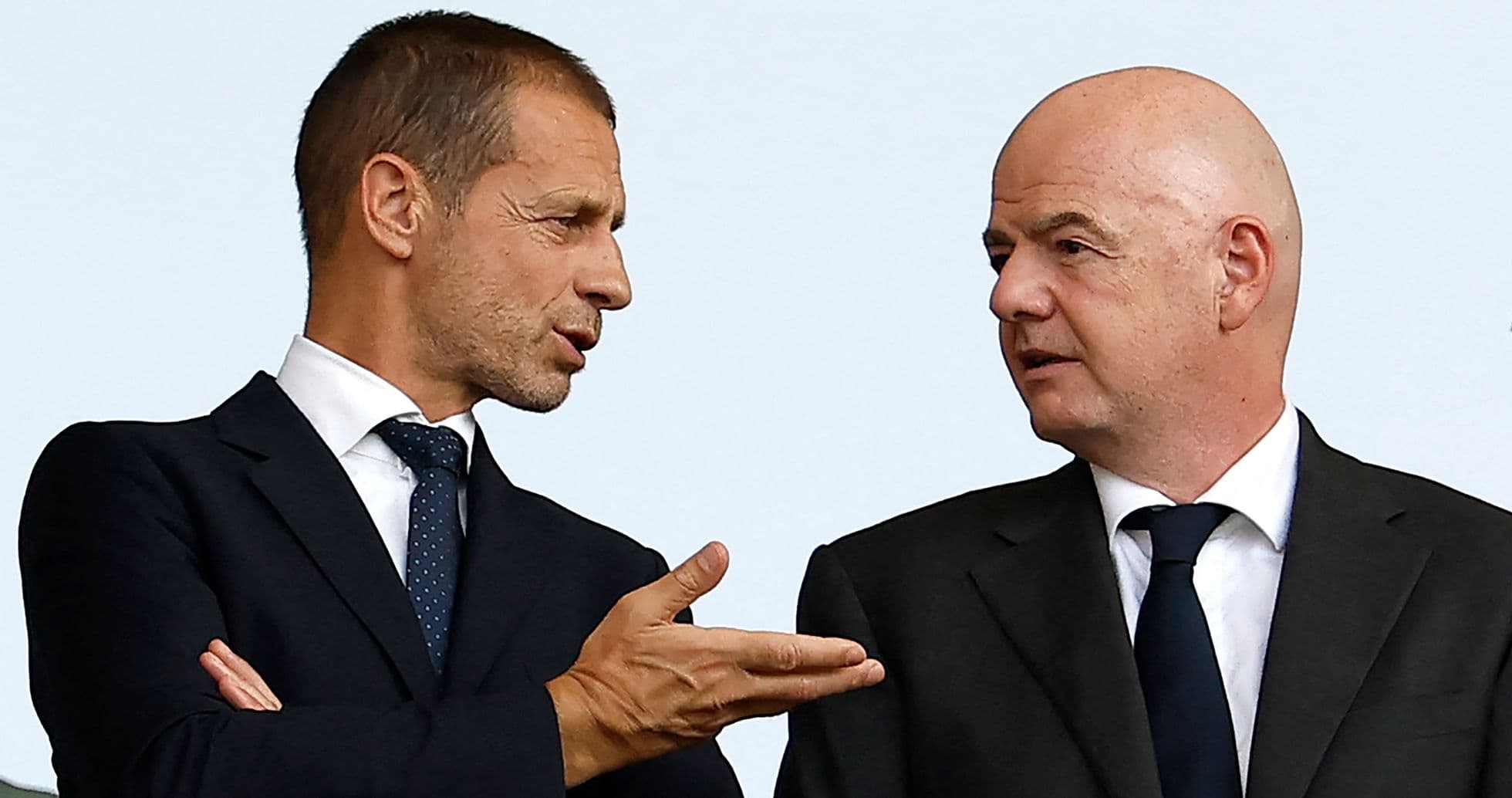
The instinct is to recoil, especially with Gianni Infantino driving the change. The reality may be more complicated. Expanded Euros and World Cups have already brought in new countries and new stories that enriched the spectacle. Purity or plurality? The argument is far from settled.
A week without football, but not without feeling
So here we are: the first day of the final week, with no ball rolling and yet no shortage of movement.
Flights are being booked on hope. Pub doors are closing after a lifetime behind the bar. Superstars are being doubted and defended. Coaches are being questioned, and some are being missed from jobs they never actually took. The World Cup is stretching, bending, testing its own limits.
No games for 63 hours. No shortage of drama. And when the football finally returns, who will still be standing to shape what this World Cup becomes – the landlords, the legends, the nearly-men, or the new kings waiting just offstage?