World Cup Friday: Key Matches and Decisive Moments
The World Cup tightens its grip on Friday. Twelve hours, six cities, and a string of matches that will decide who breathes easier and who goes home early.
Groups G, H and I reach their tipping point. France and Norway stare each other down for top spot. Spain try to lock in first place. Egypt, Iran, Belgium, Cape Verde and Saudi Arabia walk the tightrope between survival and the flight home.
All of it unfolds against a backdrop that feels uniquely 2026: Mexican perfection, Dutch orange waves rolling through the American Midwest, African sides chasing a landmark collective run, and fans providing moments that say as much about this tournament as any goal.
Friday’s decisive slate
The day starts in Boston and Toronto, ends deep into the night in Seattle and Vancouver. Every kick matters somewhere.
- Norway vs France – Boston Stadium, USA – 3pm EDT (19:00 GMT)
- Senegal vs Iraq – Toronto Stadium, Canada – 3pm EDT (19:00 GMT)
- Cape Verde vs Saudi Arabia – Houston Stadium, USA – 7pm CDT (00:00 GMT Saturday)
- Uruguay vs Spain – Estadio Guadalajara, Mexico – 6pm CST (00:00 GMT Saturday)
- Egypt vs Iran – Seattle Stadium, USA – 8pm PDT (03:00 GMT Saturday)
- New Zealand vs Belgium – BC Place, Vancouver, Canada – 8pm PDT (03:00 GMT Saturday)
The calendar looks routine. The stakes are anything but.
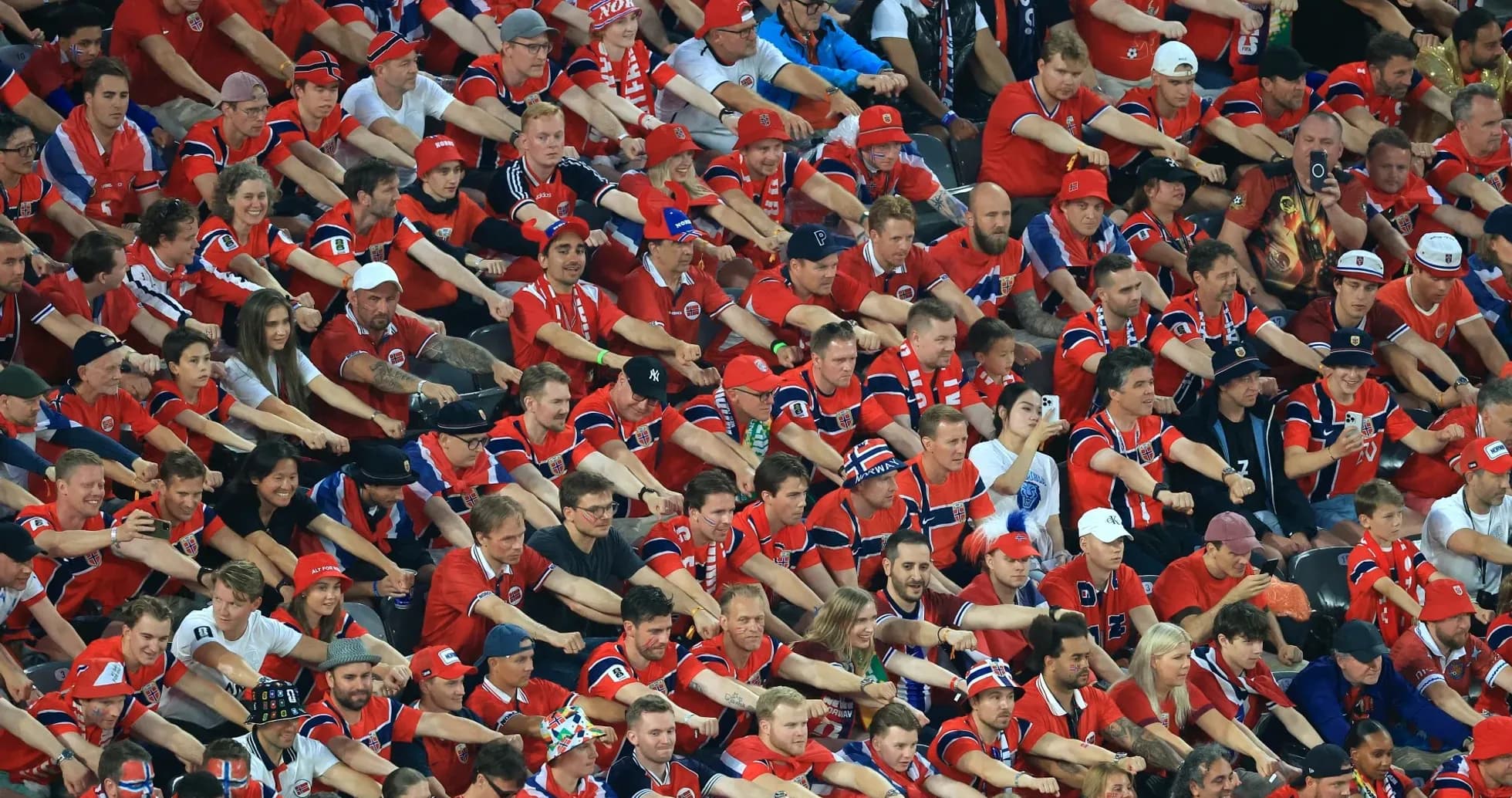
Norway vs France: history on France’s side, pressure on Norway
A decade has passed since France dismantled Norway 4-0 in a friendly in 2014. This will be the 16th meeting between the sides, but the context is sharper now: first place in Group I is on the line, even though both are already through.
Norway’s record in serious contests against France is thin. Just two competitive wins, the last all the way back in a European Championship qualifier in 1987. Their broader World Cup record against European opposition hardly inspires confidence either: no wins, two draws, three defeats.
France arrive with the weight of form and numbers behind them. They have won their last five World Cup matches against European teams. Opta’s supercomputer leans heavily their way, handing Les Bleus a 59.4 percent chance of victory.
A draw, rated at 20.6 percent, still gives France top spot. Norway’s odds of an upset sit at 20 percent. The margins are clear. If Norway want the group, they’ll have to rip it from France’s hands.
Senegal vs Iraq: one-way traffic on paper
Senegal and Iraq have never crossed paths at a World Cup. One carries a growing reputation for tournament steel; the other steps into the unknown against African opposition.
Senegal’s record against AFC teams on this stage is clean: a draw with Japan in 2018, a win over Qatar in 2022. Iraq, by contrast, have never faced an African side at the finals.
The numbers tilt almost embarrassingly in one direction. Opta gives Senegal a 77.2 percent chance of winning. Iraq sit at 8.6 percent, with the draw at 14.2 percent.
Senegal can no longer finish top of Group I, but their path to the last 32 is still wide open: a 72.2 percent chance of progressing. Iraq cling to a 1.1 percent hope. For them, this is less a match and more a last roll of the dice.
Cape Verde vs Saudi Arabia: a knife-edge in Houston
Cape Verde and Saudi Arabia meet for the first time at a World Cup with their fates tightly intertwined. One game, one result, and the bracket will look very different.
Saudi Arabia’s history against African teams at this level is quietly impressive: just one defeat in five matches, with two wins and two draws. Cape Verde arrive with less pedigree but a live chance to write a new chapter.
Opta’s model gives Cape Verde the slightest of cushions: 40.8 percent to win, against 33.9 percent for Saudi Arabia. The draw, at 25.3 percent, would send calculators into overdrive.
Qualification odds underline the balance. Cape Verde stand at 66.7 percent to reach the last 32. Saudi Arabia sit at 33.3 percent. Houston will feel every tackle.
Uruguay vs Spain: old rivalry, new generation
Uruguay and Spain share a thin but intriguing World Cup history. Two previous meetings, both drawn. A 2-2 thriller in the final round of the 1950 tournament, then a goalless stalemate at Italia ’90. More than 30 years later, they meet again, with a lot more data and just as much tension.
Spain, reigning European champions, carry the aura and the algorithm. Opta’s supercomputer ran 25,000 simulations. Spain came out on top in 62.4 percent of them. Uruguay prevailed in just 15.7 percent. A draw appeared in 21.9 percent.
The numbers say Spain. The memory of Uruguay in tournament mode says: be careful.
Egypt vs Iran: fine margins in Seattle
Egypt and Iran share only one competitive memory: the 2000 LG Cup in Tehran, a 1-1 draw settled by an 8-7 Egyptian win on penalties. Hossam Hassan scored that day; Ali Daei equalised. Now Hassan returns as Egypt coach, this time on the World Cup stage.
Iran’s record against African teams at this tournament is quietly consistent. Three games, no defeats: a win over Morocco in 2018, draws with Angola in 2006 and Nigeria in 2014.
Even so, Opta tips Egypt. They hold a 42.9 percent chance of victory. The draw, at 32.2 percent, looms large, while Iran’s win probability stands at 24.9 percent.
This is the kind of game that often turns on a single moment: a set piece, a mistake, a flash of nerve.
New Zealand vs Belgium: history or stalemate?
New Zealand and Belgium have never met at a World Cup. They arrive with very different expectations.
New Zealand’s last brush with European opposition at this level ended in quiet defiance: draws against Slovakia and Italy in 2010. Belgium, meanwhile, stand on the brink of a curious record. They could become the first European team since their own 1998 side to draw all three group matches at a World Cup.
Opta doesn’t see that happening often. Belgium are overwhelming favourites, with an 80.3 percent chance of victory. A draw is given 11.8 percent, while New Zealand win just 7.9 percent of simulations.
For Belgium, this is about more than progress. It’s about shaking off the feeling of a campaign stuck in neutral.
The table: who’s safe, who’s sweating
By Friday, June 26, six groups are done. Groups G to L still hold the keys to the remaining Round of 32 spots.
The headlines are clear:
- Mexico stand alone as the only team with a perfect nine points.
- A long list is already through: Mexico, South Africa, Switzerland, Canada, Bosnia and Herzegovina, Brazil, Morocco, USA, Australia, Germany, Ivory Coast, Ecuador, Netherlands, Japan, Sweden, France and Norway.
The live battles:
- Group G: Egypt on 4 points, Iran and Belgium on 2, New Zealand on 1.
- Group H: Spain lead with 4, Uruguay and Cape Verde sit on 2.
- Group I: France and Norway are in, but the group crown is still undecided.
Groups J, K and L wrap up on Saturday. Thirteen places in the Round of 32 remain. For a handful of giants and a cluster of hopefuls, that’s both an opportunity and a threat.
Turkiye sting the US at the death
Not every classic needs high stakes. Turkiye’s 3-2 win over the United States in Group D meant nothing on paper and everything to those inside SoFi Stadium.
With the US already locked into top spot and Turkiye eliminated, this could have drifted. It didn’t. Nearly 70,000 fans watched an open, high-tempo game capped by a 98th-minute Turkish winner.
US coach Mauricio Pochettino rang the changes, making nine alterations and handing seven players their first World Cup starts. The match turned into an audition, a showcase, and finally a gut punch for the hosts.
The table didn’t move. The memory will linger.
Africa’s surge: six still dreaming
The expanded 48-team format opened the door. African sides are trying to kick it off its hinges.
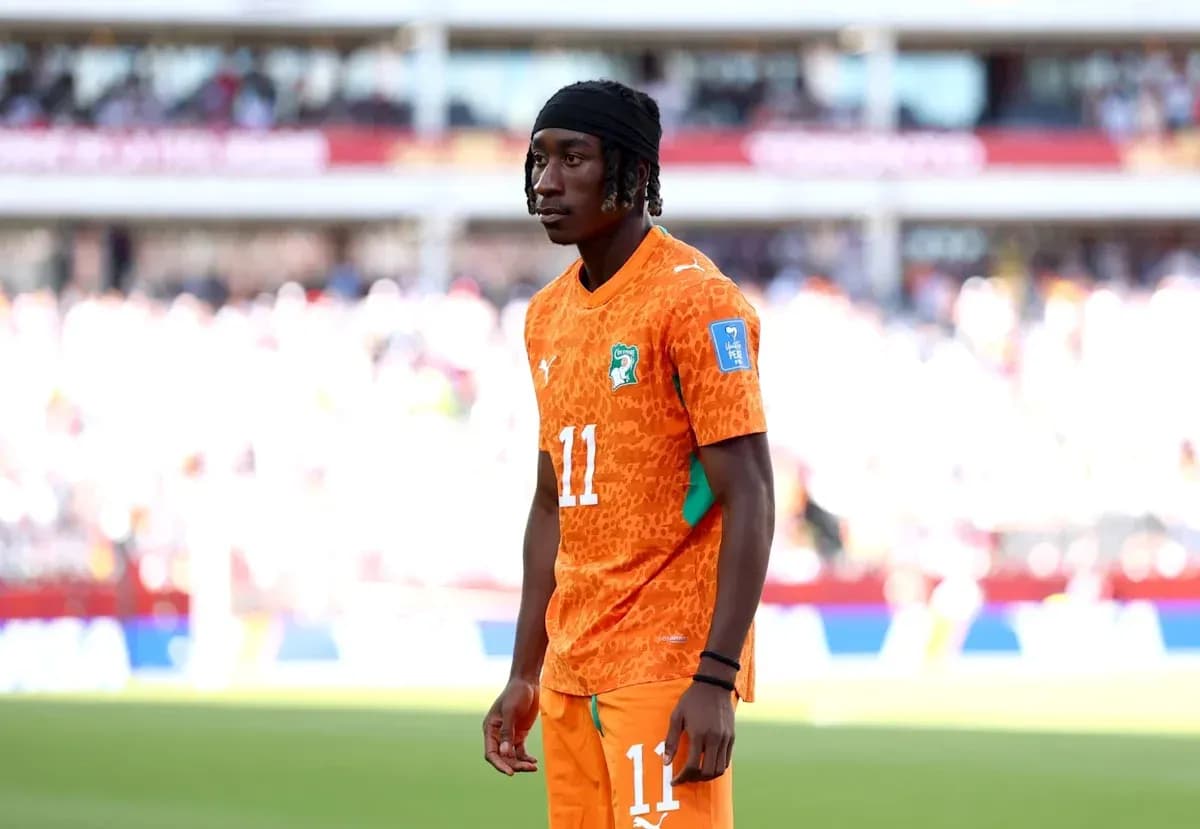
Ten African teams reached this World Cup. Two – Morocco and South Africa – are already safely into the knockouts. Ivory Coast have joined them in the Round of 32.
Behind them, a pack of contenders still control their own destiny: Egypt, Algeria, DR Congo, Ghana and Cape Verde all head into their final group matches with qualification in their own hands.
If results fall their way, as many as eight African teams could reach the knockouts. That would be more than a statistic. It would be a statement.
A lone voice, a shared anthem
Some of the defining images of this World Cup have nothing to do with goals.
Before Colombia’s Group K match against DR Congo, thousands of Colombian fans fell silent. In the stands, a single DR Congo supporter sang his national anthem alone, his voice carrying across the stadium.
No jeers, no interruptions. Just quiet. When he finished, the Colombians exploded into applause and cheers, embracing him in a moment that cut through the noise of the tournament.
The clip raced across social media, instantly tagged as one of the World Cup’s most moving scenes. Colombia then did their job on the pitch, winning 1-0 to secure a place in the Round of 32. But it was the pre-match silence that travelled furthest.
The Infantino double: one president, two screens
On another night, the football would have been the only story. Ecuador stunned Germany 2-1. Ivory Coast beat Curacao 2-0 to reach the last 32.
Yet the strangest talking point came not from a goal, but from a screen.
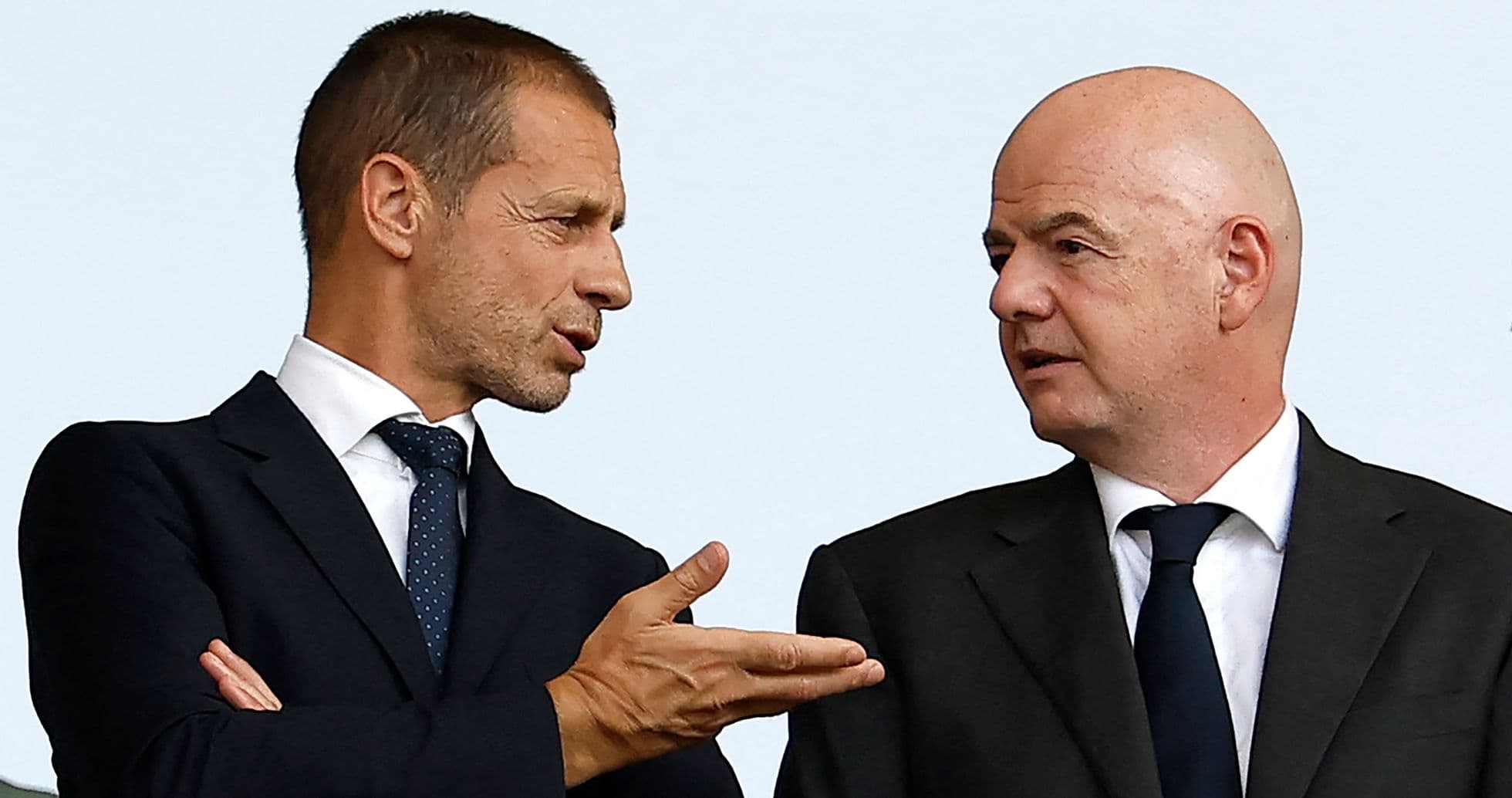
During those final Group E matches, FIFA President Gianni Infantino appeared on the big screens at both Ecuador vs Germany and Curacao vs Ivory Coast – games being played simultaneously in different cities.
The reaction was instant. Clips flew around the internet. Jokes about Infantino being in two places at once flooded timelines. In a World Cup stretched across the US, Canada and Mexico, fans were left asking how, exactly, that was possible.
No matter the explanation, the image of a duplicated president became part of this tournament’s folklore.
Mexico’s perfect march
At the Azteca, Mexico did what hosts dream of: they took care of business early, then entertained.
Already assured of top spot in Group A, they still went full throttle against Czechia, cruising to a 3-0 win and a flawless nine-point haul.
The first half simmered. The second half boiled. Mateo Chavez broke the deadlock, Julian Quinones added his second goal of the tournament, and substitute Alvaro Fidalgo finished the job.
Czechia’s hopes of the Round of 32 died on the night. Mexico, by contrast, stride into the knockouts with momentum and a home crowd that now expects more than just a brave run.
They will face one of the best third-placed teams next. Whoever it is, they’ll walk into a cauldron.
Kansas City turns orange
On Thursday, Kansas City stopped being a neutral host and briefly became an outpost of Amsterdam.
More than 35,000 Netherlands fans flooded downtown, according to local reports, joining the famous Oranje Fanwalk before the World Cup match against Tunisia. They gathered at the Power & Light District, then moved as one behind the iconic orange bus, a mobile wall of colour, song and flags.
Locals joined in. So did neutrals from across the world. By the time they reached the FIFA Fan Fest, the city had been repainted.
It was one of the biggest fan marches of the tournament so far, a reminder that sometimes the spectacle starts long before the first whistle.
Borders, visas and the limits of “global”
Away from the stadiums, a different kind of story has taken shape.
Speaking on The Take, journalist Boima Tucker described a World Cup that celebrates global unity while being shadowed by increasingly restrictive border policies.
Travelling across host cities, he dropped into immigrant communities riding the emotional waves of the tournament: Moroccan and Senegalese fans in New York, Cape Verdean supporters in Massachusetts, thousands of Ghanaians crammed into a watch party in Toronto.
“It’s been wonderful to get an intimate look at how the World Cup has affected people in their homes,” he said. “People are excited to talk about their teams and their countries.”
Yet the joy sits alongside real obstacles. Iran’s national team has been based in Tijuana, Mexico, only crossing into the US for matches. Football officials and players’ relatives have struggled to secure visas.
Tucker pointed out that these issues inevitably seep onto the pitch. “When you’re an athlete, you want to be locked in. You want to be concentrating on the field, on the results,” he said. “If you have to jump through hurdles, that’s definitely going to affect the field of play.”
For him, the World Cup mirrors deeper global inequalities. “We live in a global system that restricts people’s movement,” he said, warning that while high-profile reunions might grab headlines, “their reunion is not going to lead to systemic change.”
Yet amid that realism, he still sees something rare in this tournament. Immigrant communities celebrating side by side. Strangers sharing space, stories and nerves.
“I hope people remember this World Cup as one in which people across ethnic lines, national identities and class lines were able to briefly mingle and learn something about each other,” he said. “More than anything, those borders that we have in our daily lives were briefly overcome.”
On Friday, as France and Norway duel for top spot, as Egypt, Iran, Belgium and others fight for survival, that question hangs over the football: when the last whistle blows, what will remain – the lines on the map, or the memories of how they were crossed?