Walker vs Guardiola: Tensions in Manchester City’s Dressing Room
The walls of the away dressing room at Anfield had barely stopped shaking from Liverpool’s celebrations when Manchester City’s own foundations were rocked.
A bruising 2-0 defeat in December 2024, part of a spiralling run that would stretch to seven games without a win and six losses, lit the fuse. What followed, now revealed in Amazon Prime Video’s documentary A Beautiful Obsession, was a raw, unvarnished clash between captain and manager at the heart of a team that had once looked untouchable.
Walker snaps: “Every f***ing meeting it’s my name”
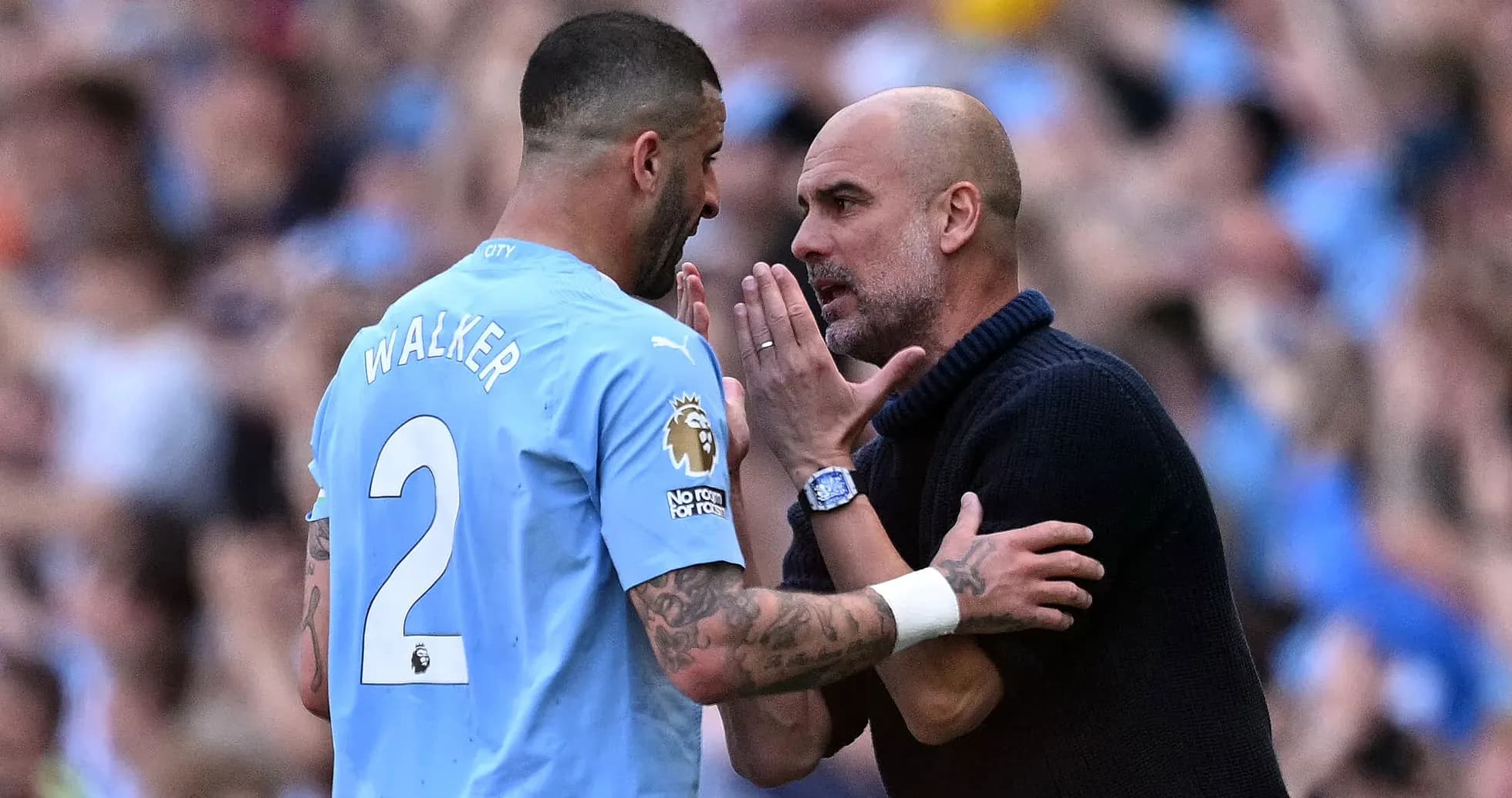
Kyle Walker, normally one of the senior pillars of Pep Guardiola’s dressing room, finally snapped. Surrounded by team-mates, cameras rolling, he turned his frustration directly on his manager.
“You keep saying my name, every meeting,” he raged. “Every f***ing meeting it’s my name.”
This was not a passing grumble. The England international felt singled out, convinced he was being used as the recurring example in team briefings despite his status as a leader in a squad that had just delivered four straight Premier League titles the previous season.
The timing could hardly have been worse. City were reeling, the aura of invincibility gone, and the pressure cranked up another notch by Guardiola’s recent decision to sign a contract extension and publicly commit his future to the club. This was supposed to be the next chapter of a dynasty, not a crisis of confidence.
“You didn’t want me to be a captain”
As the exchange grew sharper, Guardiola tried to pour water on the flames. He told Walker his name came up so often because he was one of the captains, a reference point for the rest.
It backfired.
Walker shot back instantly: “You didn’t want me to be a captain.”
The right-back pushed his case harder, arguing he was being dragged into criticism for wider tactical failures and collective errors on the pitch.
“I’ve reacted to someone else, I’ve lost the ball, you somehow bring my name into it,” he complained, suggesting he had become the default scapegoat in post-match analysis.
In a squad stacked with serial winners, this was the sound of a leader feeling exposed, not empowered.
Guardiola in tears: “If I am a problem, you have to tell me”
Then the mood shifted.
Guardiola, a manager renowned for his control and relentless tactical detail, suddenly looked anything but detached. In front of the full first-team group, he became visibly emotional. His response turned from explanation to something closer to a plea.
“If I am a problem, you have to tell me,” he said, fighting back tears. “I won’t stay here for the money or just for the fact of staying. I extended the contract because I want to be with you, I want to fight in that position.”
The room, already tense, now carried a different weight. This was not a coach laying down the law. It was a man asking whether his presence still bound the group together or pulled it apart.
“I don’t want you to feel like I’m leaving and running away from you. I don’t want to have the feeling that the pieces fall down. And I feel ‘No, I want to help you.’”
He turned to the core of his leadership group for an answer.
“But if you feel, captains first and then the other ones, that there is a problem? Tell me. It’s not going to change the love I have for all of you. Not one second. But I want to fight. That’s all. I’m sorry.”
In a few minutes, the dynamic inside one of football’s most dominant modern teams was laid bare: a captain who felt targeted, a manager questioning himself in front of his players, and a club trying to hold its nerve as a historic high threatened to tip into something far more fragile.
The titles are already in the record books. What happens next to this relationship, and to this dressing room, will decide how long that era really lasts.