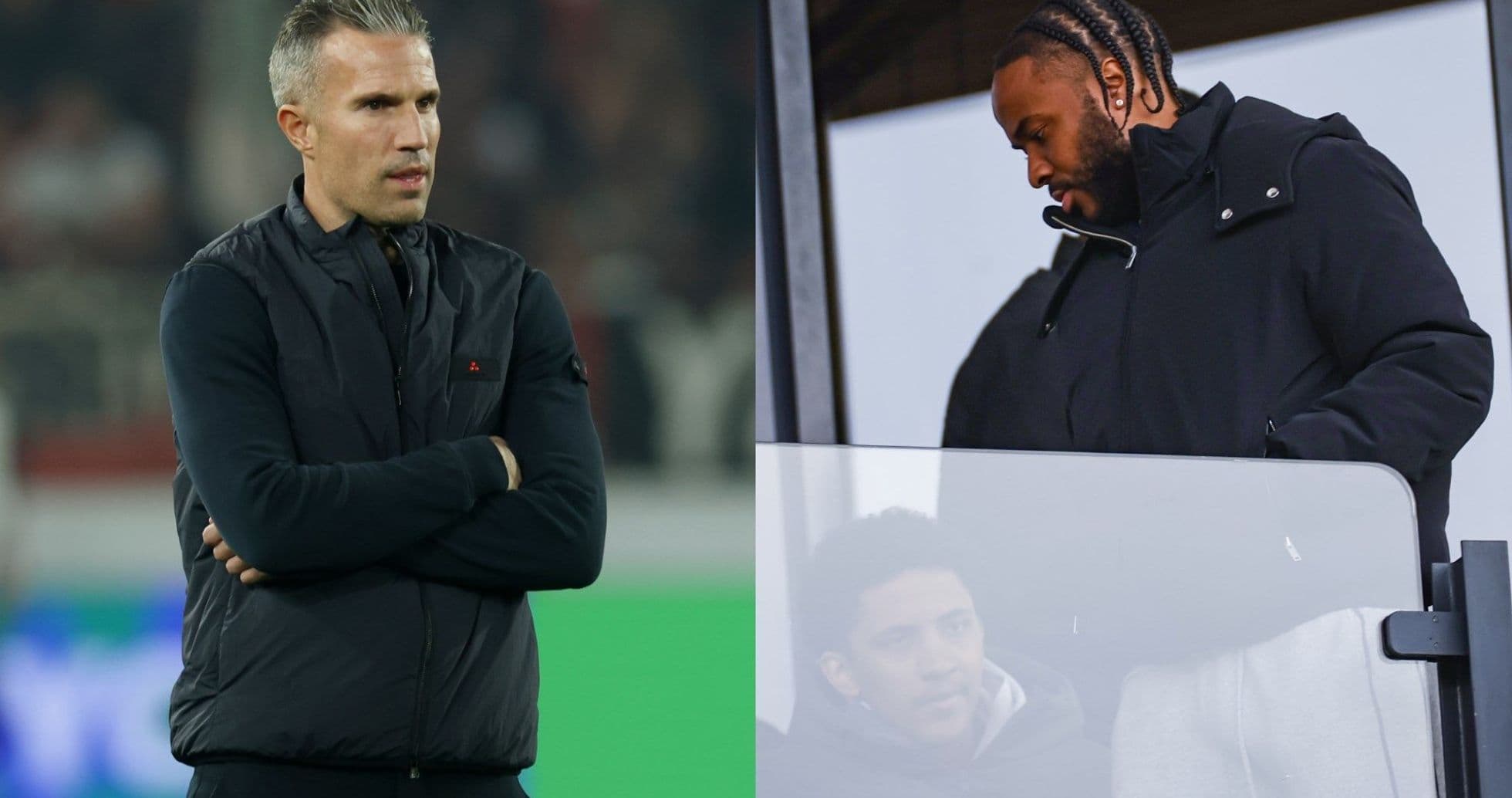
Van Persie defends Sterling's treatment at Feyenoord
Raheem Sterling finally got what he has been waiting for in Rotterdam: a proper run-out from the first whistle. On the final day of the season, Robin van Persie handed him a rare start, kept him on for more than 70 minutes, and watched Feyenoord lock in second place.
The performance? Mixed. The reaction? Exactly what Van Persie wanted to talk about.
“He was unlucky at times,” the Feyenoord manager told reporters, acknowledging the uneven display. There were flashes, though. “There were also a number of times where he was in a good position. In the second half, for example, when he produced a good run inside.”
Then Van Persie’s tone hardened. The match faded into the background; the wider debate took over.
“Personally, I struggle with the cynicism surrounding him. I think respect is more appropriate. In any case, I don't like cynicism. I can't stand the whole atmosphere around him.”
This was not a casual aside. It was a deliberate defence of a player he believes has been treated with open hostility by parts of the Dutch media and fanbase since arriving in Rotterdam with a heavyweight reputation and an even heavier CV.
Van Persie calls for respect
Van Persie, who spent his own career under the brightest of spotlights at Arsenal and Manchester United, made it clear he feels the discourse around Sterling has crossed a line. The criticism, he argued, has ignored the body of work that brought the winger to Feyenoord in the first place.
“He has scored 200 goals in England and played 82 international matches,” Van Persie said, laying out the numbers as a shield. “And that is regardless of whether you think he plays well or not.”
For Van Persie, those statistics are not trivia. They are context, and they matter. Multiple Premier League titles. Almost a century of caps for England. More than a decade competing at the top end of elite football with Liverpool, Manchester City and Chelsea. That résumé, he believes, should command a basic level of respect, even in a rough patch.
The Feyenoord coach feels the Dutch football culture has been too quick to dismiss a player of that stature. “Everyone has to know their place in that. And I think we sometimes go a bit overboard in the Netherlands regarding that,” he added, making it clear he sees a broader national issue, not just a local one.
In his eyes, Sterling did not arrive as a gamble. He arrived as a marquee signing for the Eredivisie, a statement that a player with Premier League titles and deep tournament experience with England was willing to test himself in a new league. Van Persie’s frustration lies in how swiftly that status has been stripped away in the public conversation.
“I think the way we handle this as a footballing nation is really very bad,” he said. No softening, no walking it back.
Shielding a marquee name
Sterling himself chose silence. After the win over Zwolle, he walked past the waiting microphones and did not speak to the media. His manager spoke for him instead.
Van Persie made it clear that his defence of Sterling would not end in the press room. He plans to take it into the dressing room, into the personal conversations that can shape a player’s sense of belonging.
“I am going to discuss that with him tonight,” he revealed. “We are having dinner with the group tonight. Then I will take a moment with him.”
That small detail matters. It underlines how determined Van Persie is to make sure Sterling feels valued inside the club, even if the noise outside remains harsh. For all the talk about tactics and adaptation to the Dutch top flight, this is about something more basic: respect for what a player has done, not just what he produced over 70-odd minutes on the final day.
Sterling’s season in Rotterdam has not followed the script many expected when he landed with such a massive profile. Van Persie’s message, delivered firmly and publicly, was simple: judge the form if you must, but do not forget the career.