
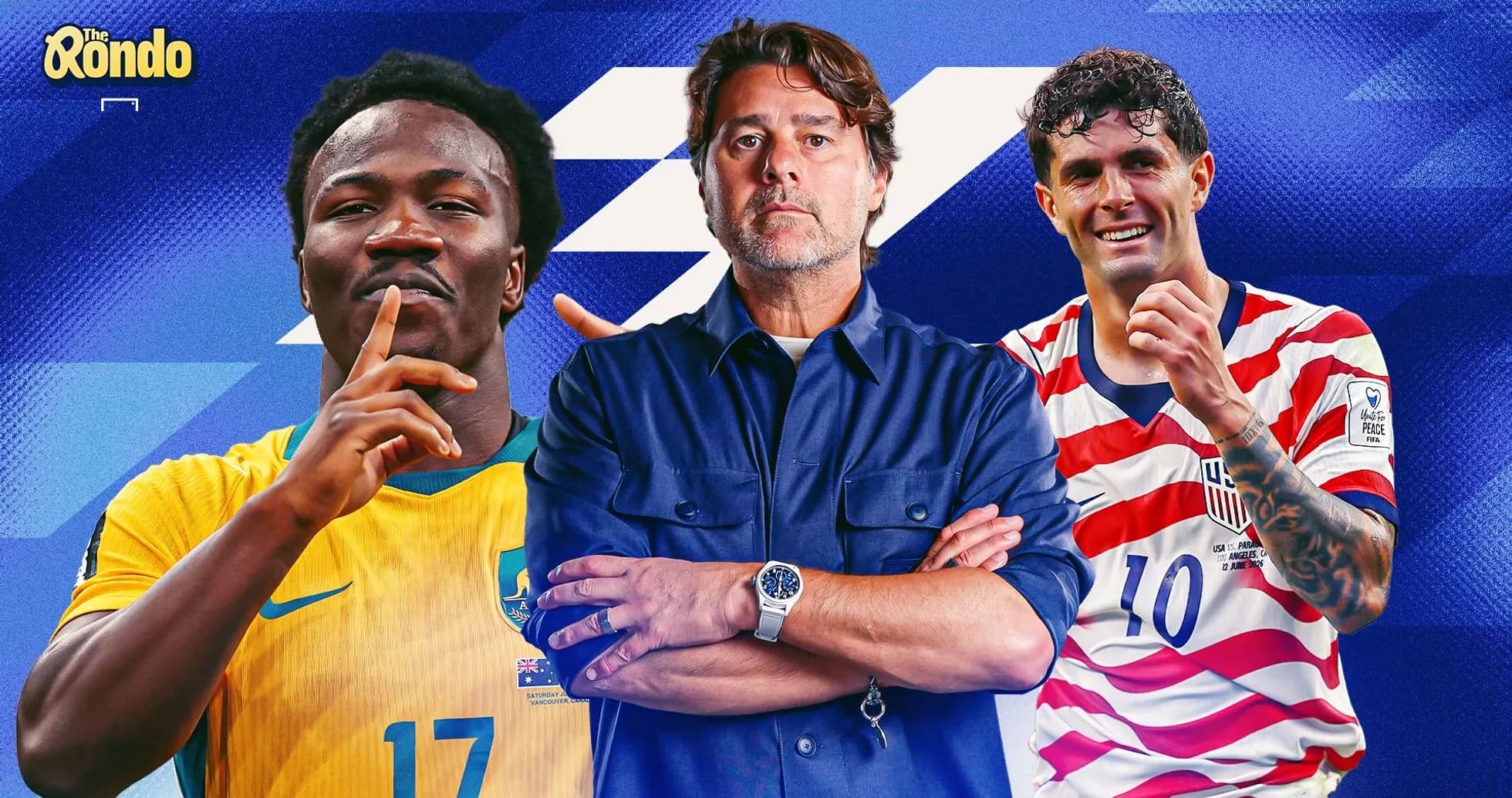
USMNT vs Australia: A Crucial Matchup
The United States walk into this one as clear favorites. Everyone knows it. The analysts know it. Australia know it. The only real question is whether the USMNT play with the same ruthless edge they showed against Paraguay, or let a stubborn opponent drag them into a scrap.
They were “simply too good” in that opening game, as Tom Hindle put it. Slick, sharp, relentless between the lines. Replicate that level and this should be a comfortable night. That’s the theory.
Reality is a little messier.
A favorite… but a fight
Australia won’t roll over. This is going to be physical, tight, and tense. Ryan Tolmich expects “a nervy one,” the kind of match that tilts on a single moment from a gamechanger. Both teams have them. The U.S., on paper, just have more.
The Americans also have a fresh scar to learn from. Turkey’s arrogance in this tournament has already been punished, and there’s a sense around this group that they won’t make the same mistake. No one in this U.S. camp is underestimating an Australia side that can sit deep, spoil rhythm, and strike with pace.
That’s where Nestory Irankunda comes in.
Irankunda vs a vulnerable back line
This Australia squad doesn’t have a long list of current Premier League stars, but it does have Irankunda – a livewire off the left, exactly the kind of winger who can turn a cautious U.S. back line into a panicked one.
Hindle expects him to keep Sergiño Dest busy all night. Tolmich goes further: he calls Irankunda the obvious breakout threat, and the matchup is stark. A U.S. defense that has been “a little bit sloppy” in recent months now has to deal with raw speed, direct running and space in behind.
If Irankunda gets into a straight foot race with Tim Ream, Tolmich asks, how does that end? Everyone knows the answer. Chris Richards is only just back from an ankle injury, the fullbacks love to bomb on, and one mistimed press could leave acres to attack. If Irankunda explodes, he’ll do it in a hurry.
And yet, for all Australia’s danger on the break, the bigger story sits at the other end of the pitch.
The Pulisic problem
“Losing your best player ain’t good,” Hindle says, cutting straight to the point. The USMNT have depth at striker. They do not have depth at “being Christian Pulisic.”
He’s the hub of almost everything they do in the final third. Ball progression, one‑v‑one threat, tempo changes, the first spark in the move that leads to a goal. Without him, this team is different. Less unpredictable. Easier to defend.
Mauricio Pochettino now faces a classic tournament dilemma. Does he roll the dice, start Pulisic, try to kill the group early and then protect him? Or does he exercise maximum caution, bench his star, and trust the supporting cast to get it done?
Hindle would start him and “wrap him in cotton wool for two weeks” after. Tolmich is more openly worried. Breaking down a low block without the one player who consistently beats a man off the dribble is no small task. On Friday, when Dest was asked who the best one‑v‑one attacker in the squad is – aside from himself – he didn’t hesitate: Pulisic.
If he can’t go, someone else has to make Australia uncomfortable. Someone else has to create that first crack.
Alex Labidou believes the U.S. can beat Australia without their talisman. His concern is bigger picture. This team looks poised to do something significant in this tournament. That kind of run almost always requires your best player on the pitch, not in the treatment room.
U.S. match‑winners under the spotlight
If Australia dig in with a back five, as expected, this becomes a showcase – or an examination – of the U.S. attacking core.
Hindle wants more from Malik Tillman in possession. The Leverkusen midfielder was outstanding off the ball against Paraguay, pressing and covering ground, but left “a bit to be desired” when it was time to create. A goal or assist here could transform his confidence and, by extension, the U.S. midfield.
Labidou is all‑in on Tillman’s new role. Pochettino may have unlocked something by using a prototypical No. 10 as a No. 8, letting him arrive in advanced spaces rather than camp there. If that experiment continues to work, the Americans gain an extra runner and creator between the lines – a key asset against a packed defense.
Tolmich, meanwhile, circles Folarin Balogun. Paraguay left space. Australia won’t. That shifts the burden onto a No. 9 who can both finish and connect play. If Pulisic is limited or absent, Balogun becomes the focal point of the attack, tasked with either winning this game himself or bringing others into positions where they can.
And then there’s the man at the other end.
With so much attention on Irankunda, Labidou quietly points to Mathew Ryan. The veteran goalkeeper has seen just about everything Europe can throw at him and has spent the week projecting calm confidence about Australia’s chances. Matt Freese barely had to make a save against Paraguay; this will be a different kind of game.
If this turns into a grind, a single stop could swing the night. Ryan’s experience in those moments might matter more than any tactical wrinkle.
What if the U.S. slip?
Drop points here, and the tone of the tournament changes in an instant.
Hindle calls that scenario “bad, but not the end of the world.” Three points can still be enough to escape a group, but momentum would suffer. Instead of strolling into the final group match, the U.S. could find themselves needing something – maybe even a win – under pressure.
Tolmich is harsher. Fail to get a result and topping the group becomes a serious challenge, which opens the door to a potential meeting with Argentina later on. This game, in his view, doesn’t just shape the group. It shapes the entire knockout path.
Labidou zooms out to two decades of U.S. soccer frustration. Time and again, the program has stood on the brink of a step forward, only to stumble. A missed opportunity here would feel like more of the same. U.S. Soccer needs this team to win the group, to show that the investment in Pochettino is paying off and that this generation can actually break through, not just flirt with the idea.
So the stakes are clear. Beat Australia and the U.S. can manage minutes, manage risk, and dream a little louder. Slip, and they’re right back in that familiar place: talented, ambitious, and still waiting to prove they truly belong among the contenders.




