
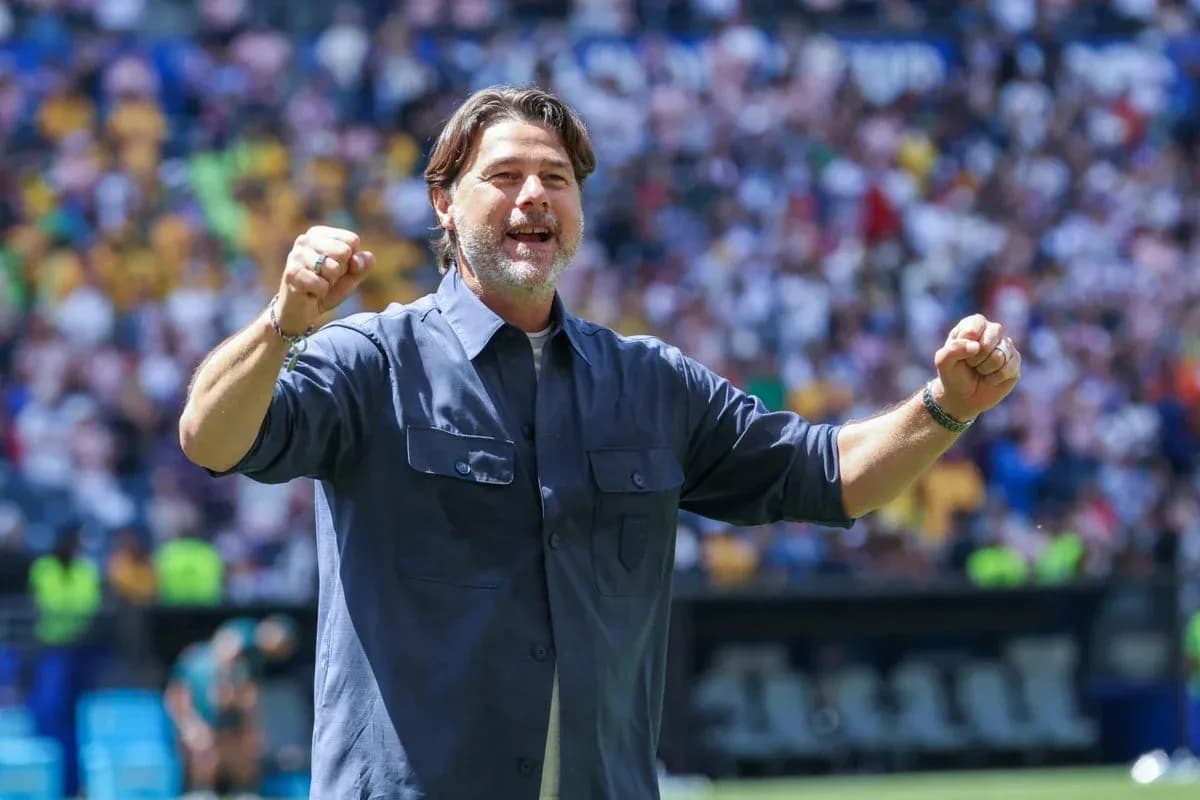
US Soccer Proposes Four-Year Extension for Pochettino Through 2030
U.S. Soccer has put its cards on the table. Mauricio Pochettino has a proposal in front of him to stay in charge of the USMNT through the 2030 World Cup, but nobody is reaching for a pen until this home tournament is over.
The Argentine’s current deal runs only to the end of the ongoing World Cup on U.S. soil. Behind the scenes, though, talks have been bubbling for months. Sources familiar with the discussions, who are not authorized to speak publicly, say the federation has already presented a four‑year extension, taking Pochettino through a second World Cup cycle.
The offer landed before a ball was kicked this summer. A clear signal from Chicago: they want this partnership to continue.
Results first, signatures later
Both sides agreed on one thing. Performance comes before paperwork.
How this World Cup unfolds will shape everything — Pochettino’s appetite for another four years of international football and U.S. Soccer’s conviction that he is the man to lead a golden era. So the proposal sits there, a lucrative marker of intent, while the tournament does the talking.
The early signs could hardly be better for the federation. The USMNT has burst out of the blocks, beating Paraguay and Australia to reach the round of 32 with a game to spare. Thursday night’s defeat to Turkey meant nothing in competitive terms. The heavy lifting was already done.
A favorable path now has a country daring to think bigger. The deeper this run goes, the louder the calls will grow to lock in the man on the touchline.
A coach courted by clubs, courted by a country
For months, the assumption around Pochettino was simple: one World Cup with the U.S., then back to the club game that made his name at Tottenham Hotspur, Paris Saint‑Germain and Chelsea.
That expectation only hardened when Matt Crocker, the sporting director who had worked closely with Pochettino at Southampton and then brought him to U.S. Soccer, abruptly left in April for a role in Saudi Arabia. Losing a key ally in the building often nudges a coach toward the exit.
Yet Pochettino has stayed locked in. And the federation has worked to make staying an attractive choice, not a compromise.
The next four years offer more than just another World Cup. There is a home Olympic Games in Los Angeles. Copa America 2028 is also expected to be staged in the United States, with the USMNT again in the field. A new $250 million national training center in Atlanta is coming online. It is a rare, concentrated window to shape a footballing nation.
For a coach who talks often about development, culture and education, that matters. An extension would hand Pochettino greater influence over youth national teams and coach education — areas where he has long shown a genuine interest.
Big leagues, big money, big donors
The rest of the world has not stopped watching. Before this World Cup began, Pochettino held talks with AC Milan in late May. U.S. Soccer chief executive JT Batson framed that as the reality of “the big leagues”: if you hire a coach with his résumé, you accept that Europe will keep knocking.
Those knocks will only get louder if the USMNT keeps impressing on the biggest stage.
Inside the federation, there has never been any doubt about the desire to keep him beyond the 2026 World Cup. The question is whether they can compete — and whether Pochettino wants another long international cycle instead of the daily rhythm and relentless challenge of European club football.
To give themselves a chance, U.S. Soccer has been in steady contact with wealthy donors and sponsors, ensuring it has the financial muscle to sit at the same table as top national teams and at least approach the upper tier of European club offers.
The original deal that brought Pochettino to the U.S. in September 2024 was underpinned “in significant part” by a philanthropic leadership gift from Ken Griffin, the Citadel founder and CEO. Additional backing came from Scott Goodwin of Diameter Capital and several commercial partners.
A historical tax filing published in March, covering April 1, 2024 to March 31, 2025, projected Pochettino’s pro‑rated base salary at around $4 million. With bonuses and incentives, his package could rise to between $5m and $6m in a non‑World Cup year.
An extension would push his total compensation into line with the highest‑paid international coaches on the planet. It would not quite touch the stratosphere of the richest European clubs, but it would sit firmly in the bracket of elite offers.
“We told the federation we are open”
Pochettino has not hidden the fact that he is genuinely considering staying.
“It’s difficult to describe or know your future,” he said earlier this week. “But when you are here, I think it’s difficult now to see yourself living in another place, because for sure, we will miss it if one day we don’t stay here in this country.”
“We told the federation we are open,” he added. “But we don’t want to distract when all the energy needs to be with my players.”
That balance — open door, eyes on the tournament — is where the relationship sits right now.
In another interview, Pochettino pushed beyond contracts and clauses, into something more fundamental.
“If the American people start to show passion in our sport too, why not be here being part of something that can create a legacy?” he said. “The legacy is not to win the World Cup. Of course, we want to win, but that [connection] is the legacy we need if one day we want to be very successful and be consistent. Why not be part of that?”
Ambition at the top
U.S. Soccer’s pursuit of Pochettino in the first place underlined the scale of its ambition. Before hiring him, the federation held talks with former Liverpool manager Jurgen Klopp. Those conversations did not lead to a deal, but they sent a message: the United States intends to shop at the very top of the coaching market.
The next decision will say even more.
If Pochettino chooses another four years, he will walk into a uniquely powerful role — architect of a generation, face of a home World Cup, central figure in a country that is finally starting to lean into the sport.
If he walks away for a club job in Europe, U.S. Soccer must prove it can replace him with someone of similar stature, backed again by donors willing to fund the vision.
For now, the proposal sits on the table, untouched, as the World Cup rolls on and a nation watches. The verdict on Pochettino’s future will come later.
The judgment on whether U.S. Soccer can truly keep pace with its own ambition may come with it.




