
U.S. Men’s National Team Wins Group Despite Loss to Turkey
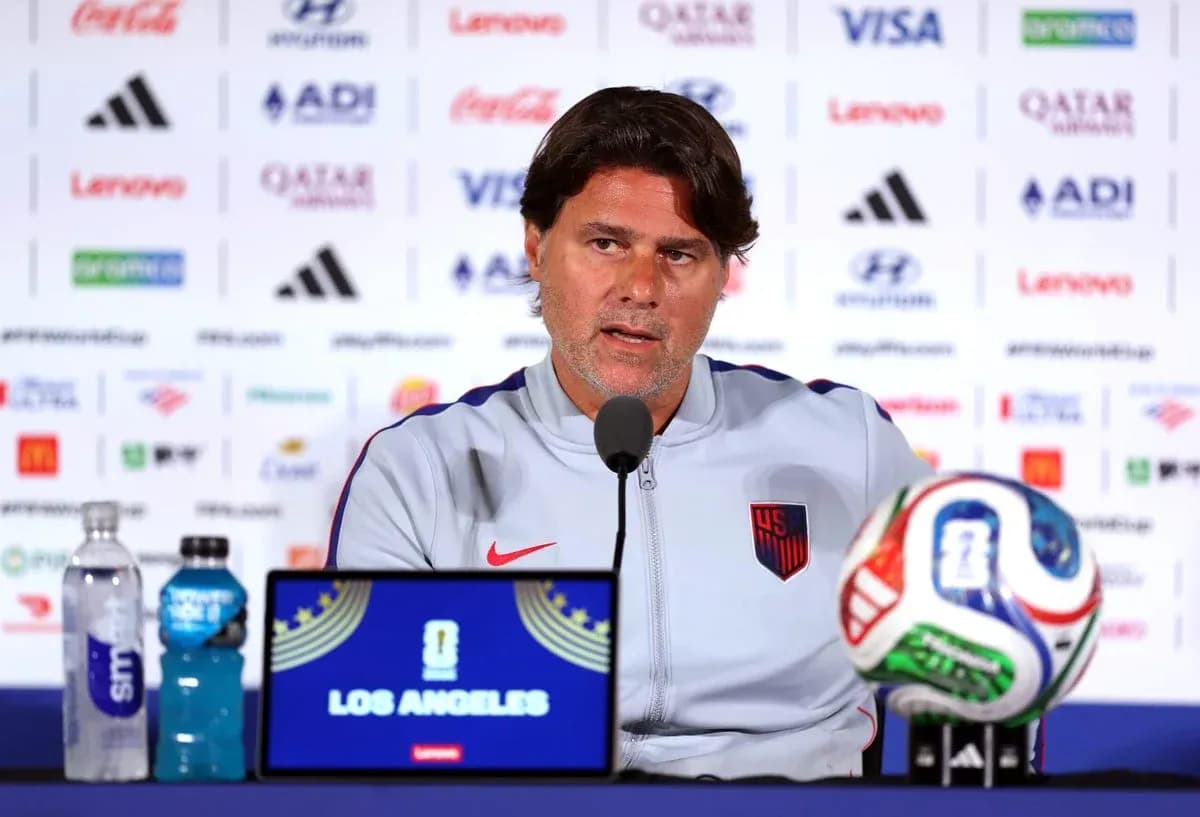
INGLEWOOD, Calif. — The questions kept coming. Mauricio Pochettino’s patience did not.
Minutes after a rotated U.S. men’s national team lost 3-2 to Turkey at SoFi Stadium, conceding with virtually the last kick of the game, the head coach snapped back at the mood in the room, reminded everyone of the one fact he felt was being ignored, then stood up and walked out.
“We won the group,” he said, twice. “Sorry guys, we won.”
The result had no bearing on that. The U.S. had already locked up first place in Group D after two games, clearing the way for Pochettino to overhaul his lineup and protect his core players for the round of 32. Turkey still celebrated three points; Australia and Paraguay celebrated qualification. Pochettino looked around the press room and saw little of that same energy.
“It cannot be possible that Turkey celebrates three points, Australia celebrates getting through, Paraguay celebrates getting through… for you to not say congratulations for winning the group, it’s a little bit sad,” he said, the irritation unmistakable.
Then he was gone, leaving behind a 3-2 defeat, a top finish in the group, and a pointed message about perspective.
A dead rubber with a sting in the tail
On paper, this was a free hit. First place secured, yellow-card suspensions looming, a chance to rest legs and test depth. Pochettino leaned into it.
Only Ricardo Pepi and Weston McKennie kept their places from the win over Australia. Tyler Adams, Folarin Balogun, Chris Richards and Antonee Robinson — all one booking away from a ban — never left the bench. McKennie lasted 86 minutes before making way for Malik Tillman. Pepi, starting again in Christian Pulisic’s absence from the XI, led the line in a side that looked very different from the one that had carried the U.S. through its first two matches.
The reshuffle brought both opportunity and chaos.
Auston Trusty struck first, giving the U.S. the lead and an early jolt of confidence. Turkey responded, growing into the game behind the brilliance of Arda Guler. The young star pulled strings, found space, and eventually found the net in a man-of-the-match display that repeatedly carved open the American back line.
Sebastian Berhalter dragged the U.S. level early in the second half after Turkey had gone in front, a composed finish that briefly steadied things. The game opened up, stretched, and tilted back and forth. It felt like the sort of wild group-stage match that lives in its own bubble, detached from the larger story of a tournament.
Until stoppage time.
With the last meaningful action of the night, Turkey snatched the winner in the eighth minute of added time, a gut-punch to a heavily rotated U.S. side that had done just enough to escape with a draw. Guler again played a central role in the buildup, even slipping a nutmeg on Pulisic before the decisive strike.
The goal changed nothing in the standings. It changed plenty in the tone of the questions.
Momentum? Pochettino isn’t buying it
The defeat, the first of the U.S. campaign, triggered a familiar line of inquiry: had the team lost momentum heading into the knockouts?
Pochettino bristled.
“Explain what you mean in momentum — I don’t understand,” he shot back. “To play with the same team we played against Australia to take a risk? To receive a yellow card (suspension)? To risk players who maybe have problems? I don’t understand.”
He reached for an example.
“Germany lost momentum too and they played with (mostly) the same team (in their loss to Ecuador on Thursday).”
For him, the calculation was simple: protect key players, secure first place, and accept whatever came with a heavily changed XI in a game that no longer carried weight in the table.
“I’m happy, maybe I’m not showing because your questions are a little bit weird,” he said. “But I’m happy, the players are happy because we are first. I’m confused, maybe the vibes are like we go home tonight and Turkey stays (in the World Cup), no?”
The record backs him up in one respect. With six points, this U.S. side has matched the nation’s best-ever group-stage haul, equaling the 1930 team, albeit in a different era when wins counted for two points instead of three. That context, Pochettino clearly felt, had been lost in the postgame inquest.
“No one congratulated us for finishing first in a very difficult group,” he said in another exchange. “I congratulate the players, staff and fans. Now I’ll answer your question. You always learn when you are in a World Cup.”
Pulisic returns — and passes the test
For all the noise around the result, one development mattered more than any late concession: Christian Pulisic is back.
The U.S. star, who left the opening match against Paraguay at halftime with a calf issue and missed the win over Australia, entered in the 58th minute. He replaced Tim Weah on the left wing and instantly changed the temperature of the game.
He moved freely. He drove at defenders. He looked, in Pochettino’s words, impactful.
“The objective was not just to win, but to get Christian 30-40 minutes,” the coach said. “He finished well and he made an impact on the pitch.”
Guler’s nutmeg on Pulisic in the buildup to Turkey’s winner will replay well on highlight reels, but inside the U.S. camp, the more important takeaway is that their talisman came through his minutes unscathed, sharp, and aggressive. Any lingering fears that he might be compromised for the knockout rounds eased with every sprint and touch.
For a team that will lean heavily on his creativity and decisiveness from here on, that is no small victory.
Bosnia and Herzegovina await
The next step is already set. Earlier on Thursday, the U.S. learned its round-of-32 opponent: Bosnia and Herzegovina, in Santa Clara next Wednesday.
The group-stage job, in Pochettino’s eyes, is done and done well. Six points. First place. Key players protected from suspension. Pulisic back on the grass.
“We’re a much better team now than we were before,” he said. “That will be put to the test next game.”
The real judgment starts there.




