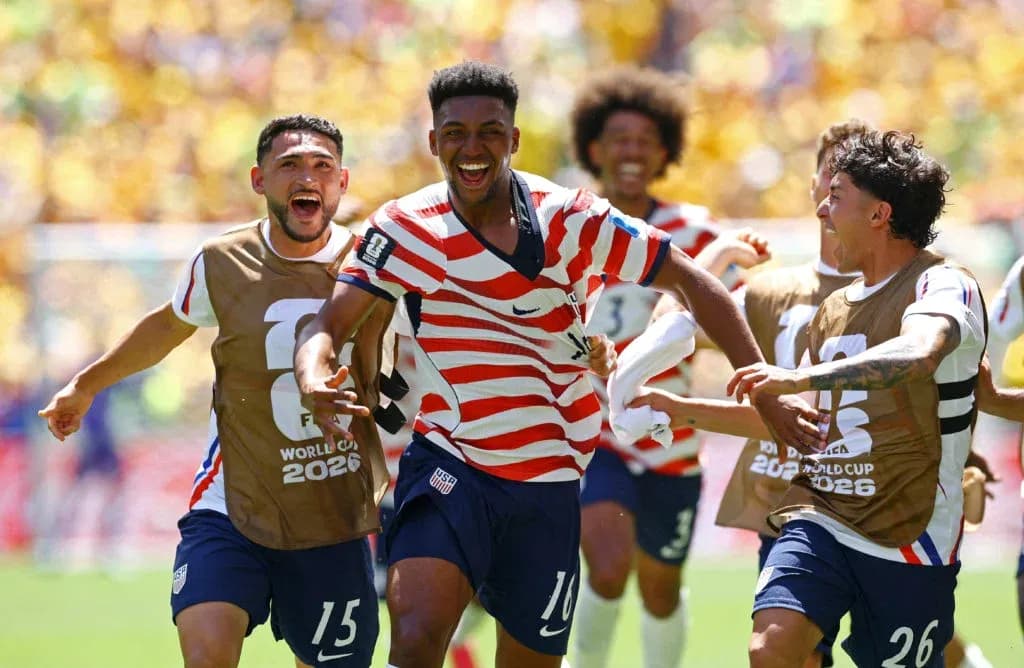
U.S. Men's National Team Advances Without Pulisic
SEATTLE — No Christian Pulisic. No problem, at least for now.
On a cool Friday night in the Pacific Northwest, the U.S. men’s national team booked its place in the World Cup knockout rounds with a 2-0 win over Australia, doing it the hard way and the impressive way — without its injured star and with its youngest player delivering the decisive blow.
Life Without Pulisic
Pulisic, the heartbeat of this U.S. side and now a key figure at AC Milan, watched from the sidelines with a calf injury, his 33 international goals and big-tournament aura left in the treatment room. In past eras, that might have spelled trouble. This time, it simply opened the stage for others.
The Americans arrived with depth to prove and history to chase. They clinched a knockout berth after just two group matches — something they had never done before. Even in 1994, when they last hosted the World Cup and squeezed through as one of the best third-place teams, nothing came this early or this assured.
This felt different. This felt like a team built to absorb a loss and still keep moving.
An Early Breakthrough
Any nerves about Pulisic’s absence lasted 11 minutes.
Folarin Balogun, fresh off his two-goal show in the 4-1 win over Paraguay on June 12, went to work down the left flank. He burned his marker, drove hard toward the box, and whipped a low, dangerous ball across the face of goal.
Ricardo Pepi, starting in Pulisic’s place, made the run. He never touched it.
Instead, Australia defender Cameron Burgess did, redirecting the ball into his own net. A slice of luck, yes, but it came from exactly the kind of direct, aggressive play this U.S. side has promised. One-nil, and the hosts had a platform.
Australia tried to settle, to slow the tempo, to drag the game back into their rhythm. The U.S. refused to let them.
Freeman Steps Out of the Shadow
The night’s defining moment arrived just before halftime, and it belonged to a 21-year-old with a famous last name and a future that suddenly looks even bigger.
Alex Freeman, the youngest player on the roster and son of former Super Bowl champion Antonio Freeman, rose above the chaos in the 43rd minute. Off a set piece, Sergiño Dest’s effort was deflected into the air, hanging for a heartbeat inside the box. Freeman attacked it.
He met the ball cleanly, steering a header past the goalkeeper for his first career World Cup goal. The stadium erupted, then waited as the video review checked the buildup. The decision stood. Two-nil. A landmark moment confirmed.
For a team often defined by its established stars, this was a statement from the next wave.
A Different Kind of Host
From there, the U.S. managed the game with a maturity that will encourage anyone looking beyond the group stage. Australia pushed, as they had to, but the Americans held their shape, picked their moments, and leaned on that “deep roster” coaches like to talk about but rarely get to prove in real time.
They have now done something the 1994 side did not: qualify for the knockouts with a game to spare. Back then, the story ended in the round of 16 against eventual champions Brazil. This time, the ambition is clearly higher.
The U.S. still needs Pulisic back if it wants to test that ceiling against the world’s elite. A calf injury can linger, and knockout football is unforgiving. But in Seattle, under the lights, this team showed it is no longer built around just one man.
It is built to last into the sharp end of a World Cup. The only question now is how far this deeper, bolder version of the United States can actually go.