
UEFA Champions League Final: PSG vs Arsenal Insights
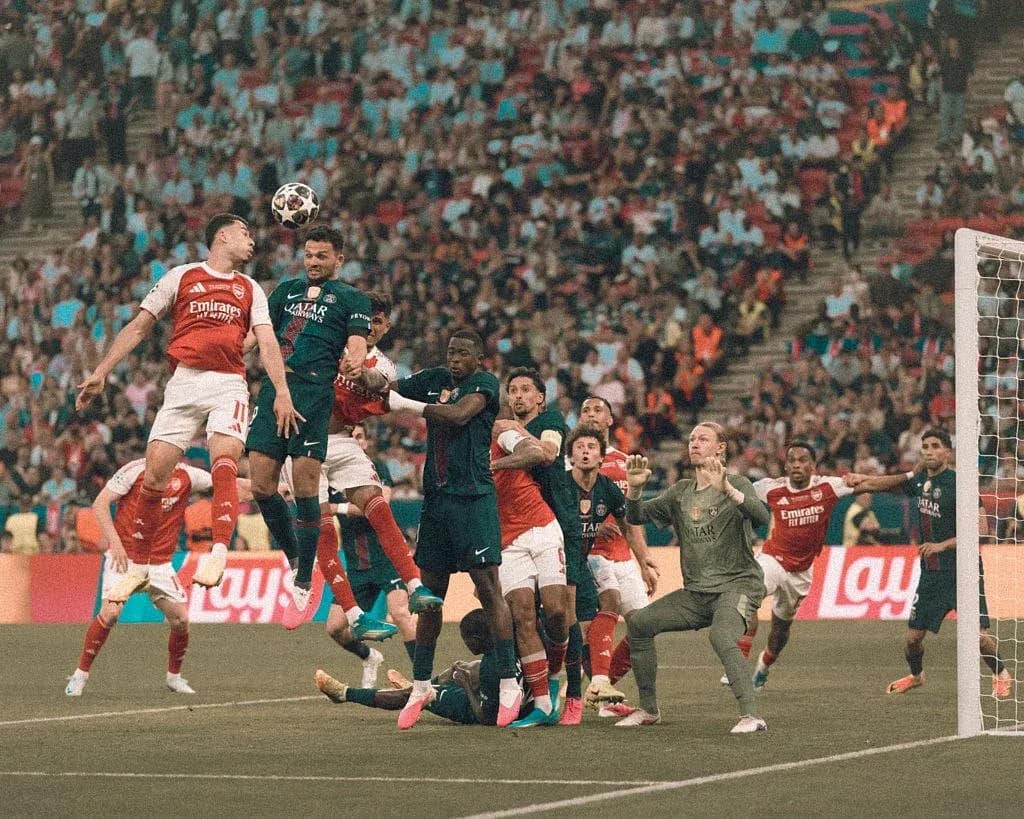
On a warm night in Budapest, PSG kept their grip on the UEFA Champions League trophy, edging Arsenal 4-3 on penalties after a tense 1-1 draw at Puskás Aréna. The drama on the pitch was gripping. The story off it was seismic.
A final that broke the rules
Across the UK, France, Hungary and the United States, the game pulled in a combined audience of 33.7 million. A strong number for a club final in a crowded summer shaped by the FIFA World Cup.
But the UK figure stopped the industry in its tracks.
Of the 19.4 million people who watched in the UK, YouGov Sport estimates 16.2 million did so via illegal streams. Unauthorised viewing wasn’t a sideshow; it was the main act. More people in the UK watched the biggest club game in Europe through pirate feeds than watched legally across all four measured markets combined, where official broadcasts reached 12.9 million.
The final was not available free-to-air in the UK. Faced with a paywall on one side and the Champions League final on the other, millions simply stepped around the gate.
TNT Sports and HBO Max drew a combined 3.0 million UK viewers. Around 200,000 more were estimated to be watching out of home. The rest? On laptops, phones and smart TVs, far from the control of rights holders.
France, by contrast, delivered 9.5 million viewers through M6 and Canal+, while the US contributed 4.8 million via CBS, Univision and Paramount+. Respectable, orderly, commercial. But the UK’s numbers laid bare a reality the industry has long suspected: when the biggest matches are locked away, fans will find their own keys.
Streets, screens and a stadium at full tilt
This was not just a broadcast event. It was a night that spilled into cities.
YouGov Profiles data suggests just under 500,000 Arsenal and PSG supporters watched from bars and pubs across London and Paris. Packed rooms, shirts and scarves, the familiar roar at every half-chance. In Budapest, 61,035 spectators filled Puskás Aréna, giving the final the full weight of a major European occasion.
From stadium bowl to city streets to clandestine streams, the final became a three-layered spectacle: official, communal and underground.
Arsenal lose the cup, Emirates win the camera
On the scoreboard, PSG walked away with the trophy. On the broadcast, Arsenal’s shirt sponsor stole the night.
YouGov Sport’s Brand Exposure analysis shows Emirates received 2 hours and 52 minutes of on-screen exposure, with a Brand Impact Score (BIS) of 3.54. PSG’s front-of-shirt sponsor, Qatar Airways, registered 1 hour and 54 minutes and a BIS of 3.25.
That gap is not a quirk. It reflects how the game unfolded.
Arsenal’s players dominated key passages of play in the broadcast cut: attacking moves, desperate defensive actions, close-ups after chances missed or tackles made, and the replays that followed. Each moment kept the Emirates logo in view a little longer, a little clearer.
When the focus tightened, the numbers tilted further. Emirates posted a higher BIS than Qatar Airways (3.54 vs 3.22), helped by a slightly larger logo, stronger positioning on screen and more frequent moments where the branding appeared alone, unchallenged by other visual clutter. Longer average exposure durations meant that when Emirates was on screen, it stayed there long enough to register.
The outcome is striking. The losing side’s sponsor walked away with the richer commercial return.
For brands weighing up multi-million shirt deals, this is the fine print that matters. A dramatic performance, even in defeat, can generate more visibility and impact than a more controlled, winning display on the other side.
Forty-two billion impressions from one night
The final did not end when the last penalty was taken. It exploded online.
Over a 48-hour window from 30 to 31 May, the game triggered more than 40,500 social media posts, 13,700 videos and 24,500 online articles. That content combined for 42 billion potential impressions, 1 billion video views and 10 billion in potential readership.
PSG, as champions and defending title holders, dominated the digital noise. Across its official social media accounts, the club generated 8.6 billion impressions and 418.6 million video views. Arsenal, beaten but far from silent, still produced 3.7 billion impressions and 49.7 million video views.
Volume mattered. PSG’s larger content output translated into a far wider overall reach, stretching the club’s victory into timelines and feeds around the world. The trophy lift became a content engine.
When fans sell the sponsor
The numbers around the shirts did not stop at screen time.
Using YouGov BrandIndex, analysts compared Recommendation levels for Emirates among Arsenal supporters in the UK and Qatar Airways among PSG supporters in France against their respective general populations. In both cases, club fans were significantly more likely to recommend the sponsor than the broader public.
That loyalty is not accidental. It reflects the bond built when a brand sits on the front of a shirt through big nights and bad ones.
Emirates also saw an increase in Recommendation among Arsenal supporters around the time of the final. Multiple factors can influence brand perception, and the data does not claim a single cause. But the timing matters. A high-stakes match, heavy exposure and a fanbase emotionally invested in every kick created fertile ground for advocacy.
Qatar Airways, meanwhile, maintained consistently strong Recommendation levels among PSG supporters throughout the measured period. The relationship there looks stable, established, less about spikes and more about sustained strength.
Through YouGov Sport’s BIS-X framework, these shifts in sentiment are not treated as background noise. They are part of the value. Sponsorship exposure is assessed alongside fan perception and brand health, recognising that a logo seen by millions is worth more when those millions feel positively about the brand behind it.
In this case, the stronger uplift in Recommendation among Arsenal supporters suggests Emirates may have gained on two fronts: greater visibility during the final and more vocal fan advocacy afterwards.
Beyond counting eyeballs
The 2026 Champions League final offered a blunt lesson to anyone still measuring sponsorship by raw audience alone.
Yes, 33.7 million people watched across four key markets. But that headline masks the real story: 16.2 million UK viewers turning to illegal streams, a losing team’s sponsor outpacing the winner’s in exposure quality, and a digital aftershock measured in tens of billions of impressions.
No single metric can carry that weight. Audience figures show who tuned in. Brand Exposure reveals who was actually seen. Social buzz tracks who owned the conversation. Fan sentiment explains who truly connected.
Put together, they show something else as well: in a fractured media landscape where access is contested and attention is fleeting, the value of a night like Budapest is no longer defined by the trophy alone.
It belongs to the clubs, the sponsors and the platforms that understand how every frame, every post and every fan reaction can turn 90 minutes of football into a global commercial event.




