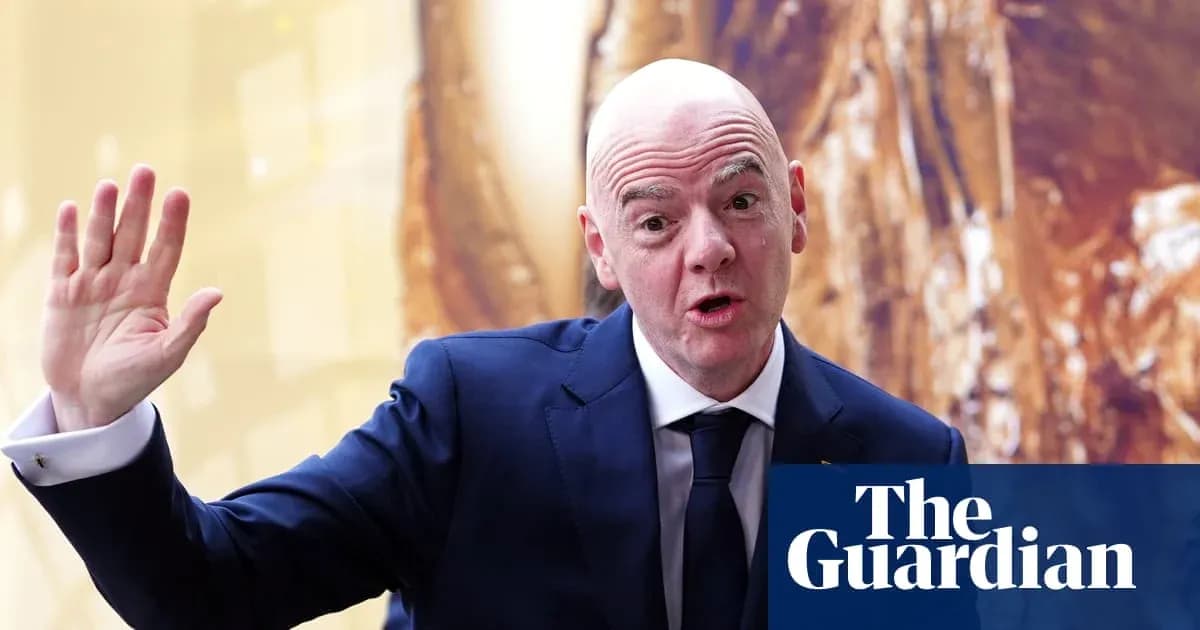
Uefa Challenges Gianni Infantino's Leadership
Uefa has delivered its most direct challenge yet to Gianni Infantino’s grip on power, warning the Fifa president that his style of leadership is no longer acceptable and demanding a root-and-branch review of how the world governing body is run.
In a blistering statement laced with references to “secret schemes”, “shabby backroom deals” and “faceless individuals”, European football’s hierarchy made clear it wants change at the top of Fifa – even after the sudden collapse of Infantino’s controversial plan to sell off stakes in the World Cup and other competitions.
Uefa turns on Infantino
Uefa stopped just short of calling for Infantino to resign. But senior figures within the organisation are understood to be determined that he should not be allowed to simply ride out what they see as a crisis of his own making. Several of the game’s most powerful national associations share that view.
Behind the scenes, leading European officials have already begun sounding out potential challengers for next year’s Fifa presidential election. That process, insiders say, will intensify in the coming days, as the scale of the backlash against Zurich becomes clear.
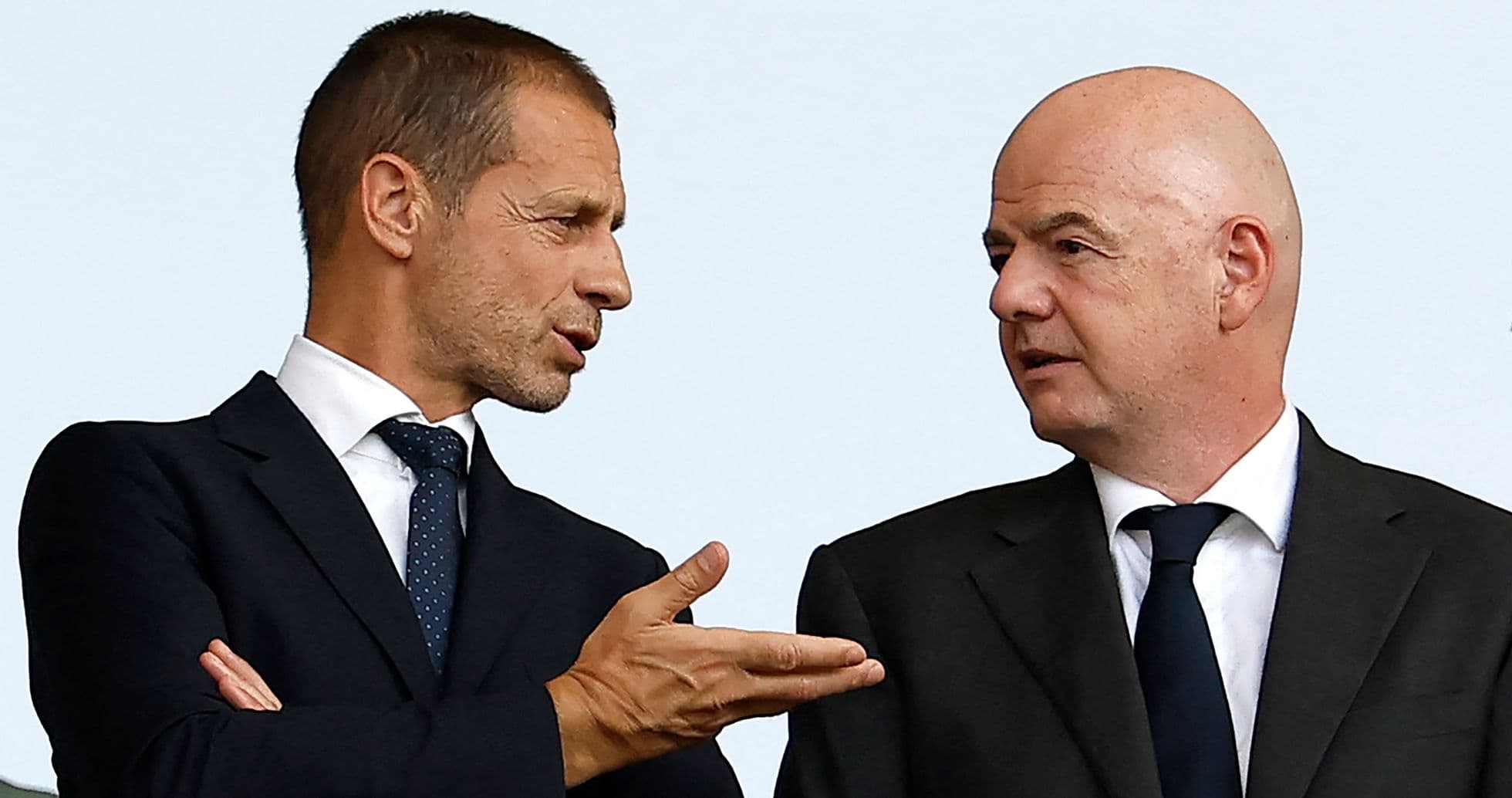
Aleksander Ceferin, Uefa’s president, has emerged as the central figure in the revolt. Having secured unanimous backing from all 55 European member associations for a World Cup boycott last Thursday, he now intends to use that unity as leverage for sweeping reform.
“We cannot keep going on like this with secret schemes on fast track timescales, cooked up by faceless individuals and of dubious benefit to the game,” Uefa’s statement read. “We must identify those responsible and hold them to account.”
The message was unmistakable: this is not a passing quarrel, but an open challenge to the current Fifa regime.
‘No option off the table’
Uefa has called for a “thorough and fundamental” review of Fifa’s governance, promising to work with its own associations and other confederations to examine how the aborted commercial deal was constructed and pushed so far down the line.
“It is right that, in the coming days and weeks, Uefa will work with its associations and in close cooperation with other confederations to reflect on how this happened and devise a plan to make sure that it cannot occur again,” the statement continued. “That review should be thorough and fundamental. No option should be off the table. The current Fifa leadership has not only lost Uefa’s confidence, but also that of many other members of the football family.”
The language is unusually stark for inter-confederation politics. It signals that Europe no longer sees Infantino as a trusted custodian of the game, despite his overnight U-turn on the proposed sale of 20% of a new commercial entity to private investors.
Promises thrown back at him
Uefa then turned Infantino’s own words against him. It reached back to his 2016 election campaign, when he promised transparency, accountability and a Fifa that would belong to its member associations rather than its president.
“When Gianni Infantino asked for the trust and the votes of Fifa’s Member Associations to elect him as their president in 2016, he said, ‘Of course we have to be transparent. I have been this in the last 15 years of my life in Uefa. You will have to play a part every day in the life of Fifa,’ before telling the assembled stakeholders, ‘The money of Fifa is your money. It’s not the money of the Fifa president. It’s your money. You are the national associations, and the money of Fifa has to serve for the development of football and not for anything else.’”
Uefa’s verdict on that record was brutal.
“On both these promises, he has failed to deliver. The shabby, back room, opaque deal he hatched and tried to force through were anything but transparent. And with reserves standing at over $5bn, he has also failed to use associations’ money for the benefit of the game.”
The accusation cuts to the heart of Infantino’s presidency: that he has centralised power in Zurich while using Fifa’s financial muscle to secure political loyalty.
Election suddenly wide open
Until this week, Infantino looked certain to be re-elected unopposed for a third full term at the Fifa Congress in Rabat next March. He is determined to stay on and has already collected more than 200 letters of support from member associations endorsing his campaign.
Those letters, though, are not binding. They can be withdrawn. And the deadline for rival candidates to declare remains 18 November.
That calendar now matters. Uefa’s move has opened the door to a contest that many assumed would never materialise.
Names are already circulating. Nasser Al-Khelaifi, the Paris Saint-Germain president and chairman of the influential European Football Clubs lobby group, is admired by many in Europe but is said to be reluctant to run. Other potential contenders include Victor Montagliani, the Canadian president of the North American confederation Concacaf, and Asian Football Confederation president Salman al-Khalifa, who narrowly lost to Infantino in the 2016 Fifa election.
None has yet stepped forward. But the search has started, and for the first time in years Infantino can no longer count on a coronation.
Battle over Fifa’s money
At the core of the row lies Fifa’s system of financial distribution. Under the Fifa Forward programme, all 211 member associations receive the same central payment over each four-year cycle. Infantino’s abandoned proposal would have created a new commercial company, Fifa Forward Enterprise, with 20% sold to private investors.
He argued that the sale would allow Fifa to increase Forward payments from $8m to $20m per association for the next cycle, plus a one-off $20m signing bonus for those who joined the scheme by 19 September.
Critics saw something very different: a patronage machine, funnelling millions to smaller federations in a way that would entrench Infantino in office. The proposed $20m bonus, dangled in front of associations as a reward for swift approval, drew particular condemnation.
Uefa’s response was to demand an immediate overhaul of the distribution model – but one that stays within Fifa’s existing structures and uses its vast reserves rather than outside capital.
“Uefa will begin work immediately with partners and stakeholders all over the world and right across the game to propose a new way of distributing resources through the existing Fifa Forward programme,” its statement said. “We must start to use some of that money that is sat idle in Fifa’s bank account to deliver the kick start that the grassroots and the wider game need in each of the 211 countries of Fifa. But we don’t need to sell off the family silver to pay for it.”
The message is clear: spend the $5bn already in the bank before inviting private money into the heart of the World Cup.
A victory – and a warning
For Uefa, the collapse of Fifa Forward Enterprise marks a win. Infantino’s plan has been shelved, the commercial company abandoned, and the immediate threat of partial privatisation of flagship competitions has receded.
“This is a victory for the whole game. But it must not be the end of the story,” Uefa concluded. “The proposal has gone. The task of rebuilding trust in Fifa has only just begun.”
The fight now moves from boardrooms and emergency meetings to the long campaign trail ahead of Rabat. Infantino still holds the office, the machinery and a broad coalition of support across smaller federations. Uefa has the money, the clubs, and a growing sense that the rest of the football world is ready for a different kind of leadership.
The question is no longer whether Fifa will face a reckoning, but who will be standing when that moment finally arrives.