
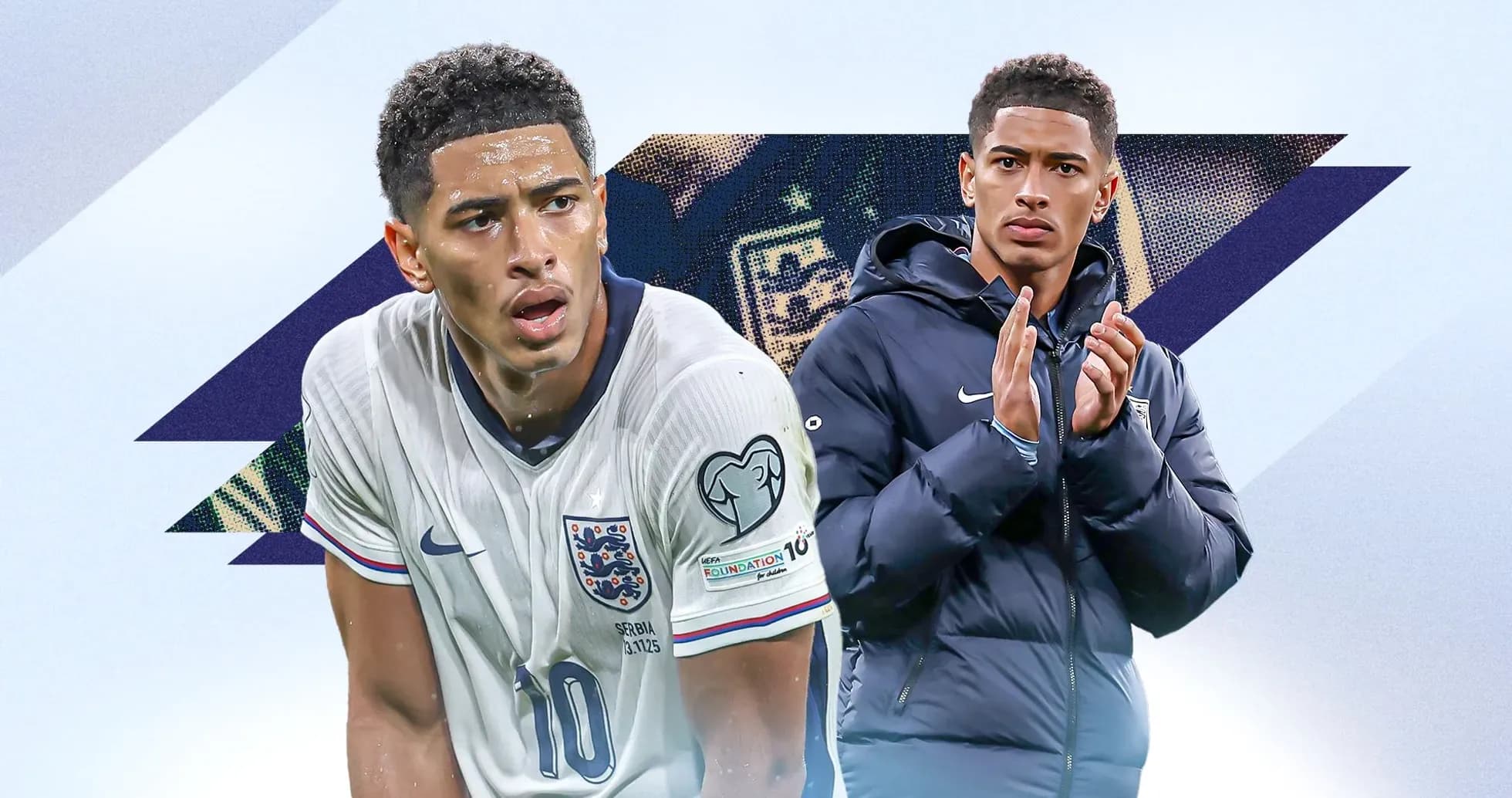
Thomas Tuchel's England Revolution: Rogers vs Bellingham
Thomas Tuchel has not wasted time rewriting the rules with England. Reputations still matter, of course, but they no longer guarantee a starting shirt. Not even for Jude Bellingham.
Since taking the job, Tuchel has made one principle non-negotiable: places are earned, not gifted. And into that space, Morgan Rogers has walked with the quiet assurance of a player who knows his form is impossible to ignore.
Rogers kicks the door open
At Aston Villa, Rogers has been electric. Tuchel has simply asked him to bring that same spark into an England shirt. He has done exactly that.
Used as a true No.10 through qualifying, Rogers became the conduit for much of England’s better attacking play while Tuchel tinkered with shapes and partnerships. The goals haven’t flowed for him yet, but his role has never been just about finishing. He finds pockets, links play, threads passes. He looks like a natural fit behind Harry Kane.
Tuchel has rewarded that. Not out of sentiment, but because Rogers has forced the issue.
"Rather than finding the best players a position to just have them on the field, it's maybe better to put everyone in their best position and have a competition. At the moment, the competition is between the two of them," Tuchel said back in November, drawing a clear line between Bellingham and Rogers for that single, coveted spot.
For now, on form alone, Rogers has every right to feel he has the edge. Bellingham, recovering from injury and rhythm, finds himself in the rare position of having to chase someone down.
Bellingham’s edge – and the fallout
Bellingham has never played small. He carries himself with a swagger that can light up a stadium or inflame it. That edge boiled over in the 3-1 defeat to Senegal last June, when his furious reaction to a VAR decision turned heads as much as the game itself.
Tuchel was asked about that flashpoint on TalkSport after the friendly at the City Ground. His response cut to the heart of the Bellingham debate.
"I think he brings an edge, which we welcome and which is needed if we want to achieve big things," Tuchel said. "It needs to be channelled. The edge needs to be channelled toward the opponent, towards our goal and not to intimidate team-mates, or to be over aggressive to team-mates or referees."
So far, so measured. Then came the line that has followed Tuchel ever since.
"I see that it can create mixed emotions. I see this with my parents, with my mum that she sometimes cannot see the nice and well-educated and well-behaved guy that I see… If he smiles, he wins everyone, but sometimes you see the rage, the hunger and the fire, and it comes out in a way that can be a bit repulsive. For example, for my mother, when she sits in front of the TV, I see that, but in general we are very happy to have him, he's a special boy."
Intended as an insight, it landed awkwardly. The England manager publicly describing the nation’s star midfielder as occasionally “repulsive” – even via his mother’s eyes – guaranteed headlines and reopened a conversation that has never really gone away: how England sees Jude Bellingham, and who gets to define him.
A strained return
Bellingham did not feature again for England until November, his post-surgery recovery keeping him away from successive camps. When he finally returned, every interaction with Tuchel was scrutinised.
Tuchel benched him for the first game of that international break against Serbia. Three days later, Bellingham was back in the XI against Albania, only for another flash of frustration to dominate the discussion. Withdrawn with six minutes to play in England’s final qualifier, he appeared to gesture angrily as he left the pitch.
"That's the decision, and he has to accept the decision," Tuchel said afterwards. "His friend is waiting on the sideline, so you need to accept it, respect it, and keep on going."
The message was clear: no one is bigger than the plan. Not even the player many see as England’s generational talent.
A bigger, uglier undercurrent
Amid the noise, another voice cut through. Ian Wright stepped in to defend Bellingham and to challenge the tone of some of the criticism.
“I don't think they're ready for a black superstar who can move like Jude is moving. They can't touch him," Wright said of sections of the English media and fanbase. "He goes out there, he performs, he does what he does. It's too uppity for these people.
"They all love N'Golo Kante. He's a humble Black man, gets on with what he's doing. Someone like Jude frightens these people because of his capability and the inspiration he can give. Because if you are outspoken, Black, and playing to that level and not caring, that frightens certain people. It's a tiring exercise to speak about."
Wright’s words dragged the debate into uncomfortable but necessary territory. This is no longer just a football argument about form, roles and systems. It is also about perception, race, and who is allowed to be brilliant, emotional and unapologetic in an England shirt.
Tuchel’s dilemma in Dallas
Strip away the noise, though, and one truth remains: when Bellingham hits his ceiling, England rise with him. He changes the geometry of games. He drags teams up the pitch. He bends matches to his will.
The problem for Tuchel is that those performances have not come often enough of late. Injury, recovery, disrupted rhythm – all of it has chipped away at his sharpness. Rogers, by contrast, has been climbing.
So Tuchel walks into England’s World Cup opener in Dallas with a decision that cuts right to the heart of his tenure.
Does he start one of the most gifted midfielders on the planet, fully aware that his emotions can spill over and that his recent form is patchy? Or does he trust the in-form, less battle-hardened Rogers, who has never felt the heat of a major tournament but currently looks perfectly tuned to the role?
Tuchel has tried to stoke Bellingham’s fire, to challenge him publicly and privately. Yet the debate around attitude, the manager’s own clumsy phrasing, and the wider culture war that has sprung up around the player have smothered serious discussion of what matters most: how well he is actually playing.
Bellingham will wear the No.10 shirt this summer. That much is settled. What is not settled is whether he will walk out as England’s No.10 against Croatia.
One thing feels inevitable: Jude Bellingham will dominate this World Cup narrative, whether through match-winning brilliance or flashes of petulance. And if England’s fate really does rest on which version shows up, Tuchel’s bold new meritocracy is about to face its first true reckoning.




