Trabzonspor vs Ferencvarosi TC: Tactical Analysis of a UEFA Europa League Defeat
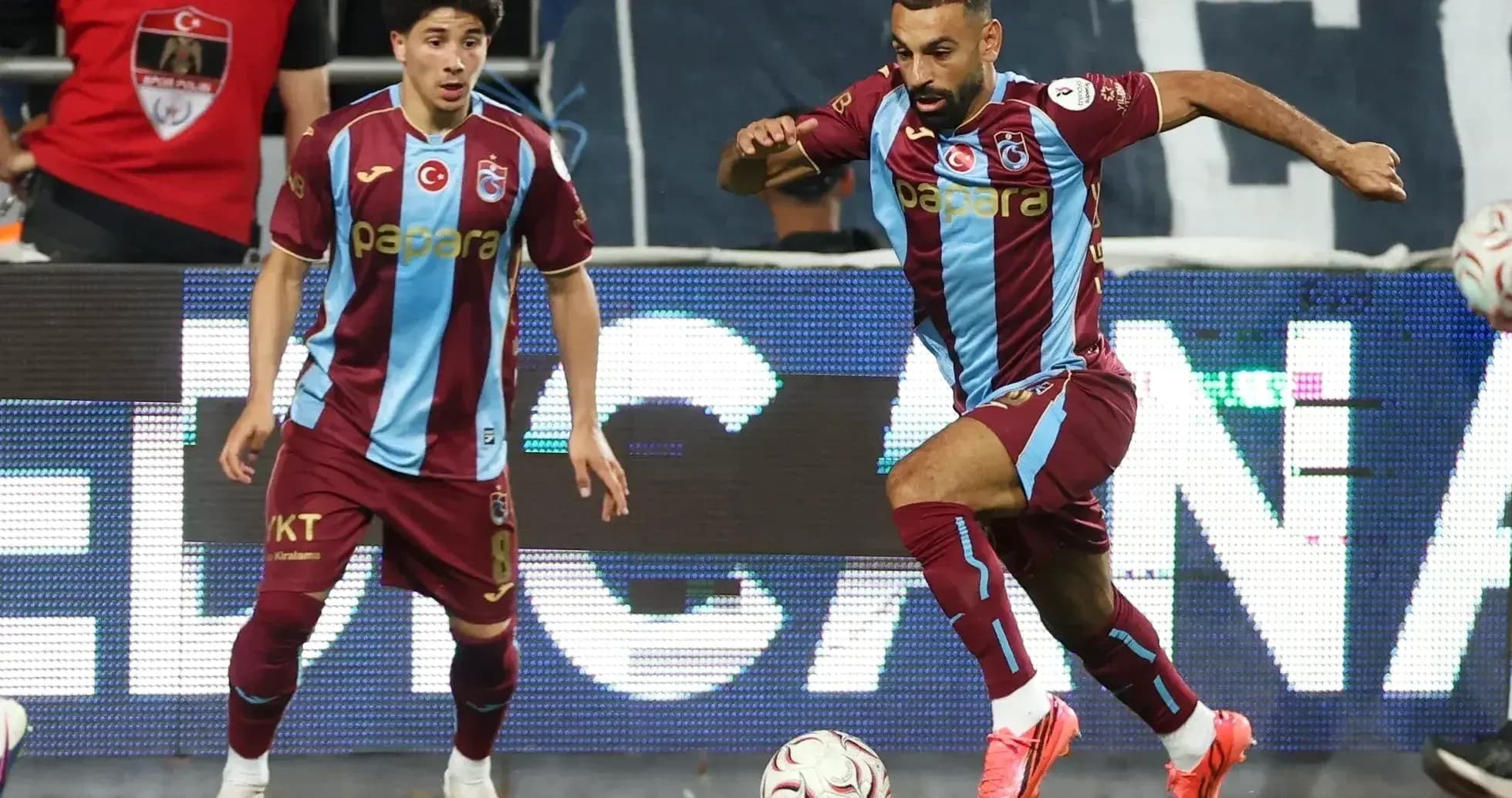
Trabzonspor’s 0-1 home defeat to Ferencvarosi TC at Papara Park was a study in territorial dominance without penetration versus compact, ruthless pragmatism. In a UEFA Europa League Play-offs tie defined by contrast, the hosts owned the ball and territory but were repeatedly funneled into low-quality shooting zones, while the visitors maximised a single, well-executed attacking pattern and then retreated into a disciplined, attritional block.
Trabzonspor lined up in a 4-2-3-1 under Fatih Tekke, with A. Onana in goal, a back four of S. Lopes Cabral, C. Ozkacar, C. Nwaiwu and W. Pina, and a double pivot of B. Bouchouari and M. Kabasakal. Ahead of them, N. Saviolo and M. Salah were tasked with connecting to a front pairing in practice of U. Nayir drifting from the line and P. Onuachu leading the attack. The structure was clearly possession-oriented: the 66% share of the ball reflects a plan to progress methodically through the thirds.
However, the shot profile exposes the flaw in that dominance. Trabzonspor produced only 3 shots on goal despite 15 shots off goal and 6 blocked efforts. Ferencvarosi TC’s 4-4-2 mid-to-low block, with Cadu and O. Nagy wide of a narrow central pair of P. Rommens and K. Zachariassen, consistently forced Trabzonspor outside. The hosts were allowed to shoot, but almost always from sub-optimal body shapes or crowded zones, explaining the high volume of off-target and blocked attempts.
Ferencvarosi TC’s attacking plan was simpler but far more efficient. The decisive moment came on 17 minutes: K. Zachariassen arrived from midfield to finish, assisted by O. Nagy, for 0-1. It encapsulated their approach—direct running from midfield into the spaces vacated by Trabzonspor’s advanced full-backs, with the wide defenders and wingers playing early balls into channels. Once ahead, Balazs Borbely’s side recalibrated into a deeper 4-4-2, compressing central spaces and accepting a foul-heavy game to break rhythm.
Discipline Numbers
The discipline numbers underline that tactical choice. Ferencvarosi TC committed 24 fouls to Trabzonspor’s 3 and accumulated 5 yellow cards, all for specific forms of contact or gamesmanship: Dele (29’, Roughing), K. Zachariassen (43’, Roughing), P. Rommens (50’, Holding), A. Osvath (89’, Roughing) and G. Kanichowsky (90+1’, Unsportsmanlike conduct). This was not a loss of control as much as a deliberate edge—constant small infringements to slow transitions, disrupt combinations around the box and prevent Trabzonspor from building tempo.
By contrast, Trabzonspor’s discipline issue was concentrated but costly. They received no yellow cards but finished with a red card when C. Nwaiwu was dismissed for Roughing at 90+6’. That late sending-off crystallised their frustration: a centre-back stepping out aggressively in a desperate attempt to recover the ball after another failed attacking wave.
In-Game Management
Tekke’s in-game management was aggressive but could not shift the underlying dynamics. At half-time, he made a double substitution: R. Malinovskyi (IN) came on for B. Bouchouari (OUT), and A. Simsir (IN) came on for U. Nayir (OUT) at 46’. The intent was clear—add long-range shooting and vertical passing through Malinovskyi, and inject more mobility and between-the-lines presence with Simsir. Later, E. Muci (IN) replaced N. Saviolo (OUT) on 64’, and M. Eskihellac (IN) came on for W. Pina (OUT) on 83’ to push the full-back line even higher and add crossing threat.
Ferencvarosi TC’s substitutions were almost entirely defensive and control-oriented. On 61’, A. Nagy (IN) replaced Dele (OUT) and G. Kanichowsky (IN) came on for P. Rommens (OUT), freshening central zones and adding energy to press the ball. At 78’, A. Osvath (IN) replaced K. Zachariassen (OUT) and K. Lisztes (IN) came on for L. Joseph (OUT), tilting the side toward ball-winning and counter-presence rather than sustained possession. Finally, on 89’, N. Zohore (IN) replaced Cadu (OUT), adding a more defensive-minded presence on the flank to help see out the lead.
Without goalkeeper save data, the defensive story is told instead through shot distribution and blocked attempts. Ferencvarosi TC’s back line, with M. Gomez and T. Raemaekers central, repeatedly stepped out to contest shots at source, contributing to Trabzonspor’s 6 blocked shots. Their own attacking output—4 shots on goal and 3 off goal—was modest but balanced, reflecting a side that attacked in short, sharp bursts rather than through sustained pressure.
Structurally, Trabzonspor’s 4-2-3-1 often resembled a 2-4-4 in possession, with full-backs high and both pivots stepping into the second line. This gave them the 66% possession and 7 corner kicks, but also exposed them to counters whenever the first line of counter-press was broken. Ferencvarosi TC’s 34% possession, 5 corners and 3 offsides point to a team happy to play on the margins of Trabzonspor’s defensive line, timing runs to exploit the space behind.
Statistical Overview
Statistically, the match is a clear case of efficiency trumping volume. Trabzonspor’s 3 shots on goal from a large overall attempt count underline their inability to convert territory into genuine chances. Ferencvarosi TC, with 4 shots on goal from far fewer total efforts, extracted more value from each attack. The foul count (3 vs 24) and card split (0 yellows, 1 red for Trabzonspor; 5 yellows, 0 reds for Ferencvarosi TC) mirror the psychological tone: the hosts controlled the ball, the visitors controlled the terms of engagement.
In the context of Europa League Play-offs football, this tactical pattern matters. Over two legs, Trabzonspor’s possession-heavy, shot-inefficient profile is a concern; they will need to convert their structural dominance into clearer chances and protect their centre-backs from isolation in transition. Ferencvarosi TC, by contrast, leave Papara Park with an away win built on compactness, tactical fouling, and a single, decisive attacking action—an approach that, on this evidence, fits knockout football perfectly.