Tottenham's Collapse Under Roberto De Zerbi: A New Era, Same Old Issues
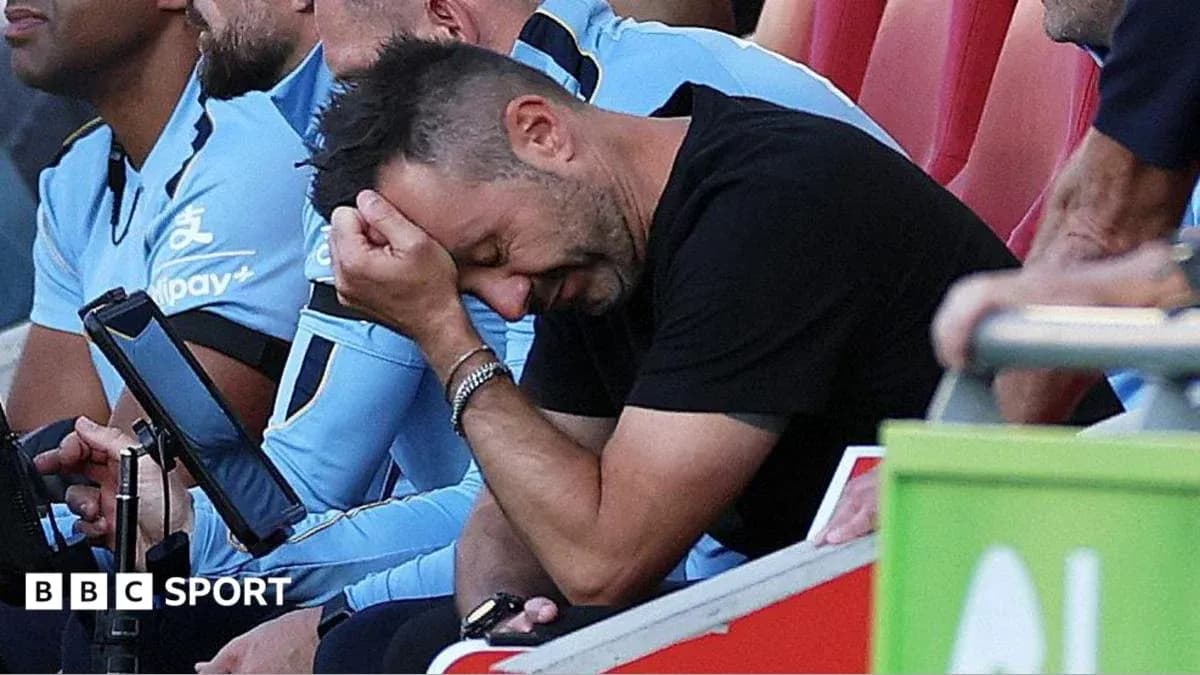
Roberto De Zerbi will soon have spent close to £400m reshaping Tottenham Hotspur in his image. On this evidence, he might need a bigger budget for therapy than for transfers.
One game into the new Premier League season, Spurs served up a brutal reminder: you can’t buy a backbone.
A new era, same old collapse
De Zerbi admitted last spring that he was acting more as psychologist than coach when he arrived with seven games to save Spurs from relegation. He did just enough, clinging on with a final-day win over Everton, and was rewarded in the summer with serious money and serious backing.
This was supposed to be the reset. It looked like a rerun.
At The Gtech Community Stadium, in warm west London sunshine, Brentford tore into Spurs and exposed all the familiar frailties. The first real wave of pressure, and Tottenham folded. Again.
For all the talk of a revamped transfer strategy and a new direction, the capitulation was horribly recognisable. Spurs were out-fought, out-run, out-thought. They were, in De Zerbi’s own words to BBC Sport’s Match of the Day, second best in “the duels” – the very heart of the contest.
“Bad game. We lost and suffered the difference in the duels. It was the key of this game. We didn't fight in the right way,” he said, blunt and clearly stung. “Our physical condition was not in the right level for all players… But we have to analyse this game better because we can't play this way in this type of game.”
Optimism turns to exodus
The day began with noise and belief. Spurs fans packed into one corner, roaring in their new signings, banners waving, songs flying. A new project, new faces, a new manager with a clear idea.
By the end, those same players were clapping towards banks of empty plastic. Large numbers of supporters had already gone, some heading for the exits as early as the 49th minute when Michael Kayode made it 3-0 and effectively ended the contest.
It might have been even uglier. Igor Thiago, normally so reliable from the spot, smacked a penalty against the post. No comfort there for De Zerbi. The damage was already deep.
Rock legend Jon Bon Jovi watched from the stands. Spurs gave him enough material for a box set of sad power ballads: a bright opening track, then a slow, painful slide into something bordering on dirge.
Debuts drowned by Brentford’s intensity
De Zerbi threw four of his new signings straight into the starting XI: Andrew Robertson, Marcos Senesi, Jan Paul van Hecke and Sandro Tonali. All of them will hope this was rock bottom, because it is hard to imagine a harsher introduction.
None impressed. None were alone in that.
Tonali, the £100m marquee arrival from Newcastle United, was supposed to bring authority and control. Instead, he was overpowered and overshadowed by Brentford’s record signing Mamadou Sangare, who dominated midfield and emerged as the game’s standout performer.
Tonali’s most notable moment came with a wild first-half effort that flew high into the sky, greeted by gleeful jeers and chants from Brentford fans questioning exactly where that £100m had gone.
Matheus Fernades, an £85m recruit from West Ham United, came off the bench. Savinho and possibly Omar Marmoush will soon offer more attacking options. The problem wasn’t the names on the teamsheet. It was what happened when Brentford turned up the heat.
Brentford smell blood
From the opening minute, Spurs’ “brave new world” looked eerily like the old one. Brentford sensed the fragility, pressed with purpose and aggression, and hunted in packs. Every 50-50 ball seemed to belong to Thomas Frank’s side. Every loose touch from Spurs felt like an invitation.
The hosts should have been ahead before Keane Lewis-Potter finally broke through after 12 minutes. When Vitaly Janelt doubled the lead before the interval, the game felt done. The third, from Kayode just after the restart, only confirmed what the body language had been screaming.
De Zerbi prowled the technical area, waving, shouting, demanding more. His players shrank. Challenges were lost, heads dropped, and any hint of composure vanished. Panic and desperation took over where structure and belief were supposed to live.
Conor Gallagher and Lucas Bergvall did not reappear for the second half. They could argue they had plenty of company in underperforming, but the changes did little to alter the flow.
Fitness, excuses and a deeper problem
De Zerbi pointed to conditioning. Several players came back late from the World Cup. Others are new, still adapting. He stressed that Robertson, Senesi, Van Hecke and Tonali are not yet at peak physical levels.
“I am surprised for the result and performance. I knew we were not in the right condition. We can't find an excuse,” he said. “We are starting a new project and we couldn't find the principle. We have to improve on that and many other things like organisation and pressing.”
He knows, though, that this runs deeper than tired legs.
This is a squad that has finished 17th in back-to-back seasons. A squad conditioned to losing, to late-season scrambles, to disappointment. De Zerbi was hired to break that cycle after a sequence of managers – Ange Postecoglou, who at least delivered a Europa League title, then Thomas Frank and the fleeting Igor Tudor – failed to shift the mood for long.
The Italian has money. He has backing. He will almost certainly have more signings before the window closes. He is refusing to hide behind that.
“I don't want the excuse that the first XI was not enough to compete and get a result,” he insisted. “Brentford's spirit on the pitch was great, it has to be the right example for us.”
Culture change or repeat nightmare?
One game does not define a season. Plenty of ambitious sides have stumbled badly on opening day and recovered. Context matters.
Yet this did not feel like a freak result. It felt like a continuation. The same patterns: early wobble, rapid collapse, a team that looks beaten long before the final whistle. Spurs’ problems have survived the clear-out, the chequebook and the new manager bounce.
De Zerbi’s real task is now laid bare. He doesn’t just need to coach a team. He needs to rewire a dressing room.
He can shuffle the squad. He can sign more players. What he must change is a culture where days like this feel almost inevitable.
How long will Tottenham tolerate another season built on that foundation?