Terry Butcher's Legacy: Searching for England's Next Warrior
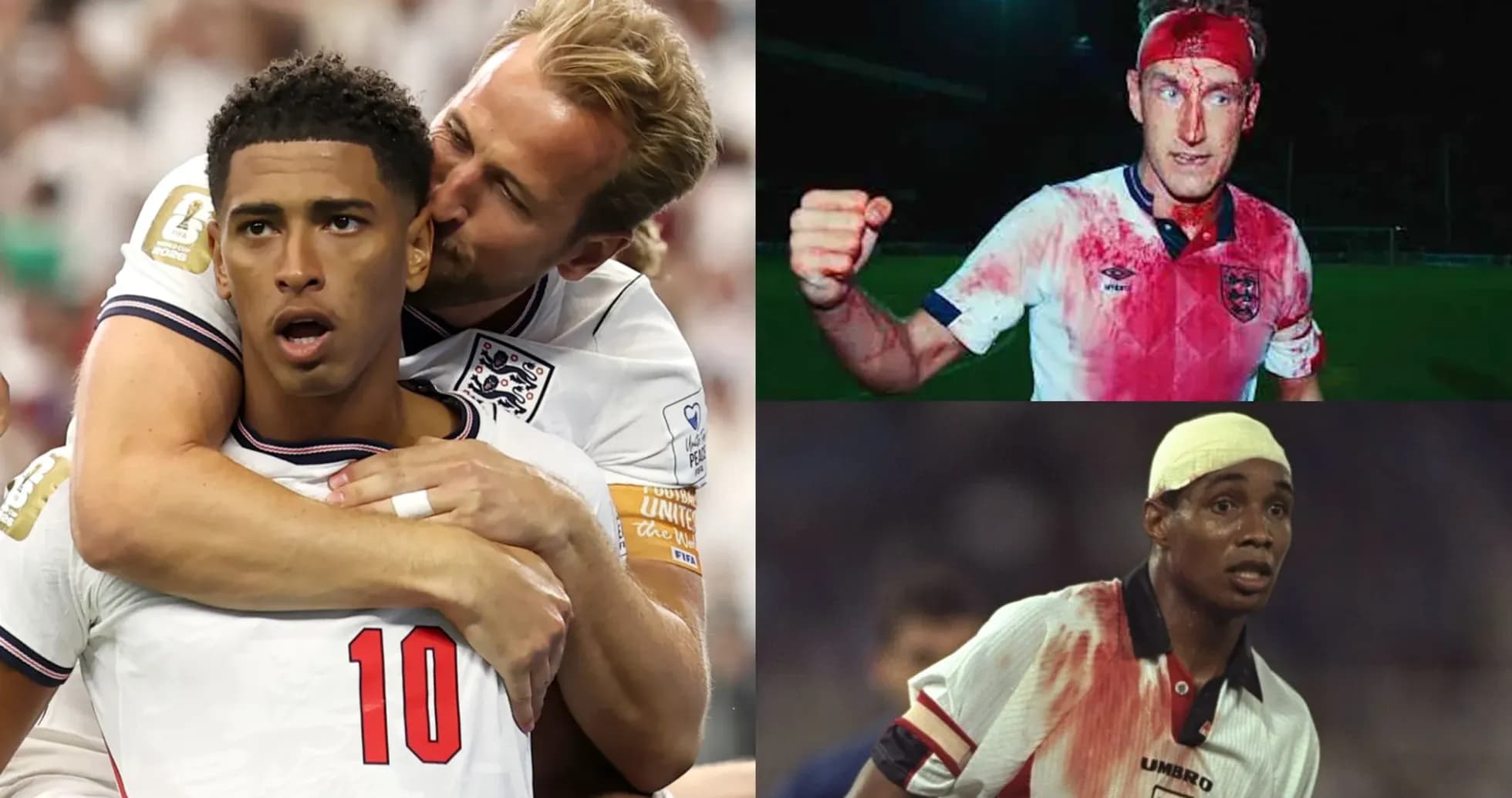
The image is burned into English football’s memory. Stockholm, September 1989. Terry Butcher, head bandaged, face smeared in red, England shirt soaked and unrecognisable. He should have come off. He refused. He played on until the final whistle, a centre-half who looked more like a boxer who had gone 12 rounds too many.
That night against Sweden turned Butcher into a symbol. Not just of bravery, but of a certain idea of what playing for England should mean: pain ignored, shirt ruined, result above everything. Paul Ince followed that path in Rome in 1997, blood pouring from his head as he dragged England to the 1998 World Cup. Stuart Pearce lived there too, all clenched fists and wild-eyed defiance.
Football no longer allows that kind of spectacle. The moment blood appears now, the board goes up and the physios take over. Player welfare, not warrior myth. But the question lingers: who in this England side would truly be ready to spill everything for the shirt?
Butcher has no doubt where he’d look.
“The biggest warrior we've got at the moment? I’d probably say Jude Bellingham, someone like that,” he told GOAL, speaking as part of Domino’s ‘Shirtiette’ campaign, which leans into the mess and mayhem of being a fan.
“He'd be more of a warrior, he does get worked up and he's fiery. I like that. Perhaps sometimes too fiery, but that's the way he plays. He lives on the edge sort of thing. He wants to put himself about and gets frustrated like everybody else. I think Jude would be the one for me.”
Bellingham, still only in his early twenties, plays as if every tackle is personal and every loose ball an insult. The modern game wraps players in data and detail, but he still carries that old, raw edge. That, to Butcher, matters.
“The Game Is a Different Animal Now”
Ask Butcher if players like him, Ince and Pearce still exist in the modern game and he doesn’t sugar-coat the answer.
“Yeah, it's faded out of the game because the game is a different sort of animal now. It's more technical. It's more about ways of playing rather than just getting stuck in.”
He doesn’t pretend nothing has improved. He sees the patterns, the rotations, the choreographed overloads that analysts love to break down. But he misses the crackle of real physical confrontation.
“There's no sort of real physicality in football. It's all about the technique. It's all about creating overloads and all the technical terms. The nearest that comes to our day is probably on set plays and particularly corners when everybody seems to take on a wrestling image and try and bundle people to the ground.
“The game has changed and you can see that it's changed for the better in many instances, but I just think a bit more physicality would certainly help. It certainly helps with the fans because the fans always like to see someone getting stuck in, but you can't do that now because you do run the risk. If you do intimidate players and if you do throw your weight around, then you're in danger of getting not a yellow card, but a red card.”
The laws have tightened. VAR has added another layer of scrutiny. The old dark arts carry a higher price. For Butcher, that shift has chipped away at one of football’s core emotional hooks: the roar that goes up when a centre-half wins a 50-50 he had no right to reach.
England’s Leadership Void at the Back
England’s need for that kind of presence feels acute. Sixty years without a major trophy weighs heavily, and the scrutiny on every defensive lapse is unforgiving. So who is out there, in this current group, marshalling the back line, dragging standards up, organising chaos?
Butcher doesn’t hesitate.
“No, I don't think there is. I don't think there's been anybody there for a long, long time.”
He talks about a dressing room culture that has shifted beyond recognition. Once, accountability was loud and immediate.
“I think gone are the days when you can speak harshly at players. I had Bryan Robson, he used to speak harshly at me if I did something wrong and then I'd have a go back at him if he did something wrong - but he didn't do anything wrong generally so I didn't have to go back at him! But you let your feelings be known vocally, very quickly and very strongly.”
That kind of exchange is now rare. Tactics have changed the language of defending.
“Nowadays you don't do that. I think one of the reasons is that players, particularly on set plays, in the corners and free-kicks, they don't mark a specific opponent. They are zonal, so there's no need for them to shout or do anything else.
“I think the way that football is now, players are too nice with each other. There's no one demanding more of each other. There's no leaders in the group. It's players and just a bunch of individuals getting on with it. They may say things in the dressing room, but on the pitch there doesn't seem to be anyone that really does shout and point a finger.”
One exception, in Butcher’s eyes, sits in goal.
“[Jordan] Pickford does that sometimes and he points a finger. Not many in the England team do. It's just a case of getting on with their job and being the best that they can be themselves.
“I liked the vocal side. I enjoyed it. I enjoyed praising people as well as also shouting at them to urge them on, ‘come on lads’ and all that sort of thing. You see it occasionally, but not very often. I'd like to see it more.”
For a man who built his reputation on command and confrontation, the modern, quieter pitch can feel strangely muted.
Bellingham, Rice and Life After Kane
At least one leadership question is settled for now. Harry Kane wears the armband and wears it with weight: 81 international goals, a place in the record books, and the calm demeanour of a man who rarely lets the temperature rise above simmer.
But time moves quickly in international football. One day soon, England will need a new captain. The debate has already started. Bellingham’s name is never far away, even as some scrutinise his temperament.
Butcher sees the potential, but not quite yet.
“I was the captain of a few clubs and I used to kick doors down and I used to be vocal and I used to swear at referees and all these kinds of things. Not what you would really expect a captain to do, but that was what it was in those days.
“I think Bellingham will in time mature, particularly on the international scene. I think then he could be eligible for the captaincy. I think at the moment he's one of the lieutenants, one of the wingmen, he's underneath that captaincy level.”
In his eyes, another name sits closer to the throne.
“Declan Rice would be an obvious candidate for a captaincy, particularly following in the footsteps of Harry Kane, but Harry Kane could play forever. The way he's going about his business, the way he looks after himself, the way he behaves, he’s like [Cristiano] Ronaldo and he could play forever. Harry didn't have much pace to lose, but his brain seems sharper, his reactions seem sharper. I think that he's got a lot more to do.”
Kane’s game has never relied on blistering speed. As the legs slow, the mind quickens. His movement, his timing, his finishing – all still razor sharp. For now, the armband looks safe on his sleeve.
New Jersey, New Stage, Same Demands
Next up for Kane, Bellingham and the rest of this England side is Panama in New Jersey, a final Group L assignment at the 2026 World Cup. The setting is North America, the stakes familiar: win, impress, convince a nation that this might finally be the year.
Thomas Tuchel will want more than a routine victory. He will want a performance that crackles, something that lifts supporters out of their seats both in the stadium and back home. A night that feels like the start of something, not just another step on a long road.
Butcher’s words hang over it all. Who will shout? Who will drive? Who will bleed, metaphorically if not literally, for the shirt?
Somewhere between the blood-stained memories of 1989 and the clinical, data-driven world of 2026, England are still searching for the kind of warrior who turns good teams into champions.