Spokane Velocity Triumphs Over Boise in USL League One Cup Clash
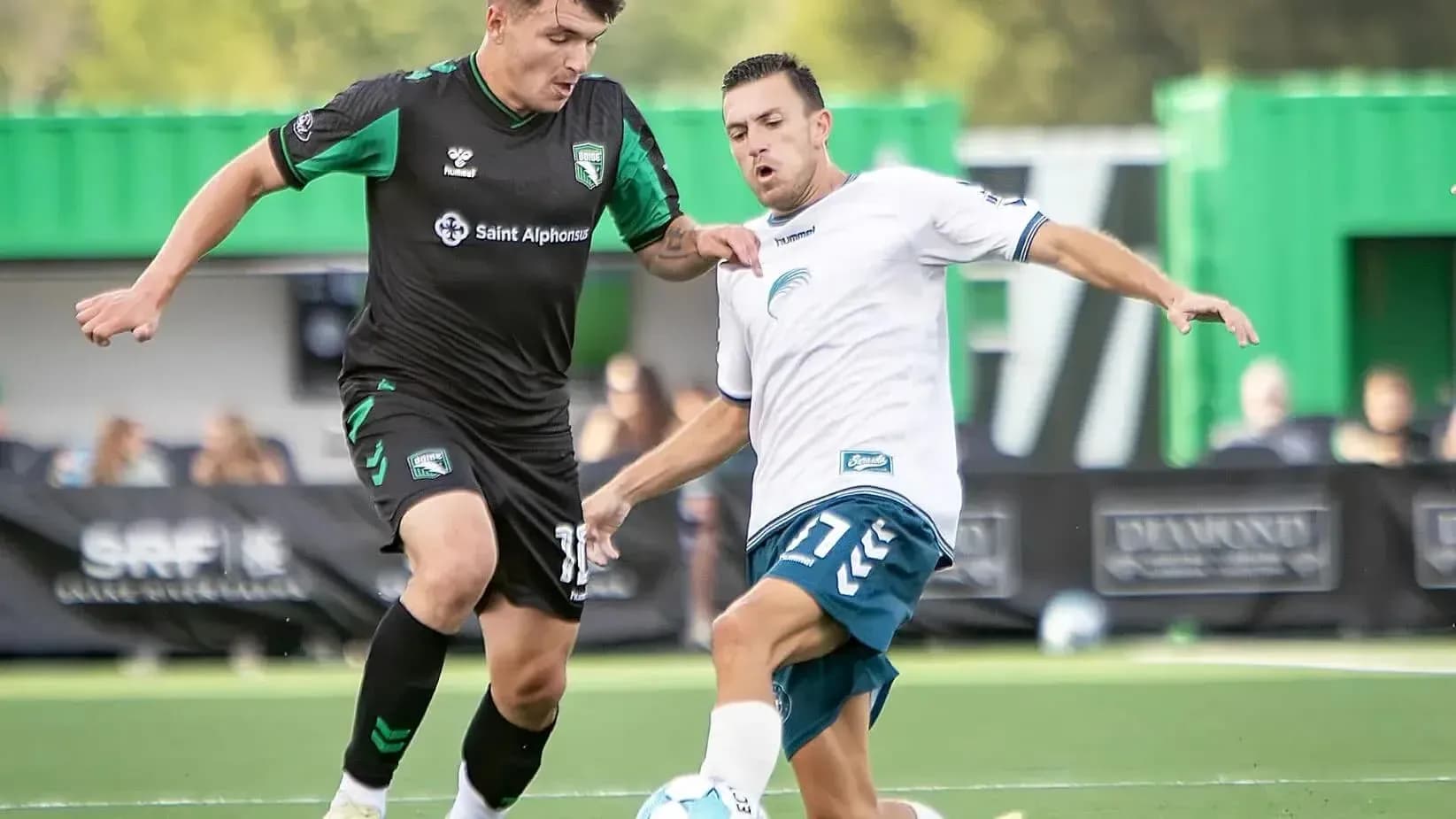
Under the lights at One Spokane Stadium, Spokane Velocity’s 2–1 win over Boise felt like more than a group-stage result in the USL League One Cup. It was a collision of identities: Spokane’s emerging home fortress against Boise’s free‑scoring, chaotic edge. Following this result, Spokane sit on 6 points with a goal difference of -2, while Boise remain on 5 points with a goal difference of 2. The numbers say both sides are still imperfect; the match showed how those imperfections might be weaponised in the knockout‑style games to come.
I. The Big Picture – contrasting blueprints
Spokane’s season to this point has been defined by a stark split between home and away. At home, they have played 2, won 2, scored 3 and conceded 1. Their home goalsFor average stands at 1.5, while goalsAgainst at home is just 0.5. On their travels, they have played 1, lost 1, failed to score, and shipped 4, with an away goalsAgainst average of 4.0. Overall across 3 matches, they have 3 goals for and 5 against, an overall goalsFor average of 1.0 and goalsAgainst of 1.7.
Boise arrive as the more volatile outfit. Overall they have played 3, won 1, drawn 1, lost 1, scoring 10 and conceding 8 in the standings snapshot; in the detailed stats block they show 7 goals for and 6 against across 3, but the shared picture is clear: games involving Boise are open. Their total goalsFor average is 2.3, with 4.0 at home and 1.5 away, while they concede an average of 2.0 overall (3.0 at home, 1.5 away). Boise do not do quiet nights.
Spokane’s biggest results underline their duality: a 2–1 home win as their best at One Spokane Stadium, and a 4–0 away defeat as their heaviest loss. Boise’s extremes tell a similar story: a 4–3 home win and a 2–1 away win as high‑water marks, and a 2–1 away defeat as their only stumble. This match, then, always looked like a test of whether Spokane’s controlled home template could withstand Boise’s appetite for chaos.
II. Tactical voids and discipline – where the game can tilt
There is no explicit injury list, but the lineups reveal Spokane leaning on a settled spine. S. Lewis in goal, with S. Fitch and G. Margvelashvili among the defensive core, anchor a team that has already kept 1 clean sheet in total and conceded just 1 goal at home. In front of them, D. Waldeck and C. Fernandez provide structure, while L. Gil, J. Gallardo, S. John-Brown and N. Brett give Spokane a fluid, interchangeable attacking band.
Boise’s XI is built for front‑foot play: J. Mazzola between the posts; J. Ricketts, J. Yaro, J. Crull and N. Moon likely forming a back line that is asked to defend large spaces; and a midfield that can surge, with P. Mayaka and M. Ndiaye supporting the creative and direct threats of D. Kostyshyn, B. Bodily, T. Amang and T. Moshobane.
Discipline is a quiet but decisive subplot. Spokane’s yellow-card timing shows a clear hot zone between 61–75 minutes, where 42.86% of their cautions arrive, with additional cards spread across 16–30, 31–45, 46–60, and even 91–105. More tellingly, their only red card this season has come in the 46–60 window, where 100.00% of their dismissals sit. Boise, by contrast, are consistently edgy: yellow cards appear in every 15‑minute band from 0–15 through 76–90, with a peak of 33.33% between 31–45. They have no reds so far.
For Spokane, the danger zone is clear: as the second half opens, their aggression can boil over. For Boise, the risk is cumulative – a yellow almost every phase of the game, threatening to disrupt rhythm and invite pressure.
III. Key Matchups – Hunter vs Shield, Engine Room battles
Without explicit top‑scorer data, the “Hunter vs Shield” duel becomes more collective than individual. Spokane’s attack is modest in volume but well‑timed. Their goalsFor minute distribution shows 25.00% of goals between 0–15, 50.00% between 61–75, and 25.00% between 76–90. They are a late‑game side: 75.00% of their goals arrive after half‑time, and a combined 75.00% fall between 61–90.
Boise’s defensive minuteDistribution is the mirror image of Spokane’s strengths. They concede 14.29% of goals in each of 0–15, 16–30 and 31–45, but the real collapse comes between 61–75, where 42.86% of their goalsAgainst occur, and another 14.29% in 76–90. Boise’s back line, led by J. Yaro and J. Crull, will be asked to hold firm precisely in the window where Spokane are most dangerous and Boise themselves are historically most fragile.
In the “Engine Room”, the contest between Spokane’s midfield pairings and Boise’s central axis is decisive. Spokane’s structure, with players like C. Fernandez and D. Waldeck, is built to keep games tight – reflected in their under/over profile: across 3 matches, all have finished under 2.5 goals, and they have never gone over 2.5 or 3.5. Boise, by contrast, have already gone over 2.5 and 3.5 in some fixtures, with 2 matches over 1.5 and 1 over 2.5. If Mayaka and Ndiaye can accelerate transitions, Boise can drag the match towards their preferred high‑event state.
IV. Statistical prognosis – xG‑style reading and defensive solidity
Even without explicit xG numbers, the season data offers an xG‑style sketch. Spokane’s total goalsFor average of 1.0 and total goalsAgainst of 1.7 suggest low‑to‑moderate chance creation, but at home the profile sharpens: 1.5 scored, 0.5 conceded. Their clean sheet count (1 in total) and the fact they have never failed to score at home point to a side that manages territory well in front of their own crowd.
Boise’s attacking averages – 2.3 goalsFor total, 1.5 away – imply a team that will generate enough volume to score in most games, but their 2.0 goalsAgainst overall and 1.5 away highlight an openness that better‑managed sides can exploit late on. Their lack of any clean sheet so far reinforces that picture: Boise always give you a chance.
The critical intersection is that 61–75 band. Spokane score 50.00% of their goals there; Boise concede 42.86% of theirs there. Layer on Spokane’s late 25.00% surge between 76–90 and Boise’s additional 14.29% concessions in the same window, and the script writes itself: if Spokane can keep this game level or close into the final half‑hour, the probabilities bend sharply in their favour.
Following this result, Spokane’s narrow 2–1 victory feels aligned with the underlying trends rather than a surprise. A controlled first hour, rising Boise pressure, and then Spokane’s late‑game punch against a tiring, card‑prone defence: that is their emerging Cup identity. Boise remain dangerous, but unless they can harden that 61–75 defensive soft spot, nights like this at One Spokane Stadium will keep slipping away from them.