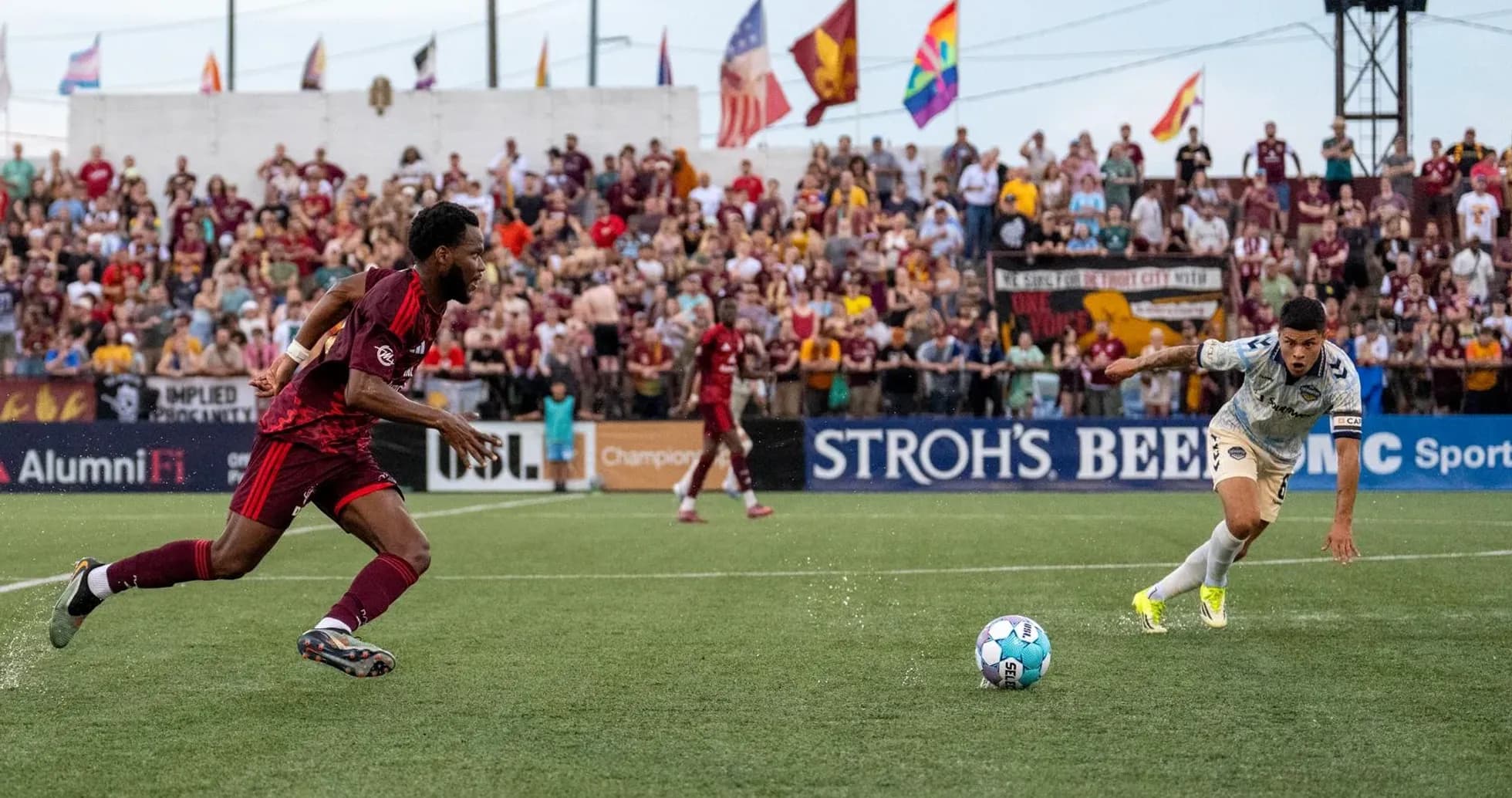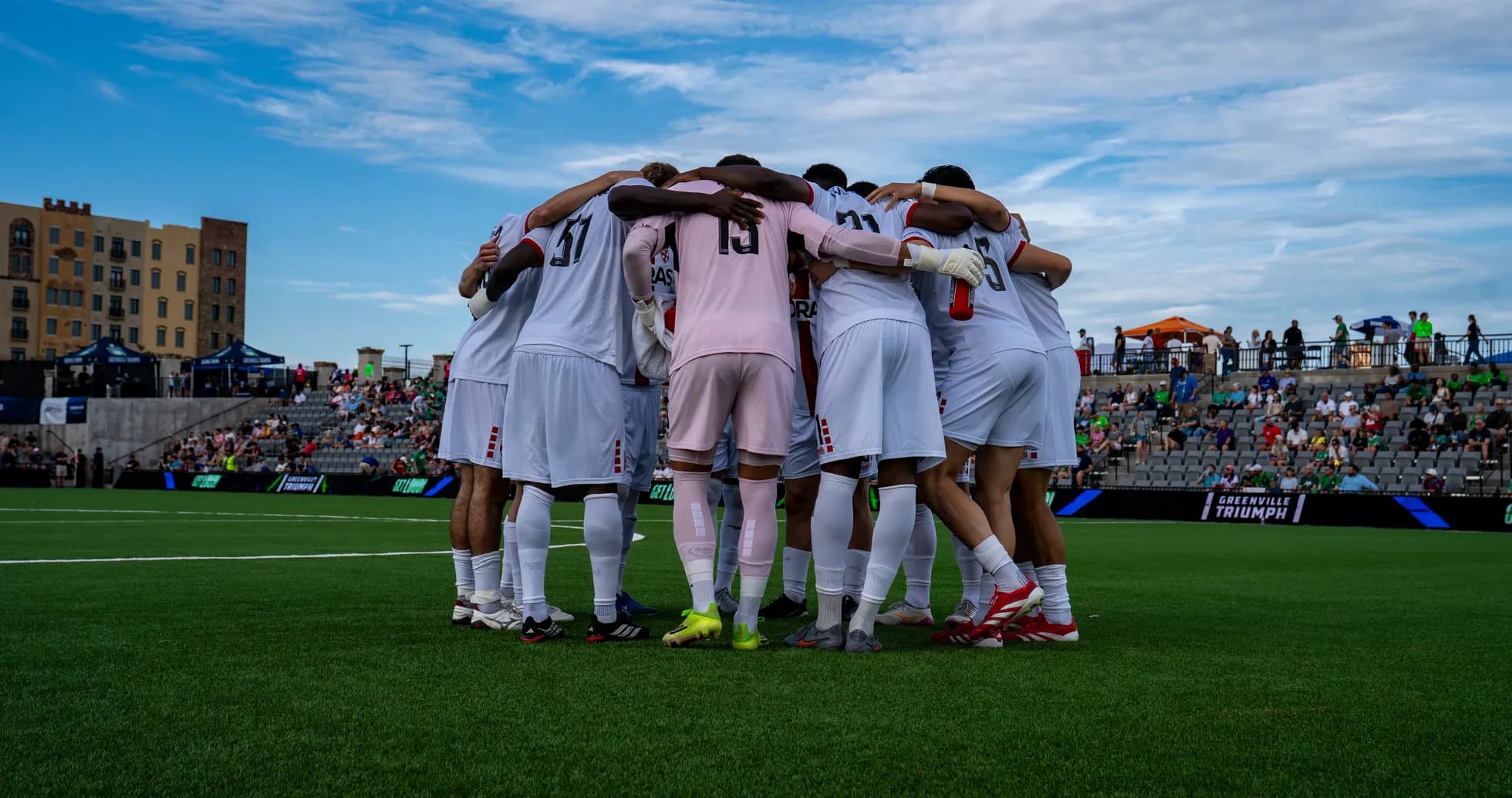
Greenville Triumph's Statement Victory Over Loudoun United
Under the lights at Paladin Stadium, Greenville Triumph’s 3–1 victory over Loudoun United felt less like a routine group-stage win and more like a statement about identity. Heading into this game, both sides carried identical overall goal differences of -1 in the USL Cup 2026, Group 6, but they arrived there by very different routes. Greenville had played 2 matches with 3 goals scored and 4 conceded overall, while Loudoun had navigated 3 fixtures, scoring 4 and conceding 5. On this night, the patterns beneath those numbers were thrown into sharp relief.
I. The Big Picture – Group Stakes and Structural DNA
In total this campaign, Greenville’s profile has been starkly split by venue. At home, they had played 1 match with a 3–1 scoreline in their favor, averaging 3.0 goals for and 1.0 against. Away, they had played 1, failed to score, and shipped 3.0 goals on their travels. This was a side built to be expansive at Paladin Stadium, fragile when they leave it.
Loudoun’s arc was more nuanced. Overall, across 3 matches they averaged 1.3 goals for and 1.7 against, with a stronger defensive record at home (1.0 conceded on average) and a far more porous look away (3.0 conceded on their travels). Their lone away outing before this had ended 3–1 against them, and the repeat of that scoreline in Greenville underlined a structural vulnerability when forced to defend space.
The 3–1 result tightened an already congested Group 6. Following this result, Greenville’s earlier -1 goal difference in the standings (3 for, 4 against) is clearly reshaped by this home win, and Loudoun’s own -1 margin (4 for, 5 against) now reflects another away concession-heavy performance. The group table snapshot provided shows Greenville ranked 5th and Loudoun 4th, both on 3 points, underscoring how fine the margins are in this cup run.
II. Tactical Voids and Discipline – Edges in the Margins
There were no listed absentees for either side, so both Dave Dixon and Anthony Limbrick effectively had full squads to select from. That meant Greenville could lean into the spine they trust: A. Knight between the posts; a defensive core built around B. Fricke, A. Patti and T. Polak; and a front unit led by the movement of W. Akio and the physical presence of A. Liadi. Loudoun countered with J. Farr in goal, a back line anchored by S. Mazzaferro and J. Erlandson, and a midfield axis of B. Akinyode and J. Murphy supporting the running of T. Ulfarsson.
Discipline has quietly been one of the defining subplots of both campaigns. Heading into this game, Greenville’s yellow-card profile was extreme: 75.00% of their cautions arrived in the 76–90 minute window, with the remaining 25.00% between 16–30 minutes. That late-game spike speaks to a side that defends aggressively to protect leads, or chases games with tactical fouls.
Loudoun’s card map is more evenly spread but still telling. They recorded 12.50% of yellows in 31–45, 37.50% between 46–60, 12.50% from 61–75, 25.00% from 76–90, and 12.50% in 91–105. Their second-half caution surge, particularly 46–60, hints at a team that often emerges from halftime needing to disrupt opponents’ momentum, perhaps because they struggle to control the tempo.
In a match that finished in regulation time, those tendencies likely reappeared: Greenville digging in late, Loudoun accumulating cards as they tried to claw their way back into the contest.
III. Key Matchups – Hunter vs Shield, and the Engine Room
Without official top-scorer data, the “Hunter vs Shield” duel is defined more by roles than raw tallies. For Greenville, the attacking thrust came from the pairing of W. Akio and A. Liadi, supported by the lines-breaking runs of C. Evans and the connective play of C. Herrera. At home, Greenville had already demonstrated a ruthless streak with 3 goals scored in their only prior Paladin outing; this 3–1 again showcased how their front line thrives when allowed to press high and combine in advanced areas.
The “Shield” on Loudoun’s side was a composite: the central defenders S. Mazzaferro and J. Erlandson, screened by the positional discipline of B. Akinyode. Heading into this game, Loudoun’s away defensive record of 3.0 goals conceded on their travels had already exposed a structural soft spot. Against a Greenville side averaging 3.0 goals at home, that matchup always looked precarious. The final 3–1 scoreline merely confirmed that the Hunter won the duel.
In the engine room, J. Murphy and J. Panayotou were tasked with dictating Loudoun’s tempo against Greenville’s central operators, notably C. Herrera and D. Boyce. The Triumph’s overall goals-against average of 2.0 this campaign suggests they are far from watertight, but at home they had only conceded 1.0 per match heading into this game. That implies the midfield screen and first line of pressure function much more coherently at Paladin Stadium, allowing defenders like B. Fricke and T. Polak to step into duels rather than constantly retreat.
On the flanks, players such as L. Meek and E. Lee for Greenville, and L. Piras and N. Adnan for Loudoun, formed the channels where this match’s territorial battle was fought. Greenville’s ability to pin Loudoun’s full-backs deep limited service into runners like R. Aman and T. Ulfarsson, forcing Loudoun to play more directly and making their attacks more predictable.
IV. Statistical Prognosis – What the Numbers Say About the Performance
Even without explicit xG figures, the season data sketches a clear expected-goals landscape. Greenville’s overall 1.5 goals-for average and 2.0 goals-against average before this fixture paint them as a high-variance side: they create enough to score multiple times, but they also leave gaps. Loudoun’s 1.3 goals-for and 1.7 goals-against overall suggest slightly lower attacking output and only marginally better defensive solidity.
At Paladin Stadium, those numbers tilt heavily toward Greenville. A home attack averaging 3.0 goals facing an away defense conceding 3.0 on their travels projects a high-scoring scenario weighted toward the hosts. The 3–1 outcome fits that projection almost too neatly: Greenville exploiting their home attacking ceiling, Loudoun once again hitting their away defensive floor.
Defensively, Greenville’s inability to keep a clean sheet at home (0 clean sheets in total this campaign) remains a concern, and Loudoun’s record of at least scoring in every venue (0 failed-to-score matches overall) held up. But the broader pattern is that Greenville’s attacking structure, when backed by the Paladin crowd, overwhelms the flaws in their own back line.
Following this result, the tactical story of Group 6 sharpens: Greenville Triumph are a home-powered side whose ceiling is defined by their forwards’ fluidity and late-game resilience, while Loudoun United must solve their away defensive puzzle if they are to turn respectable performances into points. On this night, the numbers and the narrative aligned, and the Triumph’s squad construction and tactical identity were vindicated over 90 uncompromising minutes.