Shamrock Rovers Triumph Over Egnatia Rrogozhinë in Tactical Showcase
Shamrock Rovers’ 3-1 win over Egnatia Rrogozhinë at Tallaght Stadium in the UEFA Europa League 3rd Qualifying Round was built on structural clarity and superior game management rather than overwhelming statistical dominance. With almost all quantitative metrics missing from the data set, the tactical story is written instead through formations, substitutions and the sequence of key events. Both sides lined up in mirrored 3-5-2 systems, but Rovers adapted better over 90 minutes, turning a 1-1 half-time scoreline into a controlled, two-goal victory.
Opening Phase
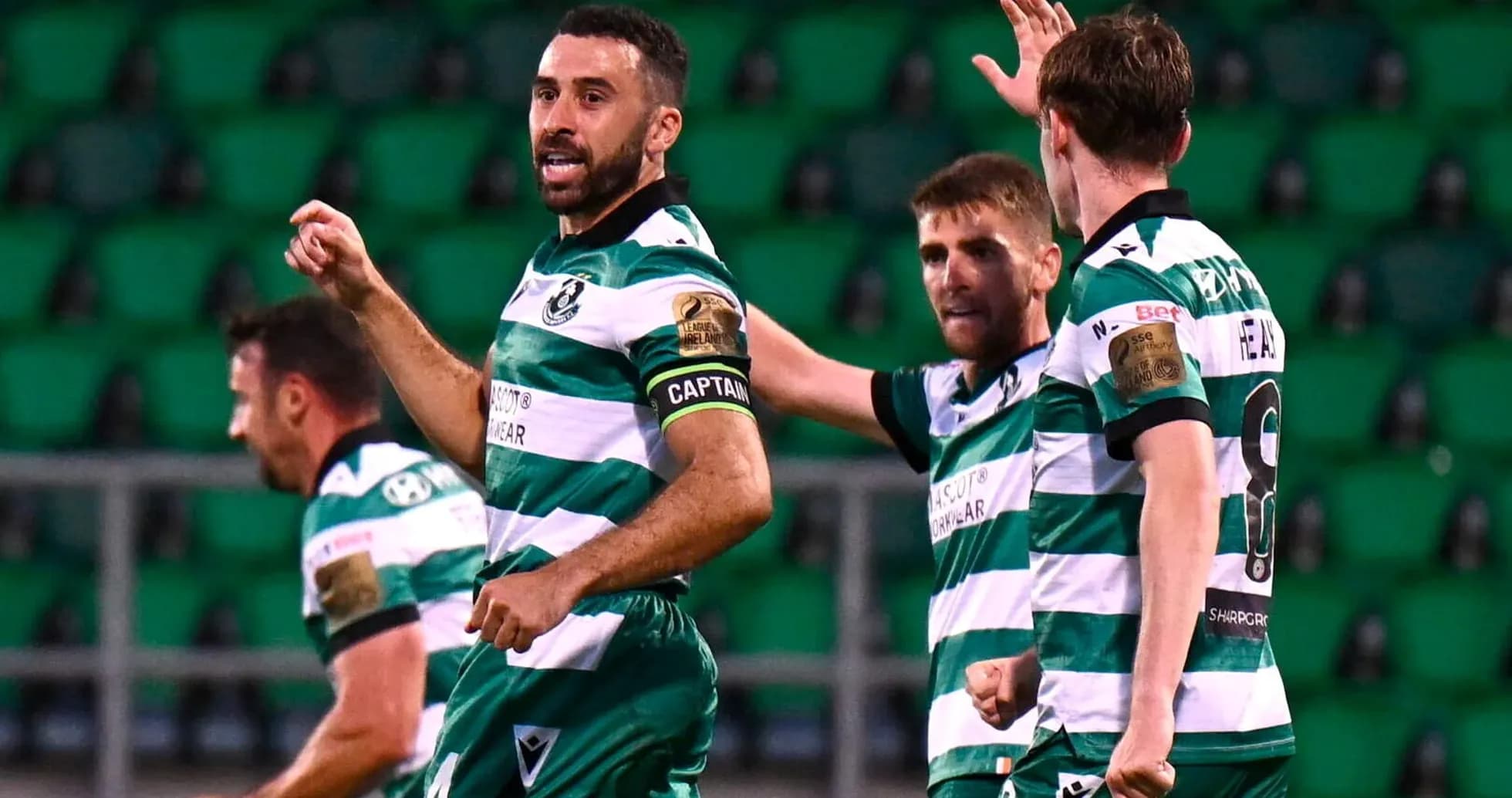
The opening phase reflected two different interpretations of the 3-5-2. Shamrock Rovers, under Stephen Bradley, used their back three of T. Sobowale, R. Lopes and E. Stevens as a stable platform to progress play through the lines. The five-man midfield – W. Fitzgerald, J. Byrne, M. Healy, D. Watts and A. Brennan – was clearly designed to overload central areas and half-spaces, with G. Burke and A. Greene working as flexible forwards rather than fixed penalty-box strikers. This structure paid off on 29 minutes when Burke converted a penalty, underlining Rovers’ intent to get their forwards between the lines and into contact situations inside the box.
Egnatia Rrogozhinë’s 3-5-2, set up by Nevil Dede, was more transitional. With G. Jaime and A. Yago operating from deeper wide roles and I. Gruda supporting from the second line, they looked to spring quickly once possession was regained. The chaotic spell around the 41st minute encapsulated their approach: first, Guillem Jaime missed a penalty, then immediately made amends with a normal goal to level the match. That rapid recovery highlighted Egnatia’s ability to commit numbers forward from wing-back and midfield when the game broke open, but it also exposed a reliance on moments rather than sustained territorial control.
Second Half
The second half was where the tactical levers were pulled decisively. At 46 minutes, both coaches reacted. For Shamrock Rovers, A. Brennan (OUT) for J. Mulraney (IN) rebalanced the midfield band, likely adding more direct running and 1v1 threat on the flanks. Dede responded with a triple change: I. Diabate (OUT) for A. Albanese (IN), I. Gruda (OUT) for K. Loukili (IN), and D. Adjessa (OUT) for J. Montenegro (IN). On paper, this was a shift towards more attacking profiles in the middle and front lines, suggesting Egnatia wanted to tilt the game in their favour early in the second half.
Instead, the reshaped Egnatia structure lost defensive cohesion. On 55 minutes, Rovers’ back-three and midfield balance paid off when centre-back R. Lopes scored from a move assisted by J. Byrne. That goal points to Rovers’ ability to use their defenders aggressively in attacking set-pieces or second-phase situations, with Byrne finding space to deliver from midfield. Just two minutes later, the match’s defining tactical blow arrived: an own goal by A. Yago at 57 minutes, credited to Shamrock Rovers, pushed the score to 3-1. For a team defending in a back five, such an error often stems from being pinned deep and forced into last-ditch interventions; it suggests Rovers were consistently asking questions with crosses or low deliveries into the danger area.
Bradley then moved into game-management mode. At 58 minutes, A. Greene (OUT) made way for J. Afolabi (IN), a like-for-like forward change that kept the front line fresh while maintaining the same structural reference points. The 69th-minute double substitution – G. Burke (OUT) for D. Mandroiu (IN) and D. Watts (OUT) for N. Razi (IN) – further underlined a controlled approach: rotate creative and central midfielders to preserve intensity in pressing and ball circulation without compromising the 3-5-2 shape. J. Byrne (OUT) for J. O’Sullivan (IN) at 77 minutes was the final adjustment, effectively refreshing the engine room to see out the result.
Egnatia's Changes
Egnatia’s later changes were more reactive. After the initial triple switch at 46 minutes, Dede replaced Z. Aliyev (OUT) with N. Ajetovikj (IN) on 69 minutes, and then A. Yago (OUT) with E. Ndreca (IN) at 81 minutes. Removing Yago after his own goal hints at a combination of tactical and psychological considerations: fresh legs at wing-back, but also a response to a decisive mistake. However, by that stage Rovers had already dropped into a more controlled block, with their back three and refreshed midfield compressing space and denying Egnatia clean entries into the final third.
Discipline
Discipline played a subtle tactical role. Egnatia collected two yellow cards, both for “Foul”: Ildi Gruda at 38 minutes and Alessandro Albanese at 47 minutes. Shamrock Rovers received one, to Dylan Watts at 60 minutes, also for “Foul”. The higher card count for Egnatia, particularly Albanese’s early booking just after coming on, constrained their ability to press aggressively from midfield without risking further sanctions. Rovers, by contrast, managed their single caution within an already favourable scoreline.
Goalkeeper statistics are not available, but the event pattern suggests that E. McGinty (Shamrock Rovers) had a relatively controlled second half after the first-period penalty drama, while M. Dajsinani (Egnatia Rrogozhinë) was repeatedly exposed by structural breakdowns in front of him, especially around set-pieces and crosses that led to Lopes’ goal and Yago’s own goal.
With possession, shots, xG and passing numbers absent, the tactical verdict rests on structure, timing of changes and score evolution. Shamrock Rovers used their 3-5-2 as a flexible, possession-capable and defensively solid platform, then managed the game with well-timed, like-for-like substitutions once they were ahead. Egnatia Rrogozhinë’s mirrored shape never achieved the same stability; aggressive half-time changes disrupted their balance, and the team oscillated between dangerous attacking bursts and fragile defensive phases. Over 90 minutes, the 3-1 scoreline reflects a home side that understood and executed its game model more coherently, especially once the match moved into its tactical phase after the interval.