Real Madrid's Late Victory Over Espanyol Masks Underlying Issues
Real Madrid walked out of Catalonia with three points and very few illusions. A 90th-minute strike from debutant Carlos Espí sealed a 2–1 win over Espanyol on Saturday night, rescuing José Mourinho’s second La Liga debut and papering over cracks that looked uncomfortably familiar.
For a brief spell, it all felt like the grand unveiling Madrid had been selling all summer.
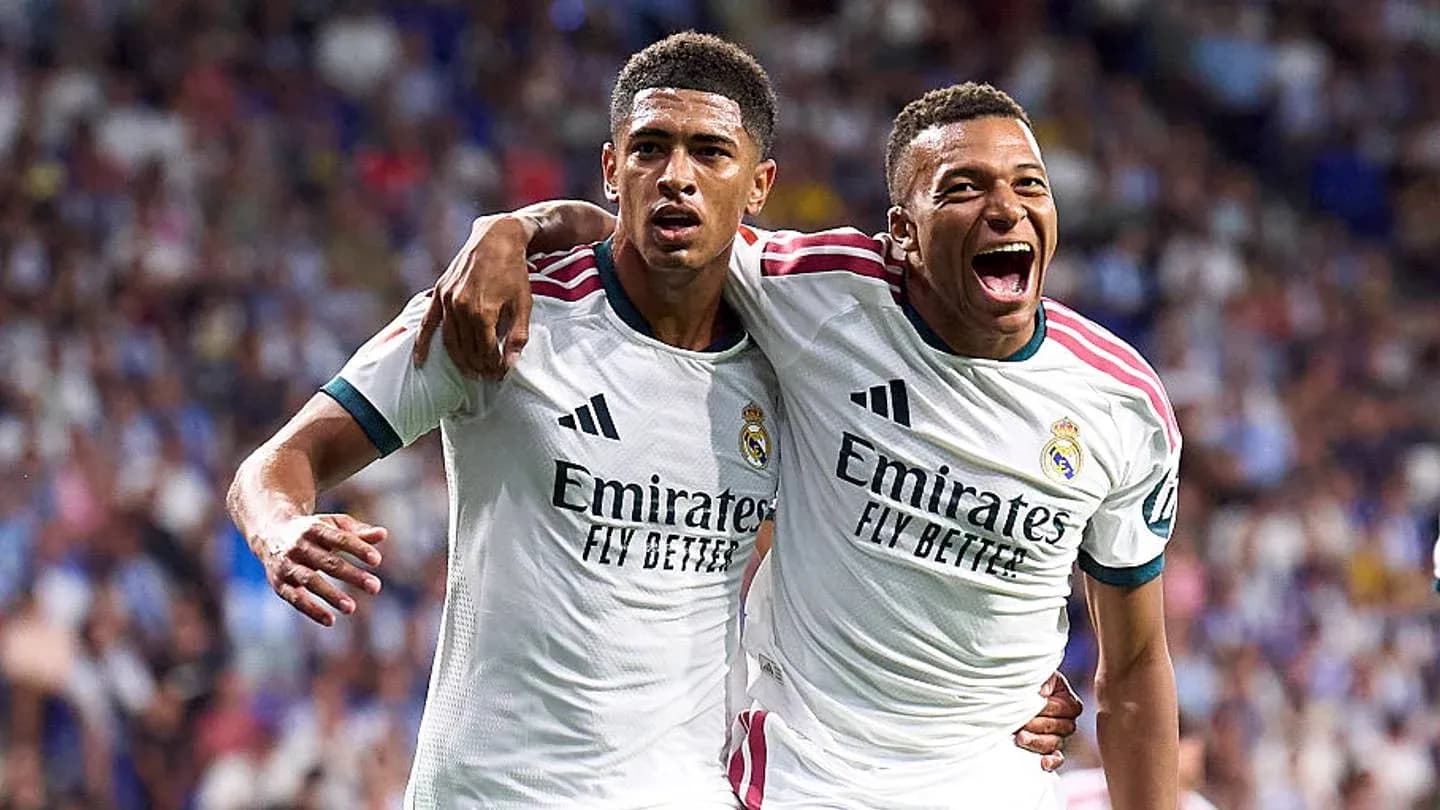
Nine minutes in, Arda Güler stood over a set piece and bent the game to his will. His delivery was vicious, curling into the perfect corridor for Jude Bellingham to attack. The Englishman rose, thumped his header past the goalkeeper, and Madrid’s new era appeared to be up and running. One ball, one run, one finish. Textbook.
Then the control seeped away.
Espanyol settled, dropped into a compact shape, and Madrid’s rhythm vanished. Passes slowed. Movements dulled. The visitors stopped turning the screw and started passing in front of a wall. The warning signs were obvious; the response was not.
On the half-hour, Madrid paid for it. Álex Calatrava ghosted into the box while Federico Valverde stood rooted, barking instructions instead of tracking the danger. The Espanyol midfielder met the ball and beat Thibaut Courtois, who again found himself exposed by those in front of him. Level at 1–1, the stadium roared. Madrid shrank.
Halftime brought the image of a Mourinho dressing-room reset. The pitch brought nothing of the sort.
Madrid’s possession grew, but their ideas didn’t. Espanyol dropped deeper, the block grew denser, and the pattern that has dogged this side for two seasons reappeared: sterile domination, hopeful crosses, and a reliance on individual brilliance that never quite materialized.
Vinícius Júnior, battered from the first whistle, kept driving at his full-back but found predictable cul-de-sacs. Espanyol read his feints, doubled up on him, and watched him end the night without a shot on target or a single chance created. Kylian Mbappé, frustrated, drifted to the right wing in search of involvement, carved out a few half-openings, then missed the kind of chance that usually defines his highlight reels — a free header, gaping goal, ball wide. The gasp from the away end said everything.
Behind them, the midfield offered little incision. Bernardo Silva was neat, occasionally dictating tempo, but never truly piercing the lines. Valverde, already guilty on the equalizer, struggled to impose himself with or without the ball. Crosses began to rain in from all angles, many of them aimless. The clock ticked. The tension rose. The pattern felt depressingly familiar.
The irony of Mourinho’s selection choices only added to the sense of unease. He had opted for Denzel Dumfries over Trent Alexander-Arnold, chasing defensive security on the right. Instead, Dumfries pushed too high, needed Ibrahima Konaté to bail him out repeatedly, and was beaten down his flank in the move that led to Espanyol’s goal. The attacking threat he was meant to sacrifice for solidity never truly arrived either, forcing Mbappé to occupy the space the Dutchman couldn’t exploit.
And yet, within the gloom, two bright lights refused to dim.
Güler, operating from the right, was Madrid’s purest source of creativity. Every time he found space, he lifted his head and looked to hurt Espanyol, threading passes and dead balls with purpose. His assist for Bellingham was no accident; it was the natural extension of a night in which he looked like the most inventive player on the pitch. His withdrawal just past the hour mark felt harsh, even if the legs around him needed freshening.
Bellingham, too, carried his summer form straight into club colours. Beyond his goal, he made relentless runs from deep, drove at defenders, and added a swagger that Madrid desperately needed between the lines. His work without the ball — pressing, harrying, offering himself as an outlet — underlined why he will be central to whatever this team becomes under Mourinho.
The problem is what surrounds them.
Valverde and Bernardo Silva, the supposed engine and metronome, left the game drifting instead of dominated. When the pressure came, it came from individuals, not from a collective plan. When Madrid needed composure and structure, they got hope and habit.
Mourinho turned to his bench. Yan Diomande arrived and swung in some useful balls, even starting the sequence that would decide the match. Marc Cucurella came on to steady the left and begin the process of building a relationship with Vinícius Jr. Trent Alexander-Arnold and Eduardo Camavinga were given late cameos — the former without time to change much, the latter without misplacing a single pass.
Then came Espí.
Introduced on 80 minutes for Bellingham, the young forward stepped into a game choking on its own anxiety. Mbappé, having already missed his big moment, finally carved out space in the dying seconds, driving at a stretched Espanyol back line. The move unfolded with the clarity Madrid had been missing all half. The ball broke for Espí, and on his debut, in the 90th minute, he buried it. No fuss. No hesitation. Just a clean, decisive finish to snatch a win Madrid had done little to deserve.
The away end erupted. Mourinho clenched three points from a game that threatened to expose his new project from day one.
The numbers behind the performance underline the story. Konaté impressed on debut, using his physicality and aerial dominance to clean up danger, even if his positioning still needs fine-tuning. Dean Huijsen showed his range with five passes into the final third and a rugged defensive display that left him bloodied but reliable. Álvaro Carreras, after a shaky previous season, avoided major errors and linked well with the midfield before making way.
Dumfries, though, embodied the tactical contradiction: chosen for security, beaten for the goal, and underwhelming in the final third. Valverde, rated highly for his overall contribution, still carries the stain of his lapse on Calatrava’s strike and his inability to truly seize control. Bernardo Silva’s tidy numbers couldn’t mask his inconsistency in the duels that mattered, winning just two of nine.
Notably absent from the problem column: Güler and Bellingham. They were the heartbeat of everything positive Madrid produced. Their blend of creativity and intensity hinted at a partnership that could define this side if given the right structure around it.
Espí’s late heroics mean Mourinho starts his second spell in Madrid with a win, and that matters. Openers can set tones, and points in August count the same as points in May.
But the soundtrack to this victory was not celebration; it was alarm. The same low-block paralysis. The same dependence on individual genius. The same midfield uncertainty. Vinícius and Mbappé, the supposed twin superstars, rarely on the same wavelength. A right-back dilemma unresolved. A title challenge that still looks theoretical.
Real Madrid escaped Barcelona’s shadow on the night. The question is whether this version of Mourinho’s team can escape it over a season.