Qarabag vs CSKA Sofia: Tactical Analysis of a Goalless UEFA Europa League Clash
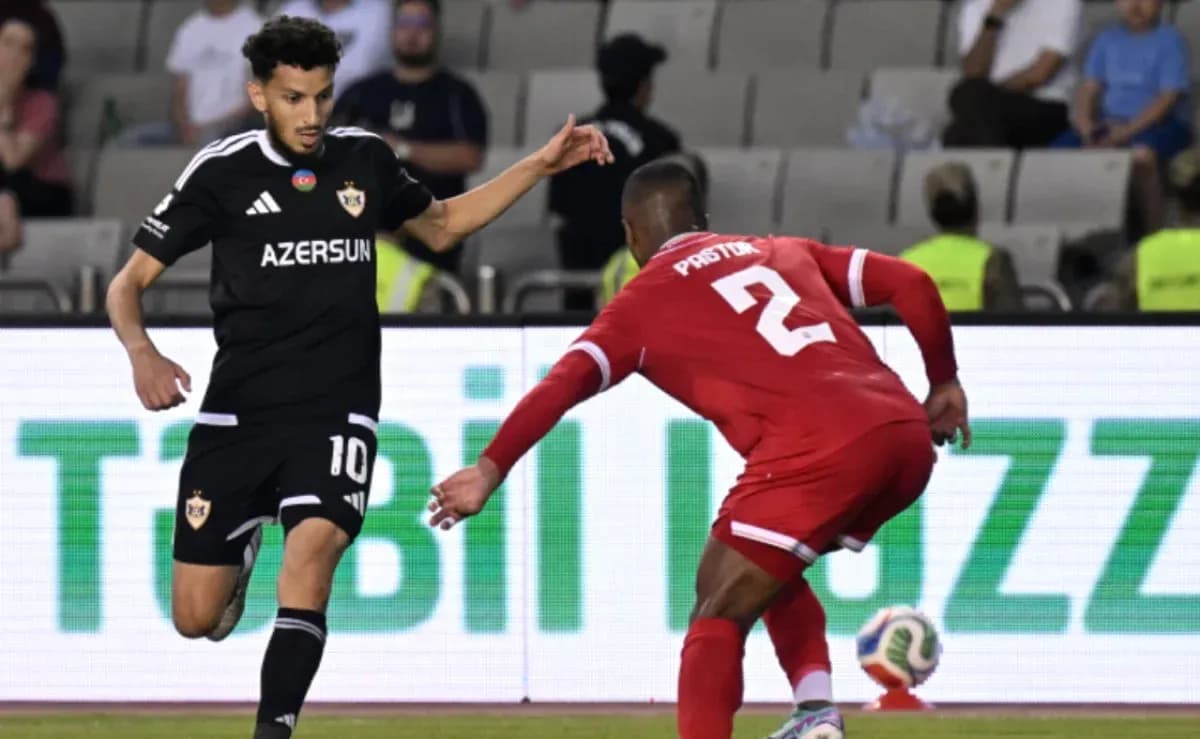
Qarabag and CSKA Sofia produced a goalless but tactically rich first leg at Azərsun Arena in the UEFA Europa League 2nd Qualifying Round, a match defined by structure, risk control and the mutual refusal to over-commit. Across 90 minutes, the sides split 23 shots almost evenly (12–11 to Qarabag), with CSKA Sofia edging possession 52–48 and carrying a slightly more controlled rhythm. Yet Qarabag generated more shots on goal (5–4) and far more corners (8–2), illustrating a home side that, within Qurban Qurbanov’s framework, pushed the territorial edge without ever fully breaking the Bulgarian block.
Qarabag set up in a 4-2-3-1 that, in practice, tilted heavily towards the left and central half-spaces. With M. Kochalski in goal behind a back four of Matheus Silva, B. Huseynov, B. Varkonyi and B. Langa, the Azeri champions built through the double pivot of Pedro Bicalho and M. Janković. Their job was twofold: draw out CSKA’s first line of pressure, then find the advanced trio of O. Kashchuk, Kady Borges and A. Zoubir between the lines, with Z. Sawo stretching the last line as a lone forward.
Early on, Qarabag’s structure gave them repeated access to the inside channels. Janković dropped close to the centre-backs to create a three-man first line, while Bicalho held a central anchor role, allowing the full-backs—particularly Matheus Silva on the right—to advance and provide width. This positional play forced CSKA’s wide midfielders to make constant decisions between pressing the ball-carrier or protecting the half-space, and it underpinned Qarabag’s superiority in corners: eight set-piece opportunities, many generated by forced clearances from those wide zones.
CSKA Sofia, in Hristo Yanev’s 4-4-2, accepted a lower share of the ball but not a reactive identity. With F. Lapoukhov in goal, a back four of Pastor, F. Rodríguez, T. Ivanov and A. Martino stayed compact, while the midfield line of M. Ebong, J. Gbamin, B. Jordao and S. Sensi focused on horizontal compactness rather than aggressive pressing. Up front, L. Godoy and I. Pittas worked as a classic split strike partnership: Godoy drifting into channels, Pittas pinning centre-backs. This shape allowed CSKA to keep their lines tight and force Qarabag into circulation in front of them.
The possession split—52% to CSKA—came less from high pressing and more from their ability to stabilise the ball once they did win it. Gbamin’s presence as a defensive midfielder in the nominal “3” line of the 4-4-2 was crucial: he frequently dropped to form a situational back three in build-up, giving the full-backs license to step higher and helping CSKA progress under moderate Qarabag pressure. When they crossed halfway, CSKA were more selective than expansive, but they still produced 11 total shots, almost matching Qarabag’s volume.
Despite that, Qarabag’s attacking pattern was more consistent. The 5 shots on goal to CSKA’s 4 reflect how often Kady Borges and Zoubir managed to slip Sawo or late runners into finishing positions. The Azeri side’s best moments came when the three attacking midfielders rotated: Zoubir drifting centrally, Kady dropping to link, and Kashchuk tucking inside to overload the right half-space. Those rotations, combined with full-back overlaps, generated several of the eight corners and sustained pressure phases.
The match’s discipline profile was low but telling. CSKA collected two yellow cards—Leandro Godoy on 35' and Facundo Rodríguez on 77'—with Marko Janković booked for Qarabag on 37'. The timing of the cautions, especially for Godoy and Janković before half-time, subtly influenced how aggressively both could defend transitions thereafter. Godoy, in particular, had to temper his pressing and duels, which may partly explain CSKA’s more conservative approach out of possession as the game wore on.
Qurbanov’s substitution pattern from 56' onward signalled a desire to raise the attacking ceiling without destabilising the rest defence. At 56', R. Cephas (IN) came on for M. Janković (OUT), shifting some creative responsibility higher up the pitch and effectively moving Qarabag towards a more vertical attacking structure. Simultaneously, E. Cafarquliyev (IN) replaced B. Langa (OUT), refreshing the left side and adding more thrust from deep. Later, at 74', J. Mouaddib (IN) for O. Kashchuk (OUT) and C. Makreckis (IN) for B. Huseynov (OUT) further increased energy and ball-carrying in midfield and defence, while at 78' J. Montiel (IN) for A. Zoubir (OUT) injected fresh playmaking legs between the lines.
Yanev’s response was more about preserving structure and legs than changing the game’s geometry. At 73', J. Zwarts (IN) for L. Godoy (OUT) and I. Solet (IN) for M. Ebong (OUT) re-energised the front line and right side of midfield without altering the 4-4-2 base. T. Ouorou (IN) for A. Martino (OUT) at 84' freshened the left-back slot, while late changes at 90+1'—M. Brahimi (IN) for Pastor (OUT) and P. Panayotov (IN) for S. Sensi (OUT)—were more about managing fatigue and securing the draw than chasing a winner.
Statistically, the game underlined a balance between Qarabag’s territorial and chance creation edge and CSKA’s control of tempo. Qarabag’s 12 total shots to CSKA’s 11 and 5 shots on goal to 4 show a marginal attacking advantage, reinforced by the 8–2 corner count that reflects sustained pressure in the Bulgarian third. Yet CSKA’s 52% share of the ball speaks to their ability to calm the game and deny Qarabag the kind of chaotic, transition-heavy script that often favours the home side in qualifiers.
Neither team recorded blocked shots, suggesting that most attempts either missed the target or forced the goalkeepers into straightforward work rather than desperate last-ditch defending. With no red cards and only three yellows, both coaches kept their teams within a disciplined, game-management framework befitting a two-legged tie.
In tactical terms, Qarabag leave Azərsun Arena with the sense that their 4-2-3-1 can consistently stress CSKA’s back line, especially via rotations in the three behind the striker and through set plays. CSKA, meanwhile, demonstrated that their 4-4-2 can absorb that pressure, control phases of possession, and still generate enough shots to be dangerous. The second leg will likely hinge on whether Qarabag can convert their territorial and set-piece edge into goals, or whether CSKA’s slightly higher possession and structural discipline can tilt a similarly tight contest in their favour.