Premier League Triumphs: Arsenal's Title and English Football's Dilemma
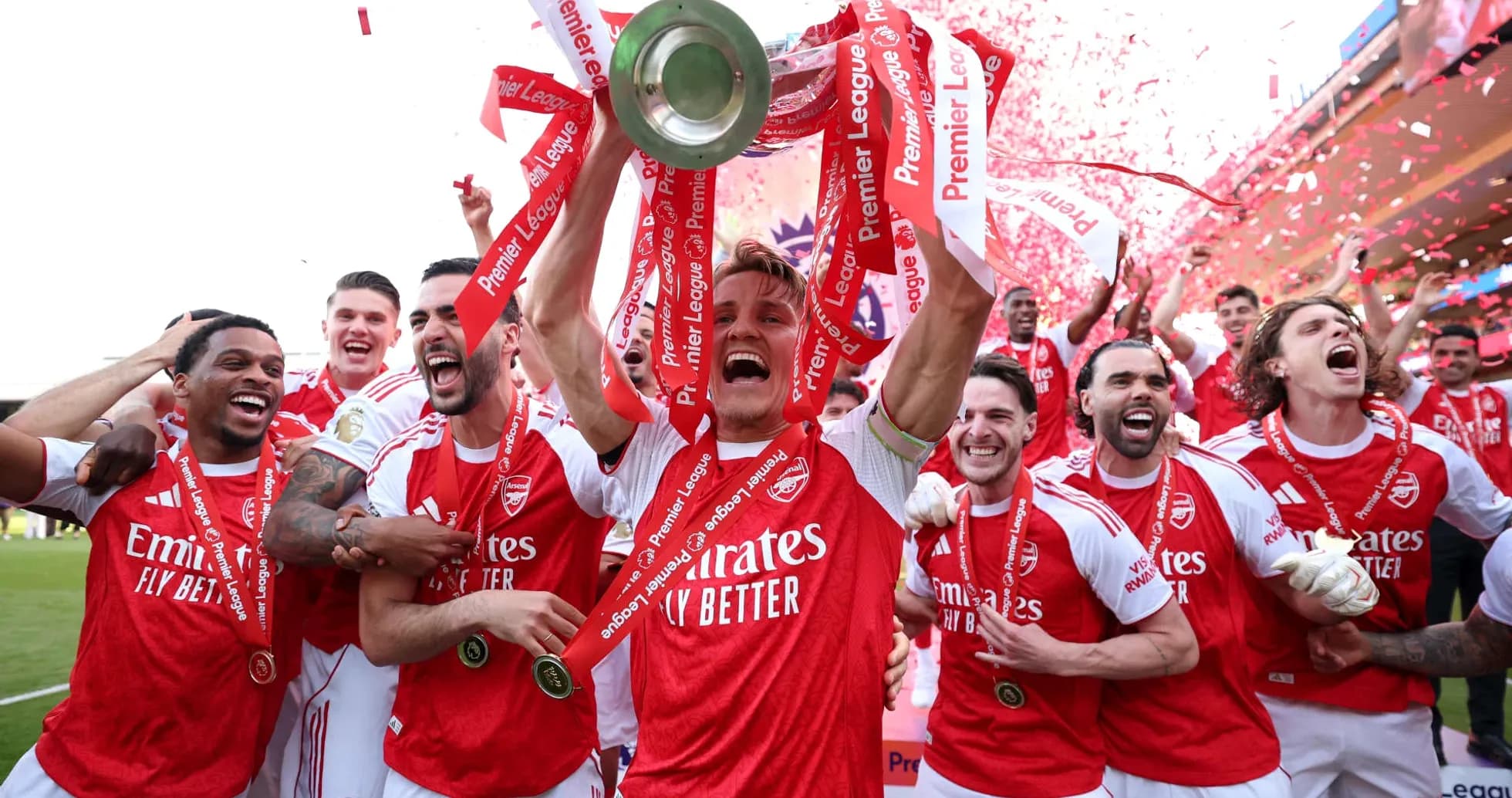
Martin Odegaard hoisted the Premier League trophy into the south London sky and, for a moment, English football looked untouchable.
Arsenal’s captain stood on the Selhurst Park turf on May 24, drenched in red and white, as a 22-year wait for a league title finally snapped. Their 14th championship, and their first since the days of the Invincibles, completed a three‑season carousel at the top: Manchester City in 2023-24, Liverpool in 2024-25, Arsenal now. Three different champions in three years. A league that sells itself on jeopardy and delivers it.
Set that against the rest of Europe and the contrast is stark. Spain, the next wealthiest domestic competition, has long been locked in a two‑horse race. Barcelona and Real Madrid have claimed 20 of the last 22 titles, a duopoly in all but name. In Germany, Bayern Munich have turned the Bundesliga into a private fiefdom, lifting the trophy in 13 of the last 14 seasons. In France, Paris Saint‑Germain have taken eight of the last nine Ligue 1 crowns.
Only Serie A can look the Premier League in the eye on competitive balance. Juventus, Inter Milan, AC Milan and Napoli have shared Italy’s last seven titles, a rotation that at least hints at variety. On the pitch and on paper, England sits where it wants to be: at the centre of the club game.
The European stage underlines that dominance. Only a penalty shootout defeat for Arsenal against PSG in last Saturday’s Champions League final stopped an English clean sweep of UEFA’s major competitions. Aston Villa and Crystal Palace had already banked the Europa League and Europa Conference League. Chelsea remain the holders of FIFA’s Club World Cup. English clubs are not just rich; they are winning.
The money explains plenty. The Premier League’s broadcast deals, domestic and international, dwarf those of any rival competition. The cash pours in from every corner of the globe. Deloitte’s latest list of the world’s 30 richest clubs by revenue is littered with English names. Half the places belong to Premier League sides, including relative newcomers to the elite financial bracket such as AFC Bournemouth, Brentford and Brighton & Hove Albion.
Scratch the surface, though, and the picture blurs.
A growing number of England’s best players no longer work in England. The national captain, Harry Kane, leads that exodus. After Anthony Gordon’s move from Newcastle United to Barcelona last week, six members of England’s squad for the forthcoming World Cup now play for foreign clubs. This is no longer the odd star taking a glamorous posting abroad; it is a noticeable slice of the talent pool heading out.
Martin Samuel, writing in The Times, captured the unease. Once, an English player heading to Real Madrid or AC Milan felt like a badge of honour for the domestic game. Now, with almost a quarter of the squad overseas, it feels different. It looks like a drain, and as Samuel pointed out, the concern deepens when the same calibre of player is not consistently flowing back the other way.
The finances are just as jarring. Premier League clubs may boast huge revenues, but profitability is scarce. Only four sides — Newcastle, Villa, Bournemouth and Liverpool — actually made money in the most recent season for which accounts are available. The rest leaned heavily on owner funding, creative accounting or both.
Drop below the top flight and the strain becomes brutal. A string of clubs have gone into administration in recent years, including storied names like Derby County and Sheffield Wednesday. History offers no protection from a broken balance sheet.
To stay on the right side of financial fair play rules, some owners resort to manoeuvres that would make a tax lawyer blush: sale-and-leaseback deals on stadiums and training grounds, one‑off boosts that tidy up the books without fixing the underlying model. The regulations are designed to prevent a handful of super‑wealthy backers, including sovereign wealth funds, from inflating transfer fees and wages to unsustainable levels. In reality, they often push clubs towards short‑term fixes and long‑term risk.
And those super‑rich owners the league has grown used to? They may not be as plentiful in the next cycle.
This season offered a sharp reminder of why. Tottenham Hotspur, one of the six Premier League clubs that flirted with the breakaway European Super League in 2021 before a furious supporter backlash killed it, only just avoided relegation. A club that sees itself as a permanent member of the elite spent the spring staring into the abyss.
West Ham United did not escape. The Premier League’s eighth‑longest serving club, 20th in Deloitte’s Money League, went down. A team with that level of revenue and history, still falling through the trapdoor, sends a chill through boardrooms.
For American investors in particular, used to closed leagues with no relegation and guaranteed fixtures, the sight is sobering. They see the upside — global reach, booming media rights, worldwide fanbases — but they also see West Ham disappearing into the Championship and Tottenham flirting with the same fate. The risk profile shifts.
Samuel noted that Liverpool, Manchester United, Palace, Chelsea and Newcastle are, “in one way or another, all for sale.” This is not a handful of distressed assets; these are some of the most recognisable names in world sport. Prospective buyers will study West Ham’s fall and Tottenham’s brush with disaster and, as Samuel put it, shiver.
You suspect the Premier League’s powerbrokers did exactly that.
The trophy in Odegaard’s hands told one story: drama, jeopardy, a league that can still produce new champions. The numbers behind it tell another: thin profit margins, fragile ownership models, and a talent pipeline that increasingly runs out of the country.
The question now is not whether English football can keep winning. It is whether the structure propping up all that success can hold under its own weight.