Pochettino's Journey: From Gold Cup Heartbreak to World Cup Triumph
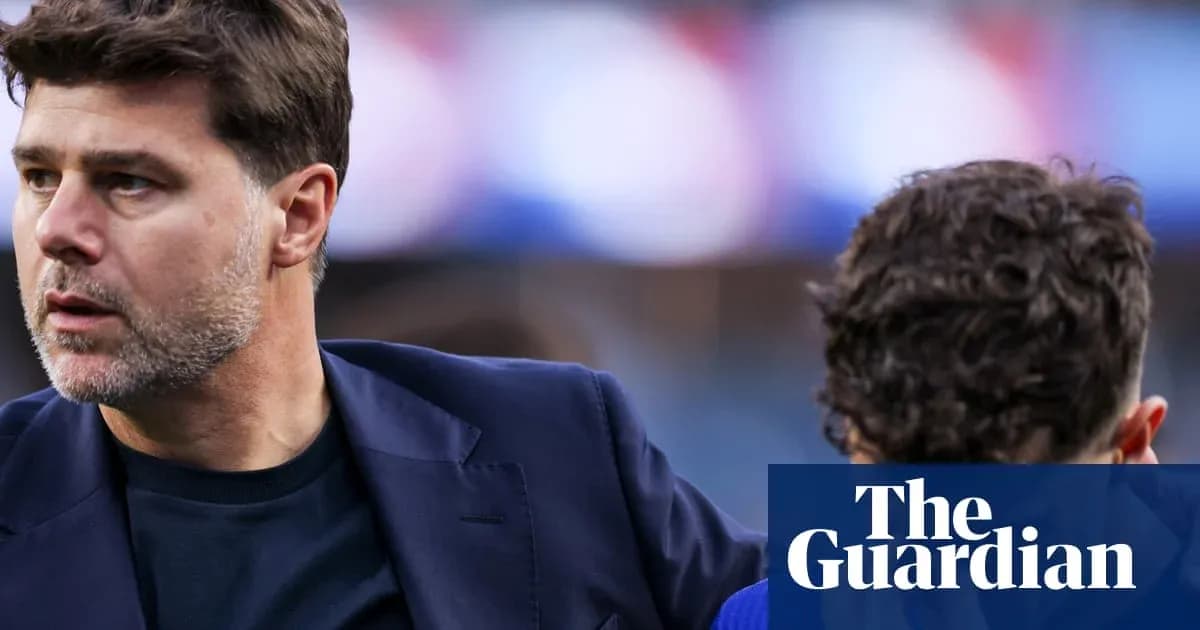
Mauricio Pochettino stood on the touchline in Houston with tears in his eyes. His United States team had just lost the 2025 Gold Cup final to Mexico, the old enemy, in a match meant to crown a regional king. The scoreboard hurt. The stands hurt more.
This was supposed to be home. Instead, the stadium roared for Mexico.
It felt, as Pochettino would later admit, like walking into Tottenham on derby day and finding the place packed with Arsenal shirts. A year out from a home World Cup, the Argentine was hit with a jarring truth: his players were fighting not only opponents, but their own place in the American sporting food chain.
“Being honest, maybe we didn’t feel or see how difficult the process would be… We were so naive,” he said this week. “We misjudged the situation. It was worse than we really believed. When we arrived here, we received a big bang, punch, and we were knocked out for a while. We said: ‘What the fuck?’”
That “punch” had landed months before the Gold Cup heartbreak. It was only the first in a series of blows that would reshape this team.
Today, with the 2026 World Cup underway, those bruises look like the foundations of something far more formidable. Two games, two wins, a 6-1 aggregate score, and top spot in Group D already sealed. The US have become one of the tournament’s must-watch sides, playing in front of raucous, partisan crowds that Pochettino and his players say are driving them forward.
This is the high-water mark of his tenure. It arrived the hard way.
The crash in an empty stadium
The first warning sign came in March 2025. On paper, the Concacaf Nations League semi-final against Panama looked like a familiar stepping stone: win, then face Mexico or Canada in yet another regional final. The US had dominated the competition since its launch in 2019-20, lifting the first three editions.
This time, they did not even reach the final.
Panama, organized and burning with intent, frustrated the US and then pounced on a lapse to score with just their third shot. It was another entry in a growing pattern: a fourth Panama win in six meetings, after the 2023 Gold Cup semi-final and a 2024 Copa América group game.
The defeat stung. The setting left a deeper mark.
“It was empty,” Pochettino recalled. “You remember the game, Panama? It was the Mexican people in the stands because they played after us.”
The US were playing a competitive semi-final in front of a crowd largely waiting for the next act. For a program that once routinely brushed Panama aside — a 17-4-2 record as of mid-2021 — it was a “good crash,” as Pochettino put it, a brutal but useful collision with reality.
“When people say, ‘Yeah, but you have bad results.’ Yeah, yeah: bad results. No worries,” he said. “We know what we are going to do. When we detect all the problems, we go for the solution. And we knew that the solution would arrive.”
One of those problems, in his eyes, was cultural. The group had grown comfortable.
Drawing a line: all-in or stay home
So when Christian Pulisic approached Pochettino about skipping the Gold Cup but joining the squad for the friendlies against Turkey and Switzerland, the answer was no. Pochettino wanted one group, together from day one of camp through the end of the tournament. No half-measures. The same principle later applied to his World Cup roster.
That refusal triggered a back-and-forth between star player and head coach. Defeats in those pre-Gold Cup friendlies cranked up the external pressure. Inside the camp, though, the message was clear: you’re either all-in, or you’re watching on TV.
The Gold Cup, stripped of some established names, became a laboratory. It also became a launchpad.
- Malik Tillman finally stepped into the role of chief playmaker.
- Matt Freese seized the No 1 shirt and then outlasted Keylor Navas in a shootout.
- Alex Freeman emerged as a young full-back Pochettino could no longer drop.
- Sebastian Berhalter played his way into the midfield rotation.
Pochettino himself changed. International football, he found, felt less like sporadic windows and more like a compressed club season when you’re locked in with the same group for a month. He could drill details, refine patterns, and build the game model he wanted day after day.
They still lost the final to Mexico. The coach still fought back tears. But inside the dressing room, his message was not about tactics or missed chances.
“Keep improving, but please don’t change,” he told them, still thinking about the hostile stands they had just walked through.
A few days earlier, he had sat in Columbus watching Ohio State face Texas in front of 70,000 fans at a college football game.
“There were 70,000 fans there,” he said. “And my question was, you know, why not? If the fans are very passionate, why not with us, with soccer? Because if the support is with us, they will be and show the same passion. It’s massive. It’s so powerful for the player.”
Out of that frustration came a mantra: “Why not us?”
Showtime takes shape
The phrase wasn’t just a slogan. It came with a change in how the US played.
When Pulisic and other long-serving figures returned in September, Pochettino rolled out what would become his base structure: a fluid, morphing side built on constant off-ball movement, rapid switches of play and a refusal to back away from gaps when they appeared.
It looked like a team intent on unsettling opponents, not just containing them. It looked, at times, like showtime.
Results followed. A 2-0 win over Japan in September. A draw with Ecuador and a win over Australia in October. Then a November window that lifted the mood again: victory over Paraguay and a 5-1 demolition of Uruguay to close 2025 on a surge of optimism.
The third lesson was waiting around the corner.
Europe hits back
March brought Belgium and Portugal, and with them, a harsh reminder of the level the US still had to reach. Across two games, the US lost by a combined 7-2. The scorelines were bad enough. The manner of the defeats cut deeper.
The defense looked stretched and uncertain. Against Belgium, Pochettino even reverted to an older, more vulnerable structure. Up front, Pulisic, mired in the worst goal drought of his career, started at center-forward against Portugal but made little impact.
Inside the camp, the players insisted they remained on the right path.
“I feel like we’ve always bought in,” defender Chris Richards said this week. “But I really feel like the March camp that we had was really important. I think we really gave, you know, two really good teams in Europe a really strong game.”
Pochettino stood his ground, even as he acknowledged the gulf in individual pedigree.
“Belgium and Portugal have, in the top 100 players, a few or some players in that top 100,” he said. “I think we don’t have any.”
Outside, the familiar pessimism swelled again. This, many felt, was the USMNT they knew too well: capable of the occasional headline result, then tumbling back to earth, just as likely to stumble against a minnow as to be overrun by a powerhouse.
The schedule didn’t ease the anxiety. Senegal and Germany were lined up as pre-World Cup opponents. Some wondered whether the federation and coach would regret it.
Pochettino didn’t blink.
“No,” he said. “That is good for us. It’s going to measure our level.”
A home World Cup, a different US
The tests sharpened them. A 3-2 win over Senegal showed resilience and attacking bite. A 2-1 defeat to Germany still carried signs of a team rounding into form at just the right time.
Then the World Cup began, and the narrative flipped.
A ruthless 4-1 dismantling of Paraguay. A controlled 2-0 win over Australia. And then, on Thursday, a dead-rubber against Turkey with the US already confirmed as Group D winners and Turkey already eliminated. A luxury fixture, of sorts, earned by doing the hard work early.
Only four teams at this World Cup wrapped up their groups after two games. Argentina and Germany, giants of the men’s game. Mexico, backed by their famously fervent support and used to playing at altitude in hostile venues. And Pochettino’s United States.
The contrast with that empty Nations League semi-final and that Gold Cup final in a hostile “home” crowd could hardly be sharper. The stands now crackle with American voices. The team that once felt like an afterthought in its own country now rides a wave of noise and belief.
Mark McKenzie, another defender shaped by this journey, framed it simply.
“It’s not going to be figured out overnight, it’s not going to be figured out in one camp, or sometimes in six months, or 12 months, maybe not as fast as everybody wanted,” he said. “I think we’re showcasing that it’s a process.”
The process has already delivered the loudest nights this program has known on home soil. The real question now is whether those tears in Houston were the end of something — or just the start of a team finally ready to own its stage.