Plzen vs FK Crvena Zvezda: UEFA Europa League Play-offs Showdown
Plzen host FK Crvena Zvezda at Doosan Arena in a UEFA Europa League Play-offs second leg that is season-defining for both clubs: with the tie already shaped by the first meeting, this match will determine who advances towards the main Europa League phase and secures vital European revenue and prestige.
Head-to-Head Tactical Summary
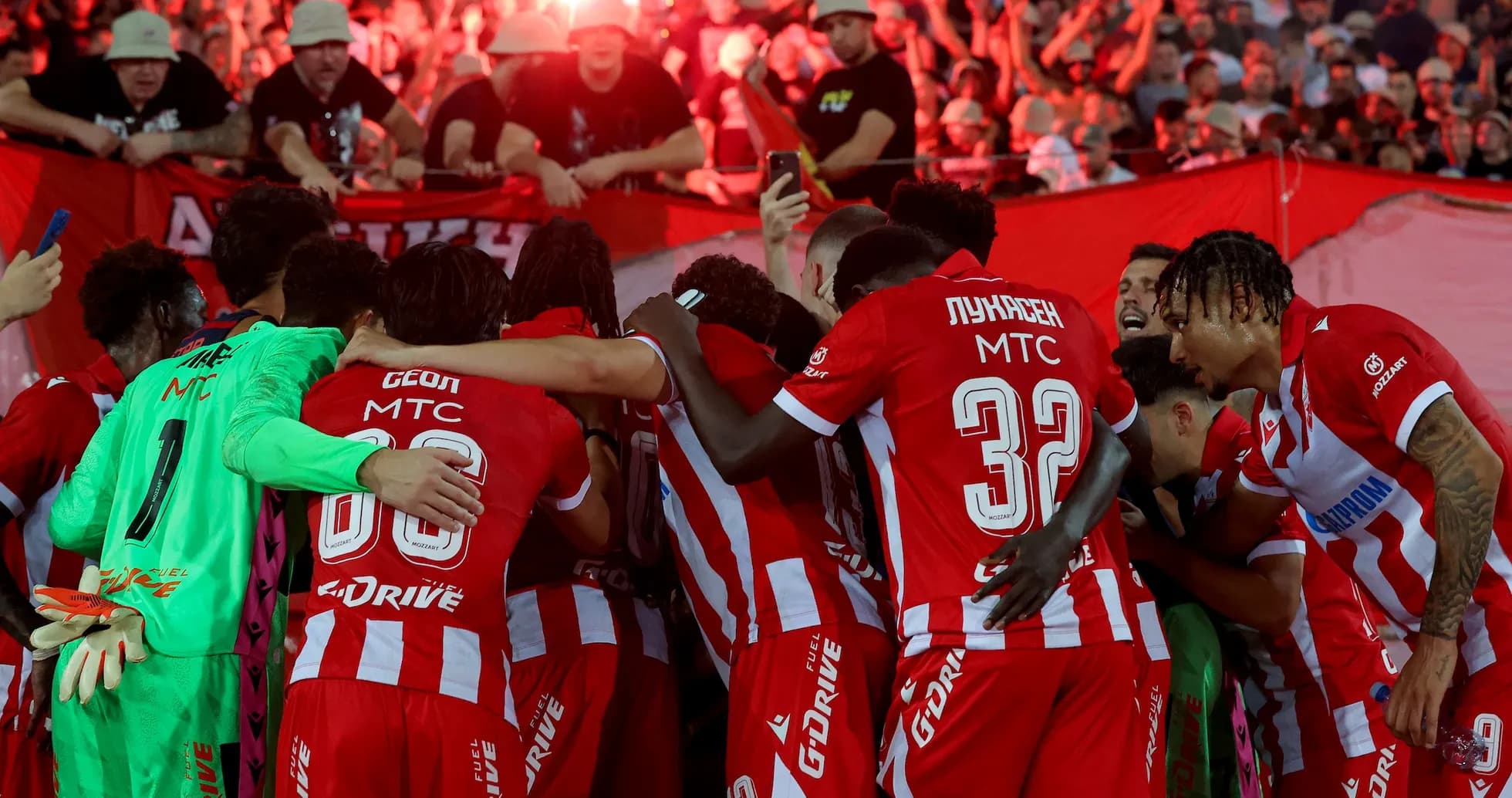
The only recent meeting in the data came on 20 August 2026 at Stadium Rajko Mitić in Belgrade, where FK Crvena Zvezda, as the home side, beat Plzen 3–0 in the Europa League Play-offs. The half-time score was 1–0 before Crvena Zvezda extended their lead in the second half. That result sets a clear tactical reference point: Crvena Zvezda have already shown they can control the tie at home, leaving Plzen needing a major turnaround in the return leg.
Global Season Picture
- League Phase Performance: There is no standings data available yet for either side in the 2026 Europa League, so their league-phase goals for, goals against, and points cannot be quantified from the current snapshot. The only competitive reference is the first-leg result: Plzen have one defeat with 3 goals conceded and none scored; FK Crvena Zvezda have one win with 3 goals scored and none conceded.
- Season Metrics: In the Europa League so far, Plzen have played 1 match, losing it 3–0 away, with no goals scored and 3 conceded. They have yet to keep a clean sheet and failed to score in that outing, using a 4-4-1-1 structure and collecting 4 yellow cards, concentrated after the 46th minute. FK Crvena Zvezda have played 1 match, winning 3–0 at home with a 4-3-3 shape, scoring 3 and conceding none, and keeping a clean sheet. They converted their only penalty of the campaign and picked up 2 yellow cards, split between the end of the first half and late in the second. These early-season metrics underline a clear initial efficiency gap in both boxes.
- Form Trajectory: Form strings are minimal but telling: Plzen’s current Europa League form reads as a single loss, indicating they enter the second leg under pressure and with no positive result yet in the competition. FK Crvena Zvezda’s form is a single win, reflecting a clean, upward trajectory and momentum from a convincing first-leg performance.
Tactical Efficiency
With only one Europa League match each, tactical efficiency is judged primarily by outcomes rather than long-term averages. Plzen’s 4-4-1-1 failed to generate goals and left them exposed to conceding 3 times, suggesting issues in both chance creation and defensive compactness when chasing the game. Their card profile, with all bookings coming after half-time, points to growing stress and reactive defending once behind. FK Crvena Zvezda’s 4-3-3, by contrast, delivered 3 goals, a clean sheet, and a successfully converted penalty, indicating a balanced attacking structure that can both create high-value chances and protect a lead. In practical terms, Crvena Zvezda currently show higher attacking efficiency (3 goals from their only outing) and defensive reliability (no goals conceded), while Plzen must significantly raise both their attacking output and defensive stability to overturn the deficit in the second leg.
The Verdict: Seasonal Impact
This Play-offs second leg is pivotal for the seasonal trajectory of both clubs. For Plzen, overturning a 3–0 first-leg deficit would transform their European campaign, keeping them in the Europa League and preserving the financial and sporting upside of group-stage football; failure to do so would likely end their continental run early and shift their focus back to domestic objectives. For FK Crvena Zvezda, successfully managing the advantage in Plzen would confirm their superiority over two legs, secure progression towards the Europa League proper, and reinforce their status as a side capable of imposing itself in European knockout ties. In strategic terms, the result will not decide a title race or relegation battle, but it will largely define each club’s European relevance in 2026 and shape their resource allocation and squad management for the rest of the year.