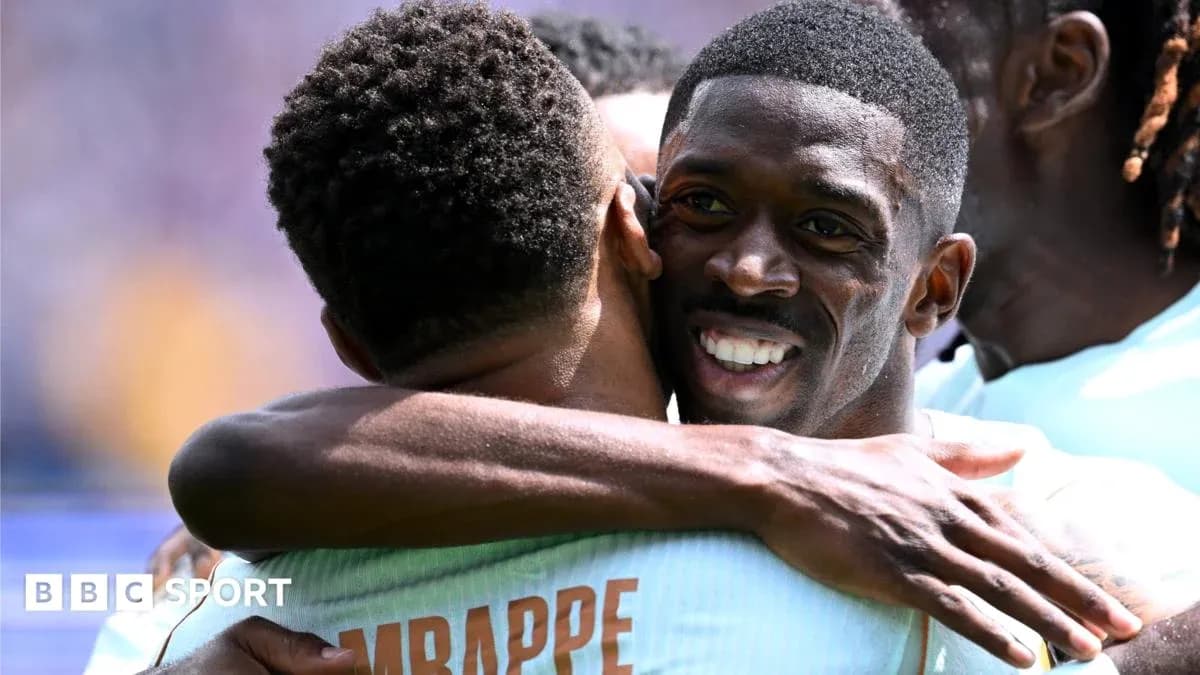
Ousmane Dembélé Shines in World Cup as France Defeats Norway
Ousmane Dembélé walked into a World Cup night billed as Haaland v Mbappé and tore up the script in half an hour.
No Haaland. A subdued Mbappé. And in Boston, it was the often-scrutinised Paris Saint-Germain winger who owned the stage, rattling in a 32‑minute hat-trick as France swept aside a heavily rotated Norway to top Group I and underline why they look every inch a contender again.
A showdown that never was
The hype had been simple: Erling Haaland against Kylian Mbappé, two of the game’s most ruthless finishers colliding on the biggest stage. Then the teamsheets landed.
Ståle Solbakken made 10 changes from Norway’s previous win, resting his Manchester City superstar and signalling, quite clearly, that second place in the group would do. The gamble drained the edge from the contest before a ball had been kicked.
Into that void stepped Dembélé.
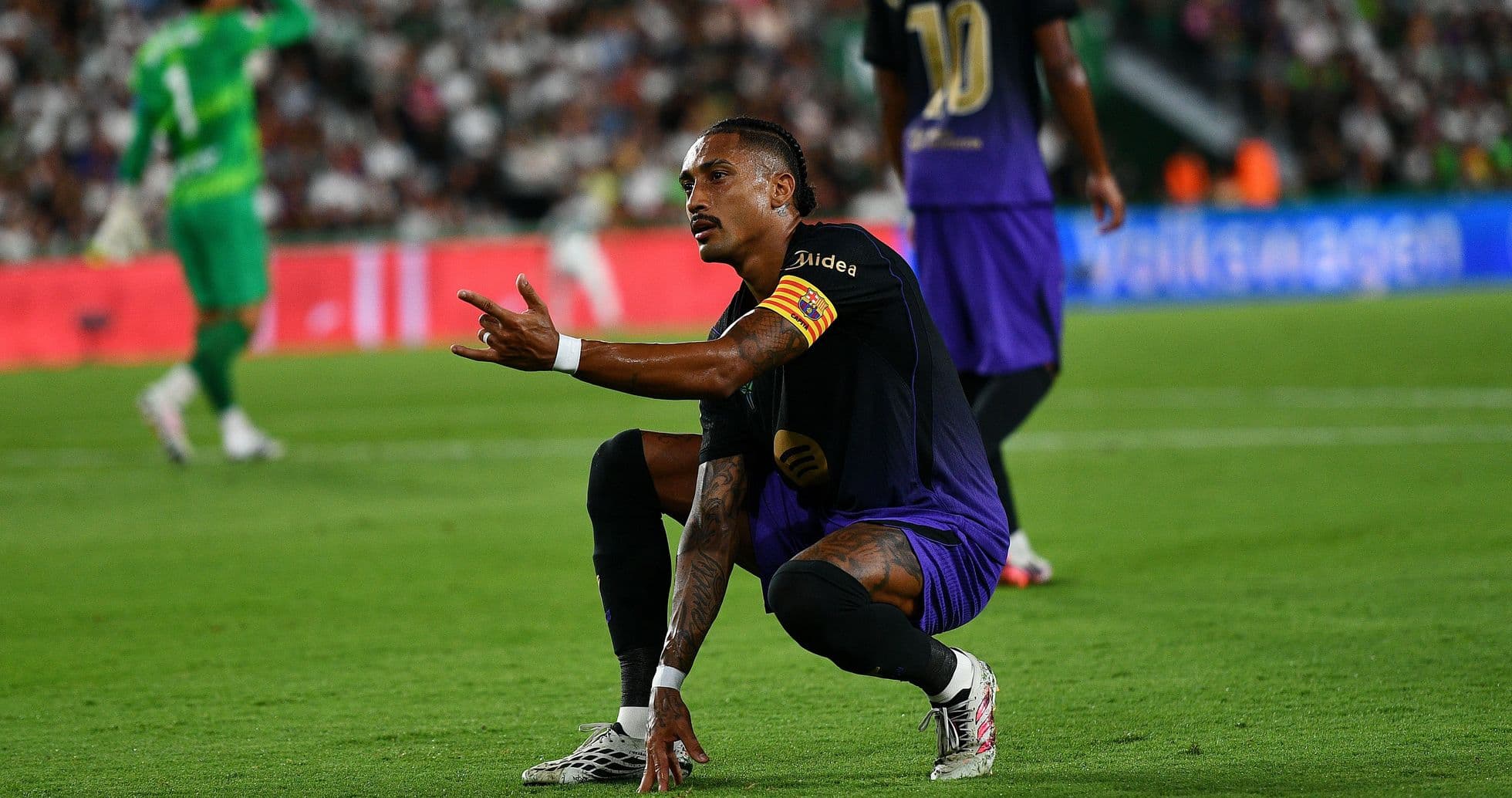
Criticised at home, doubted for his fitness record, and often cast as Mbappé’s supporting act, he responded with one of the great individual group-stage performances in recent French World Cup history.
Dembélé detonates
France flew out of the blocks and never really let go. They swarmed Norway from the first whistle, and the breakthrough came inside seven minutes.
France won the ball high, Mbappé drifted infield and slid a pass wide to Dembélé on the right. One touch to square up his defender, one brutal swing of his right foot, and the ball thundered past Egil Selvik. A clean, ruthless finish. 1-0, and the tone set.
Norway never settled. France hunted in packs, and when they broke again on 20 minutes, the move ended with Dembélé cutting in from that same right flank, this time onto his left. He bent a wicked, curling shot into the far corner, the kind of finish that leaves a goalkeeper rooted more in resignation than surprise.
2-0, and the night felt like it could get ugly.
Instead, Norway struck back almost immediately. From the restart, France’s defence simply failed to engage, backing off as Norway stitched together a direct move that ended with Rangers forward Thelo Aasgaard sweeping the ball past a wrong-footed Mike Maignan. It took 79 seconds to puncture French control.
Any hint of a wobble vanished with Dembélé’s response.
Again he drifted inside onto that left foot. Again Norway’s defenders backed away, frozen, four of them forming a ring around him without ever really closing him down. The shot, curled past Selvik once more, was pure confidence. It also took him into the conversation for the tournament’s Golden Boot with a fourth goal at this World Cup.
Three goals in 32 minutes. The second-fastest men’s World Cup hat-trick from the start of a match, behind Erich Probst’s 24-minute treble for Austria in 1954. The first time anyone had scored three in the first half of a World Cup game since Oleg Salenko in 1994.
For Dembélé, it was uncharted territory: he had never scored more than once in a game for France before this.
A goal born from 17 passes
The third goal carried an extra layer of significance. It wasn’t just an individual flourish; it was the product of a team in full flow.
Seventeen passes. All 11 French players touched the ball in the build-up. Norway chased shadows, the tempo rising and dipping as France probed, recycled, and then accelerated. When the ball finally reached Dembélé, the outcome felt inevitable. He did the rest.
It was the most passes recorded in the build-up to a France goal at a World Cup. A statistic that underlined how this side can suffocate teams with the ball, not just slice them apart in transition.
On the touchline, Guy Stéphan, standing in for Didier Deschamps after the death of the head coach’s mother, watched the winger he knows so well silence his doubters.
“Ousmane is a human being, just like anyone he can hear the criticism,” Stéphan said afterwards. “He has unfortunately had injury issues but every time he comes back harder and harder. Three goals in a World Cup game is exceptional.”
The assistant’s words matched the performance: this was a player responding, not shrinking.
Mbappé quiet, Maignan decisive
Mbappé almost stole the show before it had even started. After just 21 seconds, he crashed a vicious effort off the underside of the crossbar, a reminder of how quickly he can ignite a game.
Then he faded into the background.
By half-time, he had registered the fewest touches of any French outfield player. The pattern echoed that 2022 quarter-final against England, when Gareth Southgate’s side largely contained Mbappé, only for Antoine Griezmann to dictate everything around him.
Here, in Boston, Dembélé took that conductor’s baton. Griezmann knitted things together, as ever, but it was the winger who brought the chaos, the precision and the goals.
At the other end, Maignan added a small but telling line to French World Cup history. Early in the second half, with the tempo dropping and Dembélé later withdrawn on 65 minutes to a deserved ovation, Norway earned a penalty.
Jørgen Strand Larsen stepped up. Maignan guessed right and saved, becoming the first French goalkeeper to stop a World Cup penalty in normal time since Joël Bats in 1986. For a team already widely tipped as favourites for a third world title, it was another piece of evidence: they have a genuine match-winner in goal too.
Norway blink, France cruise
The broader story of the night rested in the dugouts. Norway needed a win to leapfrog France and take top spot, but Solbakken’s rotation told its own story. With qualification already secured, he banked on resting Haaland and others for the knockouts rather than chasing an upset.
His stand-ins battled, Aasgaard took his goal well, yet the gulf in depth and sharpness was obvious. Strand Larsen’s tame penalty summed up the difference in conviction.
Norwegian fans will expect a fully recharged Haaland when the knockouts begin. He sits on four goals, level with Mbappé, and his absence here only heightens the sense that Norway’s real tournament starts now.
France’s, you suspect, is already in full swing.
Deep into stoppage time, with the game drifting, Dembélé’s PSG team-mate Désiré Doué rose to meet a cross and looped a header over Selvik for 4-1. A flourish, not a turning point, but it underlined France’s depth: even as the stars sit, the next wave finds a way to leave its mark.
A different France, same expectations
This French side is not the 2022 version, and Stéphan was quick to stress that.
“This team is totally different to 2022,” he said. “More than half the squad had never played a World Cup.
“We can only see as the World Cup goes on, then up our level as we play strong teams. There is the offensive and defensive side, we need to have that balance, and for that we need to wait.”
The message was clear: three wins from three group games – something France had not achieved since 1998, the year they hosted and lifted the trophy – do not guarantee anything in the weeks to come.
Yet nights like this shape belief. Dembélé, so often cast as the fragile talent, just delivered one of the most devastating individual displays of the tournament. Maignan stepped into a historic role. The supporting cast, from Griezmann’s craft to Doué’s late goal, showed why this squad runs deep.
France have topped the group, answered some questions, and dodged others. The real examination lies ahead.
If this is what they can do with Mbappé on the fringes and Haaland watching from the bench, what happens when the next opponent dares to bring their full strength to the fight?