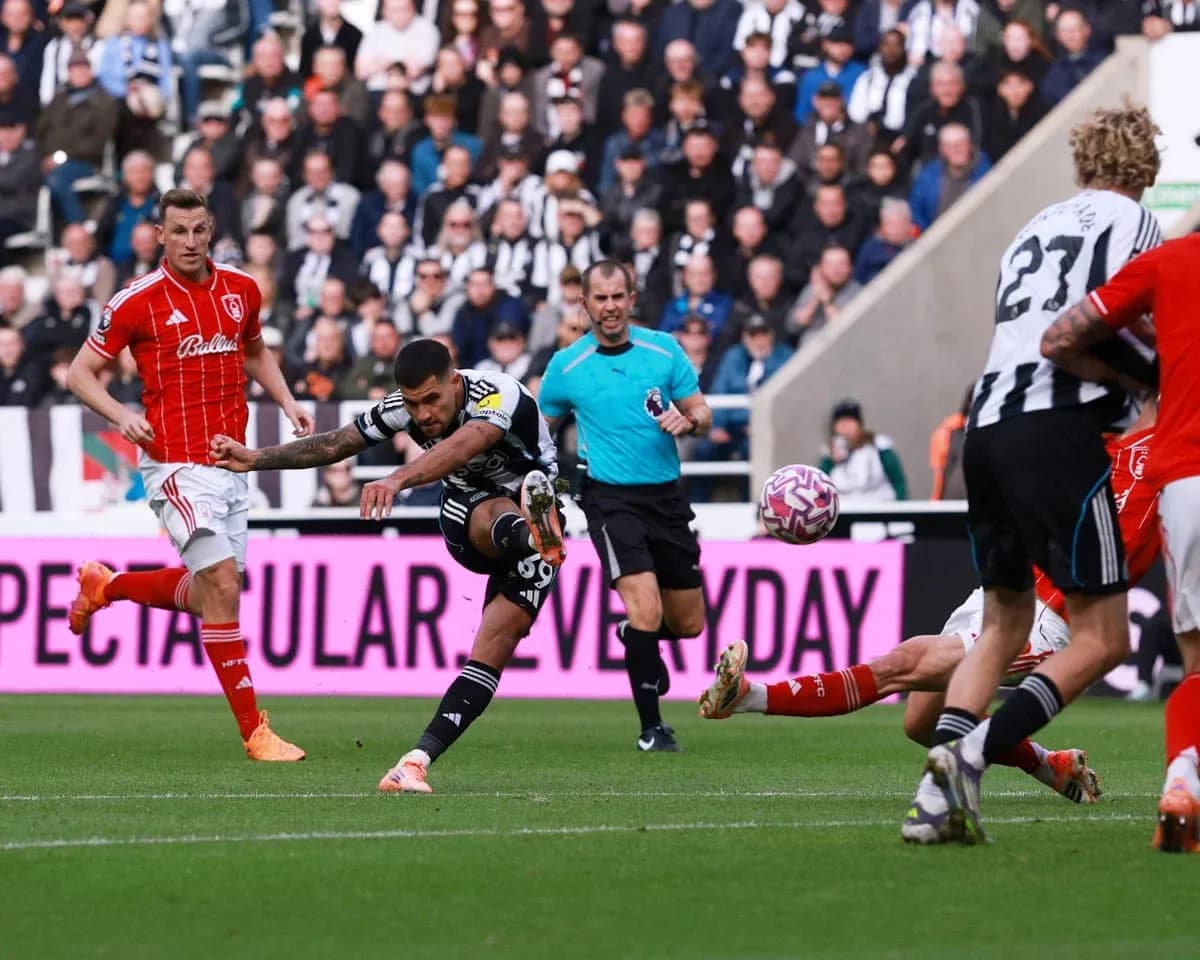
Nottingham Forest vs Newcastle: Key Late-Season Fixture
In the league phase, this is a high‑stakes late‑season fixture at City Ground in Round 36, with Nottingham Forest 16th on 42 points (44 goals for, 46 against) and Newcastle 13th on 45 points (49 for, 51 against). With only three league matches left, Forest are still close enough to the relegation battle that any home result here significantly affects their safety margin, while Newcastle need points to avoid sliding further into the lower mid‑table and to keep a top‑half finish alive rather than drifting toward a disappointing bottom‑third outcome.
Head-to-Head Tactical Summary
The recent head-to-head record is Newcastle‑tilted and goal‑rich. On 5 October 2025 at St. James' Park in the Premier League (Regular Season - 7), Newcastle beat Nottingham Forest 2‑0, after a 0‑0 HT, under referee Peter Bankes. On 23 February 2025, again at St. James' Park in the Premier League (Regular Season - 26), Newcastle won 4‑3; the HT score was 4‑1 to Newcastle, indicating a first half where Forest were repeatedly opened up before rallying after the break. On 10 November 2024 at The City Ground in the Premier League (Regular Season - 11), Nottingham Forest led 1‑0 at HT but Newcastle turned it around to win 3‑1. In cup action on 28 August 2024 in the League Cup 2nd Round at The City Ground, the match finished 1‑1 (HT 0‑1) before Newcastle advanced 4‑3 on penalties. On 10 February 2024 at The City Ground in the Premier League (Regular Season - 24), Newcastle edged a 3‑2 away win after a 2‑2 HT. Overall, Newcastle have consistently found ways to score multiple times both home and away, while Forest have shown they can create chances but struggle to convert that into results against this opponent.
Global Season Picture
- League Phase Performance: In the league phase, Nottingham Forest sit 16th with 42 points from 35 matches, scoring 44 and conceding 46 (goal difference -2). Their home record is modest: 4 wins, 6 draws, 7 losses at City Ground, with 18 goals for and 21 against. Newcastle are 13th with 45 points from 35 matches, also on a -2 goal difference, having scored 49 and conceded 51. Away from home they have 4 wins, 4 draws, and 9 losses, with 16 goals for and 22 against.
- All-Competition Metrics: Across all phases of the competition, Nottingham Forest average 1.3 goals scored and 1.3 conceded per match (44 for, 46 against over 35), with 9 clean sheets but 14 matches where they failed to score, reflecting an inconsistent attack and balanced but not dominant defense. Their biggest wins (4‑1 at home, 0‑5 away) and heaviest defeats (0‑3 at home, 3‑0 away) underline a volatile profile. Card-wise, Forest’s yellow cards cluster strongly between minutes 31‑75 (64.28% of their bookings), suggesting rising defensive stress as matches progress. Newcastle, across all phases, average 1.4 goals scored and 1.5 conceded (49 for, 51 against over 35). They have 8 clean sheets and 8 matches without scoring, pointing to a slightly more productive but also more open style. Their biggest away win is 1‑4, while their heaviest away loss is 4‑1, again illustrating a high‑variance team. Newcastle’s yellow cards spike late, with 28.13% between 76‑90 minutes and a further 17.19% in added time, indicating late‑game discipline issues under pressure.
- Form Trajectory: In the league phase, Forest’s recent form string is WWWDW, meaning four wins and a draw from their last five. That is promotion‑level form at a critical moment, suggesting an upward trajectory in both confidence and execution. Newcastle’s form is WLLLL, with one win followed by four straight defeats in the league phase, a clear downward spiral that has turned a mid‑table campaign into one at risk of drifting further down the standings.
Tactical Efficiency
Across all phases of the competition, Nottingham Forest’s averages of 1.3 goals for and 1.3 against indicate a balanced but relatively low‑ceiling attack and a defense that is competitive but not dominant. Their 14 matches failing to score, despite a respectable overall goals‑per‑game figure, point to streaky attacking efficiency: when they do create, they can score in bursts, but they also produce too many flat attacking displays. Newcastle’s 1.4 goals for and 1.5 against across all phases show a slightly stronger attacking output but a looser defensive structure. With more clean sheets than Forest but also a higher goals‑against average, Newcastle profile as a team that either defends well in specific game states or gets opened up when chasing matches.
Without explicit attack/defense indices from the comparison block, the best proxy is these goal and clean‑sheet patterns. Forest’s recent WWWDW league‑phase run suggests an efficiency uptick at both ends relative to their season averages, especially given that they have only 9 clean sheets across all 35 matches yet are now grinding out results. Newcastle, by contrast, are underperforming their season‑long attacking and defensive means in the WLLLL league‑phase stretch, implying that their underlying attacking potential (1.4 goals per match across all phases) is not currently translating into points, and their already fragile defense (1.5 conceded per match across all phases) is being exposed more often.
The Verdict: Seasonal Impact
In 2026, this fixture is pivotal more for survival and mid‑table positioning than for the title or top 4. For Nottingham Forest, a home win would likely push them decisively clear of relegation danger by stretching the gap to the bottom three, validating their recent WWWDW surge and turning the final two rounds into an opportunity to climb toward mid‑table rather than a scrap for safety. A draw would maintain momentum and keep them on course, but might still leave work to do depending on other results. Defeat, however, would halt their best league‑phase run of the year and re‑open the door to late pressure from teams below, especially given their modest home record (4 wins from 17).
For Newcastle, three points would arrest a damaging WLLLL slide, move them toward the 50‑point mark, and reframe the season as a late‑stabilised mid‑table campaign instead of a collapse toward the lower reaches. A draw would do little to change the narrative of stagnation and might still leave them vulnerable to being overtaken by teams just behind. Another loss would deepen the crisis, confirming that their across‑all‑phases attacking edge (1.4 goals per game) is being wasted and that their defensive fragility (1.5 conceded) is dragging them toward an underperforming finish. In strategic terms, this match is a leverage point: Forest can convert form into safety and upward mobility, while Newcastle either re‑set their trajectory or risk ending 2026 firmly in the bottom third of the Premier League table.