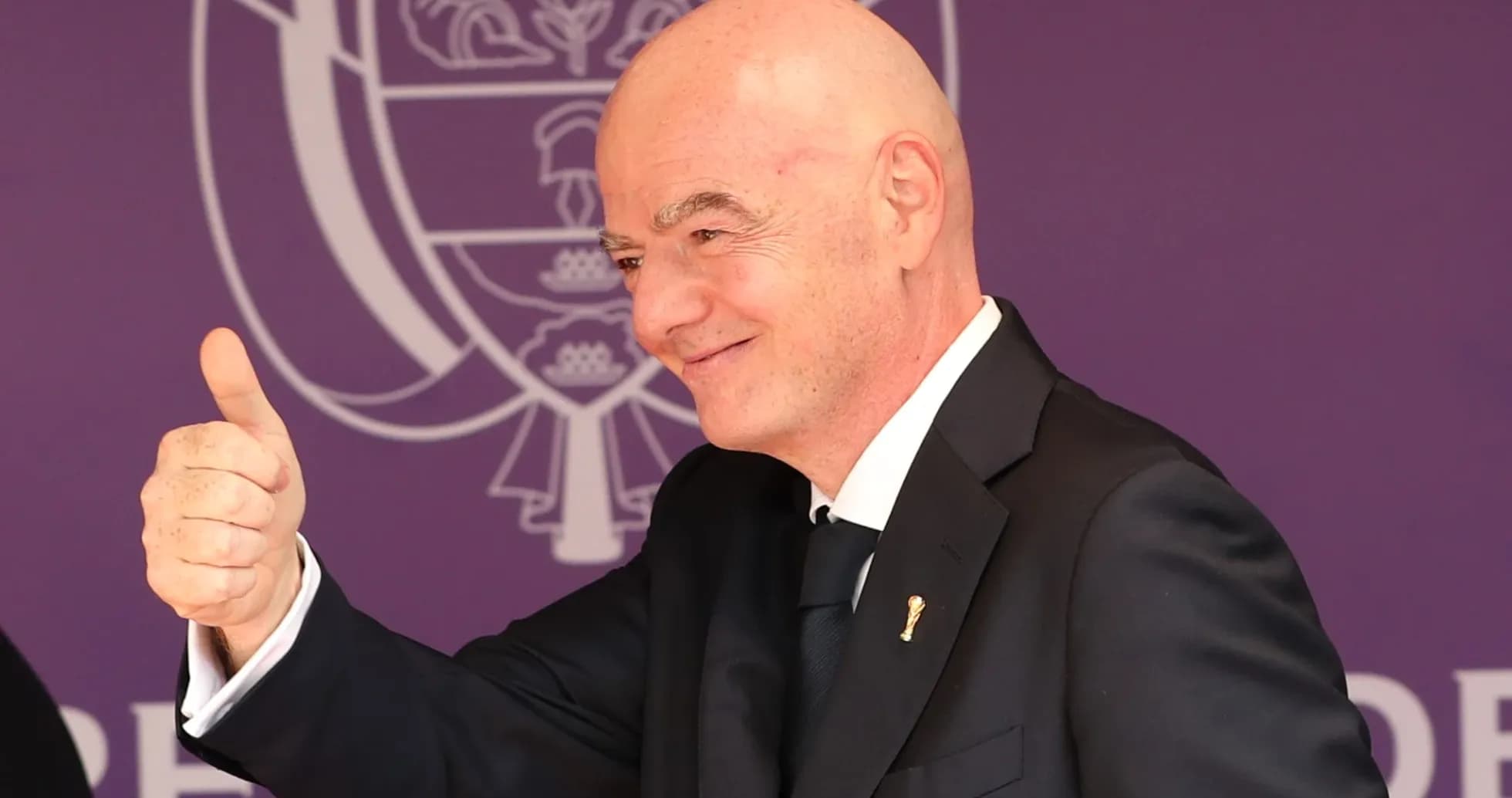
New Zealand Withdraws Support for FIFA's Infantino Amid Leadership Crisis
New Zealand has broken ranks.
The only Oceania nation heading to this year’s World Cup has pulled its backing for FIFA president Gianni Infantino’s re-election, deepening the crisis around his aborted plan to sell a slice of football’s most lucrative commercial rights to private investors.
At the same time, the Oceania Football Confederation (OFC) has chosen a softer line, publicly standing by FIFA’s leadership while calling the shelved proposal a chance to learn lessons rather than a reason to change course at the top.
New Zealand walks away
Infantino is chasing a fourth term at the helm of world football and will stand again at the FIFA Congress next year. Africa and South America remain firmly in his corner. New Zealand no longer does.
On Friday, New Zealand Football confirmed it had withdrawn its support, bluntly citing a loss of confidence and trust in FIFA’s leadership over the handling of the commercial rights plan and demanding an independent review.
“We’ve called for an independent review specifically because what we don’t want to see is a sort of in-house quick washover of this,” New Zealand Football chief executive Andrew Pragnell told Reuters.
“An independent review is something else that has been called for by other confederations that will help restore some of the trust.”
The call places New Zealand alongside powerful voices in UEFA, the Asian Football Confederation (AFC) and CONCACAF, which have already demanded a review of Infantino’s leadership and criticised his conduct around the proposed deal.
Oceania backs the system, not the storm
While New Zealand has turned its back on Infantino, its regional confederation has not.
In a statement, OFC said it welcomed FIFA’s decision to withdraw the proposal and praised the progress the region has enjoyed under the current regime.
“OFC recognises the progress achieved over the last decade in advancing football development in Oceania under FIFA’s leadership and encourages FIFA to use the review as an opportunity to identify and implement any changes that may be necessary,” it said.
The split is stark: one of OFC’s key members is openly questioning the leadership, while the confederation itself continues to underline the benefits it believes FIFA has delivered.
The $4.2bn plan that blew up
At the heart of the revolt is Infantino’s plan to carve off the commercial rights to the World Cup and other FIFA competitions and sell a 20 percent stake to private investors. The deal was pitched as a way to raise about $4.2bn.
On the table for national associations was a $20m grant for the next funding cycle, with the promise that the figure could double if they signed up.
The backlash was immediate and fierce. After a crisis meeting in Morocco last week, FIFA scrapped the proposal, apologised to its 211 member associations for “mistakes” in its handling and announced that its leadership had full support for Infantino.
That claim jarred with reality. Three confederations – UEFA, AFC and CONCACAF – had already lined up against the plan and were questioning Infantino’s leadership. Together, they represent 136 of the 211 associations who will vote in March’s presidential election.
Allies in key corners
Even so, Infantino is far from isolated.
Six heads of Arab national football associations, including Qatar and 2030 World Cup cohost Morocco, came out strongly for him on Thursday, praising what they called his “sustained efforts to advance football globally”.
The Confederation of African Football’s executive committee also unanimously reaffirmed its support, though there is no guarantee that all 54 African member associations will vote as a bloc.
For now, those endorsements matter. They give Infantino a core of backing across Africa, the Arab world and South America as he tries to ride out the storm from Europe, Asia and North and Central America.
Who knew what?
For Pragnell and New Zealand, the issue now is not just the proposal itself, but how it was conceived, sold and supervised.
He said any independent review of the scrapped FIFA Forward Enterprise proposal must dig into decision-making and oversight at FIFA. It must also establish who was involved in bringing Thrive Capital – a firm with close family links to former US President Donald Trump – to the table as a leading partner in the venture.
“I think the scope needs to be considered really carefully, but what’s most important is that all confederations should agree on the scope, and it needs to get under way with urgency,” Pragnell said.
Australia, another AFC member, has also called for an independent review as part of the Asian bloc’s stance, although it has not publicly declared a position on Infantino’s leadership.
“Based on what we’ve seen, including [Australia’s] commitment to the AFC statement, we’re strongly aligned,” Pragnell added.
Infantino will walk into next year’s Congress with powerful allies and powerful opponents. The question now is whether the independent scrutiny New Zealand and others are demanding arrives in time to reshape the race – or whether world football will vote first and investigate later.