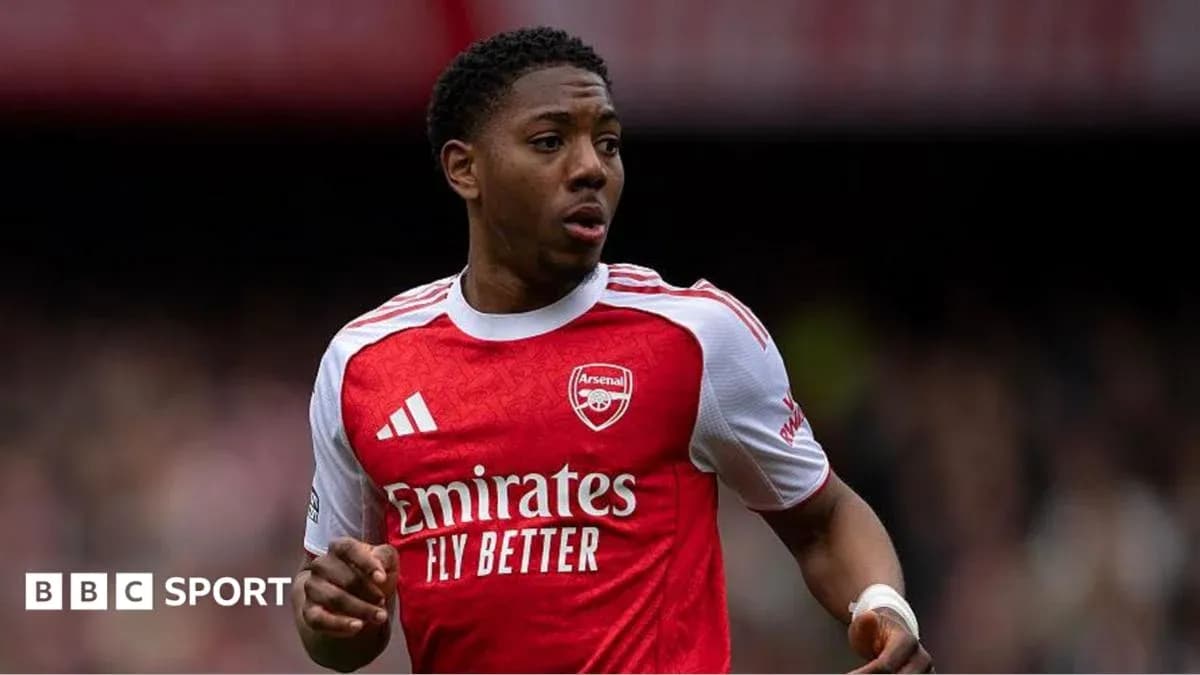
Myles Lewis-Skelly: From Left-Back to Arsenal Midfield Star
Myles Lewis-Skelly has never taken the easy road into Arsenal’s first team. He’s had to squeeze through gaps, not stroll through open doors.
At 19, he already feels like a story with chapters. The breakthrough as an emergency left-back. The England debut. The contract. The setback. And now, perhaps, the moment where he finally walks into Arsenal’s midfield as if it always belonged to him.
From Hale End to Wembley – via left-back
Lewis-Skelly grew up at Hale End as a midfielder, telling anyone who asked that the middle of the pitch was his home. Then the 2024-25 season tore holes in Mikel Arteta’s squad. Injuries piled up, full-backs vanished, and the teenager was told to solve a problem on the left.
He didn’t just cope. He surged.
Thrown in at left-back, he became one of the standout young full-backs in the Premier League, a defender who didn’t really defend like a defender at all. He inverted into midfield, slipped away from pressure in tight spaces, and carried the ball past opponents as if they were training cones. The traits that had made him a Hale End standout were suddenly on show in front of 60,000 people every week.
That form took him beyond Arsenal. In March 2025, he walked out at Wembley in an England shirt and left with a slice of history: the youngest man to score on his England debut, opening the scoring in a 2-0 win over Albania. A few months later, Arsenal handed their academy graduate a new five-year deal. The message felt clear. This was a player for the future.
But football rarely follows a neat script.
The squeeze at left-back
Last season, the door slammed on him just as quickly as it had opened.
Riccardo Calafiori, signed for £42m in 2024, returned to full fitness. The Italian’s adventurous, unpredictable surges from the back became central to Arsenal’s attacking patterns again. At the same time, Piero Hincapie arrived from Bayer Leverkusen, first on loan and then permanently. Two older, more experienced defenders, both trusted by the manager, both competing for the same real estate on the left.
Minutes dried up. Lewis-Skelly watched more than he played.
Arteta admitted he had been “tough” on the teenager, and it showed in the team sheets. The player who had ridden the wave of his debut season now had to wait, and wait, and wait some more.
The irony was obvious: Arsenal had a midfielder playing at left-back, then suddenly had so many left-backs that the midfielder couldn’t get on the pitch at all.
A late-season twist in midfield
The turning point came from an entirely different angle.
Martin Zubimendi’s form dipped as last season entered its final stretch. With four league games remaining, Arteta finally turned to Lewis-Skelly in his natural role, handing him the chance to anchor the midfield against Fulham.
He grabbed it.
Composed on the ball, sharp in the press, comfortable receiving under pressure, he looked like someone who had been playing there for years. That performance changed his status overnight. From that point, he started all but one of Arsenal’s remaining fixtures as they surged to the Premier League title and reached the Champions League final, losing to Paris St-Germain.
In the biggest games of their season, with the biggest prizes on the line, Arteta trusted a 19-year-old academy product in central midfield. That choice did not go unnoticed inside or outside the club.
“Pure profit” and a modern dilemma
Modern football doesn’t allow any fairytale to exist without a spreadsheet lurking in the background.
As an academy graduate, Lewis-Skelly represents “pure profit” on Arsenal’s books if they sell him. In an era of financial regulations and transfer inflation, that phrase carries real weight in boardrooms. It grates with supporters, though, especially when it’s attached to a player who has grown up in their colours and clearly understands the club.
Lewis-Skelly knows the conversation exists. When Arsenal celebrated their title at Selhurst Park on the final day of last season, he posted a picture with the Premier League trophy and captioned it: “pure profit”. A joke, a jab, or a pointed acknowledgement of the business side of the game – take your pick. But it showed he is not naive about the forces that shape careers.
Arsenal want to operate sustainably. They spent around £250m on new players last summer and, even with room in their finances, they cannot keep buying without selling. At one stage, the club were open to listening to offers for him.
Then came that burst of performances in midfield at the end of the season. Inside the club, that run has prompted a rethink over his status. Suddenly, the idea of cashing in on “pure profit” looks less attractive when the profit might be a future cornerstone of your midfield.
Bruno Guimaraes and the traffic ahead
The picture is still complicated.
Arsenal are closing in on a deal to sign Newcastle captain Bruno Guimaraes for a fee that could rise to £80m. Bring in a player of that calibre and you inevitably create traffic in central areas. For a young midfielder trying to establish himself, that kind of signing can feel like a barrier dropping in front of the pathway he has fought to clear.
Yet Lewis-Skelly’s case is different from that of an ordinary squad player. His versatility, his age, his homegrown status, his performances in the title run-in – all of that keeps him firmly in the conversation for minutes. Arteta has already shown he trusts him in high-pressure situations. That doesn’t disappear because another star walks through the door.
And this season, the schedule might tilt in his favour again.
A head start on tired stars
The World Cup’s late finish has left a swathe of Arsenal’s midfield either resting or easing their way back. Captain Martin Odegaard, England duo Declan Rice and Eberechi Eze, plus Zubimendi and Mikel Merino – fresh from winning the tournament with Spain – have yet to fully rejoin the squad.
Lewis-Skelly has not wasted the gap.
He has started and impressed in pre-season friendlies against Girona and Real Betis, using those games to sharpen his case. Against Betis he operated at the base of midfield, the deepest-lying midfielder, and looked entirely at ease with the responsibility. He dropped in to collect the ball, drove it upfield when Arsenal needed progression, and stitched together moves with a calmness that belied his age.
There was another familiar pattern too. When Calafiori surged forward on one of his trademark runs, Lewis-Skelly instinctively slid across to cover at left-back, the old role feeding the new one. The Italian was effusive afterwards.
“We just speak in the last few days about this connection that we have – we don’t need to speak,” Calafiori said. “I really like to play with him, a really good player.”
On the pitch, that chemistry matters. To a manager obsessed with structure and relationships between positions, it matters even more.
Manchester City next – and another audition
The next test comes quickly. The Community Shield against Manchester City is just nine days away, and all signs point to Lewis-Skelly getting another serious audition in the heart of Arsenal’s midfield.
This time, it won’t be as an emergency full-back or a late-season gamble. It will be as a young midfielder standing in his rightful zone, armed with a title winner’s medal, an England goal, and the knowledge that he has already altered the club’s thinking once.
The question now is simple: in a squad packed with stars and with another marquee signing on the way, can Myles Lewis-Skelly turn a window of opportunity into a permanent place at the core of Arsenal’s future?