Mourinho Returns to Real Madrid: A Familiar Challenge
José Mourinho walks back into Real Madrid and, somehow, the scenery looks both familiar and completely altered.
Spain are world champions again, a Barcelona player scored the winner in the final again, and their opponents finished with 10 men again after trying to kick them off the pitch. The echoes of 2010 are impossible to ignore. Back then, Mourinho arrived to knock a dominant Barcelona off their perch. Fourteen years on, the mission is almost identical: Barça have won La Liga twice in a row, and Madrid have turned once more to the man who used to relish being their lightning rod.
The cast around him has shifted. The power lines at the club have not.
Pérez’s bet on the past
Florentino Pérez is still the central figure, the president who treats Real Madrid like a personal epic. If last summer’s push for Xabi Alonso was driven by chief executive José Ángel Sánchez, this time Pérez has taken full ownership.
He went to elections, promised Mourinho’s return if he was re-elected, and delivered the announcement on the opening day of the World Cup. Classic Pérez theatre. Mourinho, the coach who once stormed to a 100-point title, is his statement signing all over again.
Not everyone sees this as a simple rewind. Jorge Valdano, who worked above Mourinho in that first spell, framed it bluntly to A Bola: “Almost 15 years have passed: football is no longer the same, society is not the same, Florentino is no longer the same, and Mourinho certainly won’t be either.”
Yet in a club drifting into disorder, Mourinho was the law-and-order candidate.
From chaos to control
The end of last season was a slow-motion car crash. Alonso’s sacking in January did not steady the ship; Álvaro Arbeloa’s interim spell only deepened the sense of drift. By May, the dressing room was literally splitting open. Federico Valverde ended up in hospital for stitches after a bust-up with Aurélien Tchouaméni. Days later, Madrid ceded the league in the clásico and stumbled to a trophyless finish.
Outside the stadium, the circus raged. An online petition demanding Kylian Mbappé’s departure soared to 30 million signatures. The future of Vinícius Júnior, running down his contract with a year left, became a constant drumbeat of doubt.
Madrid needed someone to slam a door, dim the noise and take command.
Not everything has broken their way since. Atlético Madrid rejected a £129m offer for Julián Álvarez. Barcelona, ominously, look closer to landing Rodri from Manchester City. Yet the atmosphere around Valdebebas feels different now. Calmer. Sharper.
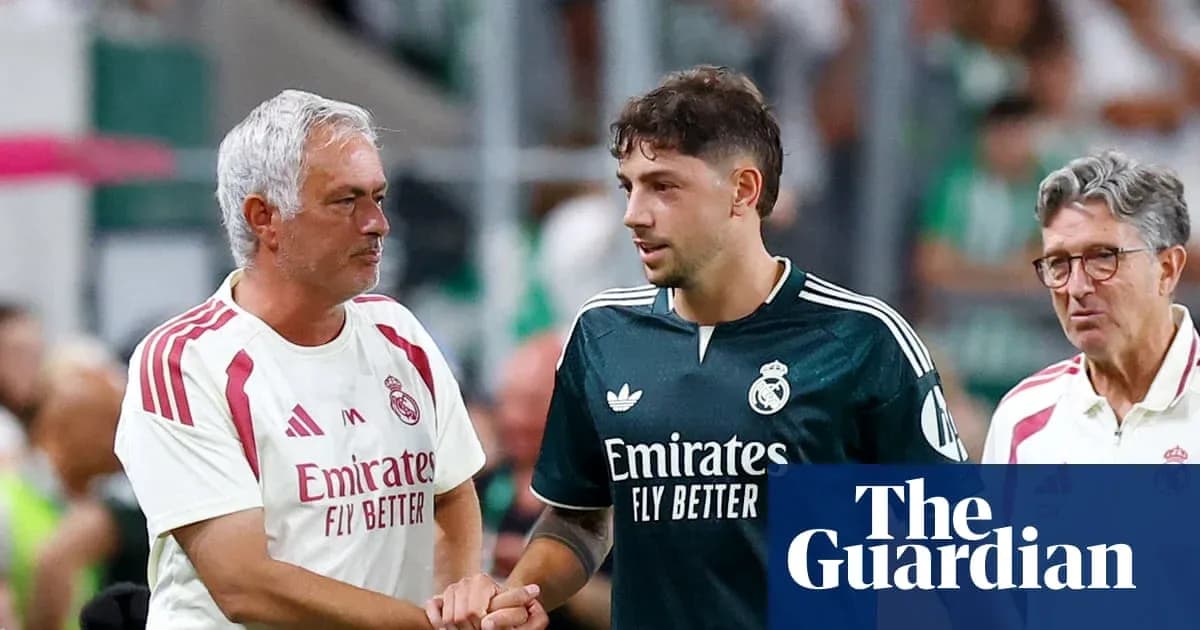
Mourinho started work a month before his contract officially kicked in. There was no grand unveiling, no choreographed press conference. Just a terse in-house interview and a pointed line: “It’s not about working at Real Madrid, it is working for Real Madrid.” The slogans, for now, are reserved for his Netflix documentary. The pre-season tour has been stripped back to low-key European friendlies. No globe-trotting circus. No distractions.
Vinícius stays, Diomandé arrives
After months of Arsenal rumours and anxiety, Vinícius has signed a new six-year deal. Madrid framed it in suitably grand terms: “Vinícius has become one of the most important players in one of the most successful periods in our history.”
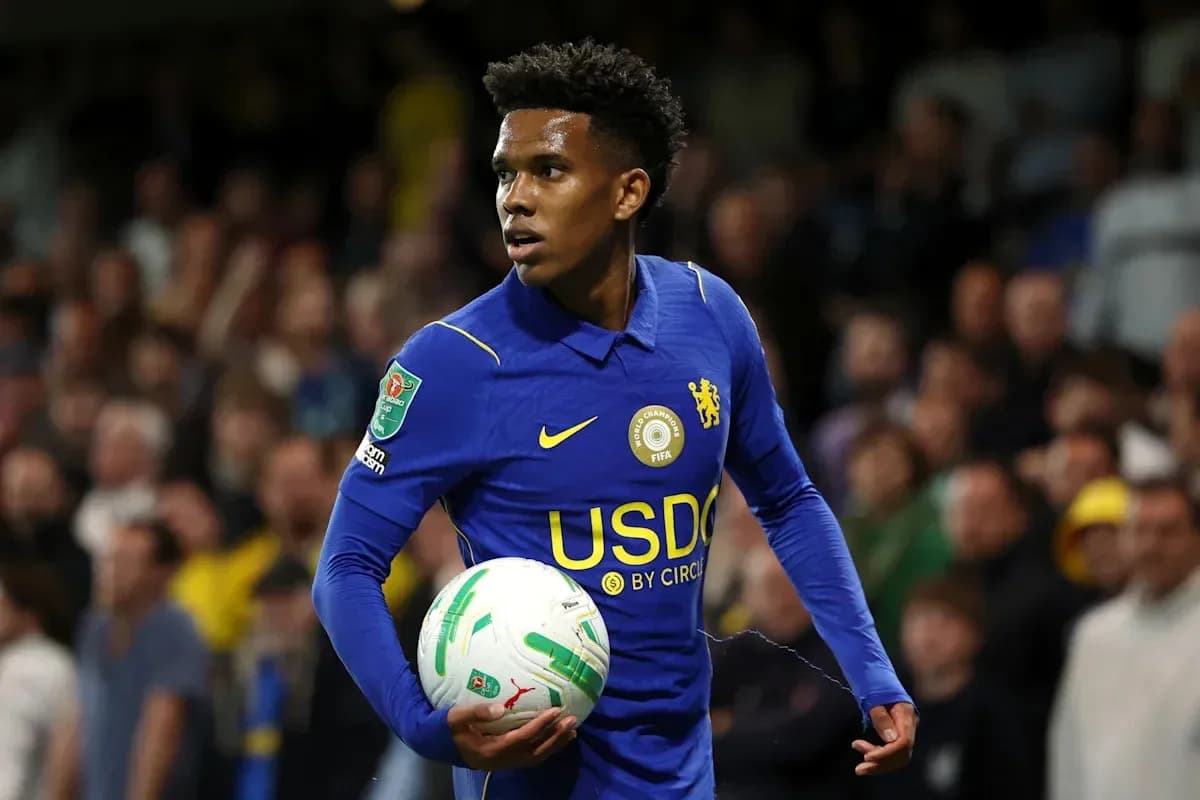
Now Mourinho must make the pieces fit. Vinícius, Mbappé, Jude Bellingham – and, crashing into that constellation, a new galáctico: Yan Diomandé, a £115m winger who was playing for Leganés B in Spain’s fifth tier only last year.
Diomandé’s first brush with the Bernabéu came in March 2025, when he made his Leganés debut there at 18. “Who makes their debut at 18 against Real Madrid? It was a dream. And then it was a nightmare,” he wrote this summer in the Players’ Tribune, while lighting up the World Cup for Côte d’Ivoire. The piece, raw and painful, was dedicated to his sister Roxane, who died aged 15 after her drink was spiked at a party, just weeks after his La Liga debut. Madrid are not just signing talent; they are signing a young man forged in something far harsher than football pressure.
On the pitch, Mourinho has tools that look tailor-made for him. Down the left, Diomandé and Vinícius will have Marc Cucurella at their back, a relentless full-back whose energy and aggression scream Mourinho. Bernardo Silva, Ibrahima Konaté, Denzel Dumfries and 6ft 4in striker Carlos Espí all fit the same mould: tactically disciplined, physically committed, capable of living inside the demands of a coach who still thrives on control and confrontation.
Yet even in this galaxy, the main attraction is still the man on the touchline.
Mourinho’s second act
Landing the Madrid job again is a comeback few foresaw. His later Premier League years dulled the aura; his tour across Europe brought flashes of the old magic mixed with disappointment. Then came last season’s Champions League tie with Benfica, when he masterminded a stunning escape against Madrid themselves, capped by goalkeeper Anatoliy Trubin’s late goal. It dragged him back into the spotlight.
The light turned harsher when he spoke after Vinícius accused Benfica’s Gianluca Prestianni of racist abuse. Uefa eventually banned Prestianni for “homophobic conduct”, but Mourinho’s comments were condemned by Kick It Out as “a form of gaslighting”. The line from Arbeloa – “Mourinho is Mourinho” – felt less like praise and more like a weary truth.
Any lingering tension with Vinícius, though, has not surfaced publicly. Back in pre-season, the Brazilian sounded relaxed: “It has gone very well, getting to know the new coach … Mourinho wants me to be as I have always been: happy, cheerful and playing my football.” For now, at least, the relationship starts with a clean slate.
Mourinho is not the only familiar face returning to Spanish football.
Old names, new chapters
Racing Santander are back in La Liga for the first time since 2012 and have brought home one of their own. Sergio Canales, now 35, left at 19 to join Mourinho’s Madrid in that feverish summer of 2010. “I’m still struggling to believe this is real,” he said last month as he walked back into El Sardinero.
Deportivo and Málaga also climb back into the top flight for the first time since 2018, both having endured the humiliation of dropping to the third tier. Depor’s headline signing is a 37-year-old Pierre-Emerick Aubameyang, a name that still carries weight and goals if his legs hold up.
At the top end, the dugouts are a study in continuity and reinvention. Diego Simeone, starting his 15th full season with Atlético, will lock horns with Mourinho again in a Madrid derby that suddenly feels like a throwback. Atlético have stepped into the post-Antoine Griezmann era by investing smartly, most notably in Lee Kang-in from Paris Saint-Germain, who inherits Griezmann’s No 7 shirt.
Manuel Pellegrini, the man Mourinho once replaced at the Bernabéu, continues his calm, steady work at Real Betis. Villarreal, the fifth Spanish side in this season’s Champions League, have turned to Iñigo Pérez after his impressive spell at Rayo Vallecano.
In the Basque Country, change has its own flavour. Pellegrino Matarazzo, the American at Real Sociedad, builds from a position of strength after their Copa del Rey triumph in April. Across the region at Athletic Club, history is being made: Edin Terzic becomes the first German coach there since Jupp Heynckes in 2003. Heynckes left him with a line that sums up the club’s soul: “Athletic is the only club where a handshake is more important than a signature.”
And yet, through all this movement, one reality holds.
Barça still set the pace
Barcelona remain favourites for the title. They have lost Robert Lewandowski to Major League Soccer, a seismic departure that leaves a clear gap at centre-forward while Atlético stand firm over Álvarez. Hansi Flick’s attack is being rebuilt on the fly.
On the left, Anthony Gordon arrives to replace Marcus Rashford and battle an injury-prone Raphinha. On the right, with respect to Karim Adeyemi, there is no genuine competition. That flank belongs to Lamine Yamal.
He did not dominate the World Cup as many had predicted, but he came back from the United States as a world champion and, crucially, as a 19-year-old with time still on his side. If Flick is to match Pep Guardiola’s feat of three consecutive league titles, Yamal will almost certainly be the ringleader again.
The first clásico lands at the Camp Nou at the end of October. By then, we will know whether Mourinho’s return is a nostalgic gamble or the start of another storm in Spanish football.