Morgan Rogers joins Chelsea amid challenges and chaos
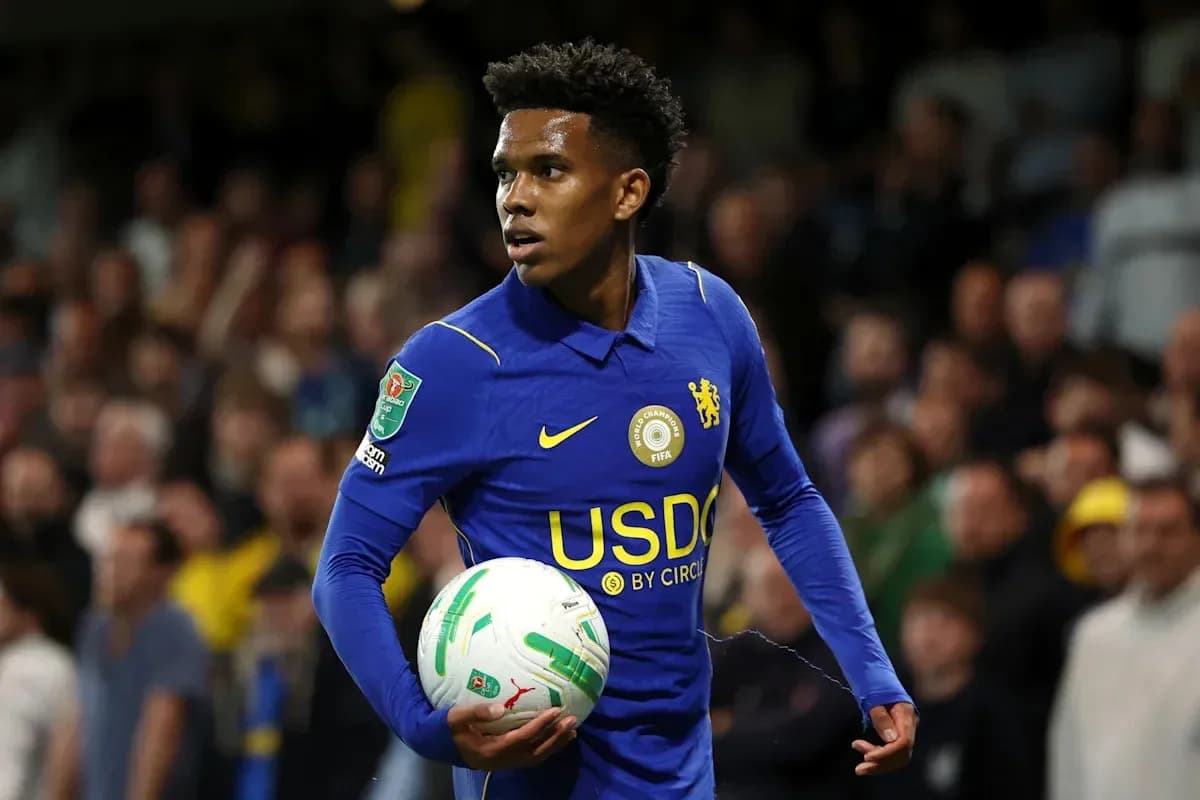
Morgan Rogers walked into Stamford Bridge last month as the most expensive British footballer of all time and promptly lit the fuse. £117 million from Aston Villa to Chelsea, a record fee and a bold declaration at his unveiling: he was joining “the biggest club in London”. Arsenal fans heard the subtext immediately.
For months, Rogers had been heavily linked with Mikel Arteta’s side. On paper, that move made sense. Champions of England. Champions League football. A squad trending upwards with a defined structure and a clear style. Leaving a rising Villa team for the new title holders would have been a logical step up.
Instead, he has stepped into a project that is anything but settled.
Rogers bets on chaos at Chelsea
Chelsea, under the BlueCo ownership, are rebooting yet again. This time the reins have been handed to Xabi Alonso, but there will be no European football to cushion the transition. The lighter schedule should, in theory, help a squad that laboured to 10th in the Premier League last season. Alonso, though, is not a magician.
The departures have already hurt. Marc Cucurella has gone to Real Madrid. Enzo Fernandez could yet follow him out, and if that happens Chelsea’s midfield will be ripped apart. That is hardly the environment a 23-year-old record signing needs.
Then comes the tactical puzzle. How does Alonso fit Rogers and Cole Palmer into the same team without suffocating the central areas? Rogers is at his best as a No.10, operating between the lines. Palmer has thrived in similar spaces and is already a central figure at the club. If Alonso builds around the England international, Rogers may find himself shunted wide, where his influence will inevitably dip compared to his Villa days.
There is also a stylistic clash looming. Rogers has not been raised in a possession-heavy system, recycling the ball against deep, organised defences. At Aston Villa, Unai Emery unleashed him as a counter-attacking weapon, driving into space, breaking lines at speed. At Chelsea, Alonso will want control. He will want the ball. He will want structure. That pursuit of dominance could end up dulling Rogers’ edge.
And then there’s the weight of the fee. £117m is not a number you can hide from. Rogers will be expected to transform Chelsea from day one. If the goals and assists do not come quickly, the pressure will. He is an excellent talent, but he is not the kind of once-in-a-generation signing who instantly drags a club back into title contention on his own.
Right now, the move looks like a high-wire act without a safety net.
Carrick handed a job, but not the tools
Up in Manchester, a very different kind of gamble is unfolding.
Michael Carrick earned the right to be Manchester United’s permanent manager. He guided them to third in the Premier League and back into the Champions League. That achievement should have been rewarded with serious backing in the transfer market.
Instead, INEOS have tightened the tap.
United have spent just £75m, bringing in Andrey Santos from Chelsea and Youri Tielemans from Aston Villa. Two smart additions, but nowhere near enough for a club juggling domestic ambitions with a demanding European campaign.
The squad looks alarmingly thin. Casemiro’s departure has left a gaping hole in midfield. Mason Mount remains plagued by fitness issues. Manuel Ugarte is still working his way back from an ACL injury. Across the backline, depth is minimal. Up front, Joshua Zirkzee appears to be heading for Serie A, which could soon leave Benjamin Sesko as the only natural No.9.
The warning signs are obvious. A slow start is a real possibility. If results dip, confidence – so fragile in recent seasons – could collapse again. Carrick’s early run of 12 wins in 17 games was built on defensive discipline and moments of individual brilliance, not on a fluid, progressive possession game. That approach is difficult to sustain when the fixtures pile up and legs tire.
With three games a week returning as the norm, the cracks could spread quickly. If United find themselves drifting by early December, Carrick will be in serious trouble. INEOS would then be searching for a fourth head coach in what has already been a turbulent two-and-a-half-year reign. Stability was the promise. Another reset is starting to look more likely.
Arsenal step into a weakened landscape
While others hesitate, Arsenal have finally stepped through the door they kept rattling.
After three consecutive seasons finishing as runners-up, Arteta’s side claimed the 2025-26 Premier League title by seven points ahead of Manchester City. No late collapse. No familiar wobble. Just a ruthless run-in that delivered the club’s first league crown of the Arteta era and a huge psychological breakthrough.
That shift matters. Arsenal now enter the new season not as plucky challengers, but as the benchmark. And the landscape around them has tilted in their favour.
Liverpool’s defence looks threadbare, undermining hopes of repeating their 2024-25 triumph. Manchester United are under-resourced for the schedule ahead. Aston Villa have been cautious in the market. Chelsea and Tottenham are both braced for transitional years.
That leaves City as the only plausible roadblock. Yet even at the Etihad, the era of relentless dominance is clearly fading.
Pep Guardiola has gone. So have Bernardo Silva and John Stones, pillars of the most successful period in the club’s history. The biggest blow, though, is Rodri’s £65m move to Barcelona. The 2024 Ballon d’Or winner did everything: dictate tempo, protect the back four, drive City forward, lead by example. Replacing that kind of presence is almost impossible.
Elliot Anderson has arrived for £116m, a huge outlay and a statement of intent, but City are braced for a transitional season. The early evidence has not been kind. Arsenal dismantled them 3-0 in the Community Shield, a performance that underlined the gulf in cohesion and left new boss Enzo Maresca with serious questions to answer.
Arteta, by contrast, has the most settled, talent-stacked squad in the league. And it has just been upgraded again with the signing of Bruno Guimaraes from Newcastle, an all-action Brazilian midfielder who adds yet more steel and sophistication to an already formidable engine room.
Unless Arsenal implode or suffer a freakish injury crisis, the trophy looks set to stay at the Emirates in 2027.
Arbeloa walks into a storm at Fulham
Down by the Thames, Fulham have chosen a very different path.
Marco Silva walked away in June after five successful years, heading home to take over at Benfica. That vacancy only existed because Jose Mourinho returned to Real Madrid, where Alvaro Arbeloa’s turbulent six-month spell had just been cut short.
The circle completed itself at Craven Cottage. Fulham turned to Arbeloa, handing him a three-year deal and a Premier League lifeline.
On the surface, the appointment has a certain romantic logic. Arbeloa learned under Mourinho and Carlo Ancelotti during his playing days at Madrid. As a coach, he showed faith in youth with both the senior side and Castilla. For a club like Fulham, with limited resources and a pipeline of emerging talent, that profile is attractive.
Strip away the sentiment, though, and the risks are glaring.
Silva kept Fulham competitive by leaning on a pragmatic 4-2-3-1, built on defensive structure and organisation. Arbeloa wants something different. He prefers a higher defensive line, a more aggressive stance. With Fulham’s squad, that approach could leave them badly exposed.
The doubts do not stop at tactics. His time at Madrid was dogged by dressing-room friction, his authority undermined when results turned sour. The spotlight at Fulham will be softer, but the dynamics inside a struggling squad are the same. If the losses stack up, those old issues could resurface.
The transfer business has done little to ease the concern. Arbeloa has brought Gonzalo Garcia and César Palacios with him from Madrid. Fulham have also made teenage forward Jonah Kusi-Asare’s move from Bayern Munich permanent after a promising loan. Interesting pieces, yes, but not game-changers.
Crucially, Harry Wilson has not been replaced. Last season’s top scorer and leading creator has gone, and there is no one in the squad with his blend of goals and assists. The creative void is obvious.
The fixture list offers no mercy. Chelsea, Liverpool and Manchester United all arrive in the opening five games. An early slide towards the bottom three feels almost inevitable. If that happens, Arbeloa looks a strong candidate to become the first managerial casualty of the 2026-27 campaign.
Newcastle’s dream sours into a familiar nightmare
Not long ago, Newcastle United looked ready to crash the elite party for good.
The 2025 League Cup triumph over Liverpool ended a 70-year wait for major domestic silverware. A second Champions League qualification under Eddie Howe followed. Tyneside adored him. The Saudi-backed owners appeared aligned with a manager who had restored pride and purpose.
Fifteen months later, the picture is unrecognisable.
The spine of that exciting side has been ripped out. Alexander Isak, Anthony Gordon, Sandro Tonali and Bruno Guimaraes have all left St James’ Park. None has been adequately replaced. Of the five signings made so far in this window, only one is over the age of 20. Established stars have repeatedly turned Newcastle down.
Howe is gone as well, deciding after five years that it was time to move on. With the club at a crossroads, many expected a proven elite European coach to take over. Instead, Newcastle have turned to Matthias Jaissle, the German who has spent the last three years in the Saudi Pro League with Al-Ahli.
Jaissle shares Howe’s front-footed instincts and has been dubbed a “rock star” by CEO David Hopkinson. The label jars with the reality. He inherits a squad low on belief, short on experience in key areas and still reeling from a 12th-place finish.
There is quality there, enough to avoid panic on paper. But matches are not played on paper, and the mood around the club is toxic. The owners’ recent decisions have alienated a fanbase that had once been fully united behind the project. That discontent seeps into the stands, onto the pitch, into every mistake.
Relegation with these resources would be a catastrophe. Yet Newcastle have already dropped into the Championship twice this century. In the current climate of chaos and drift, pretending it cannot happen again is wilful blindness.
The club that was supposed to be the new force in English football is staring at the old, ugly fear once more: the trapdoor.