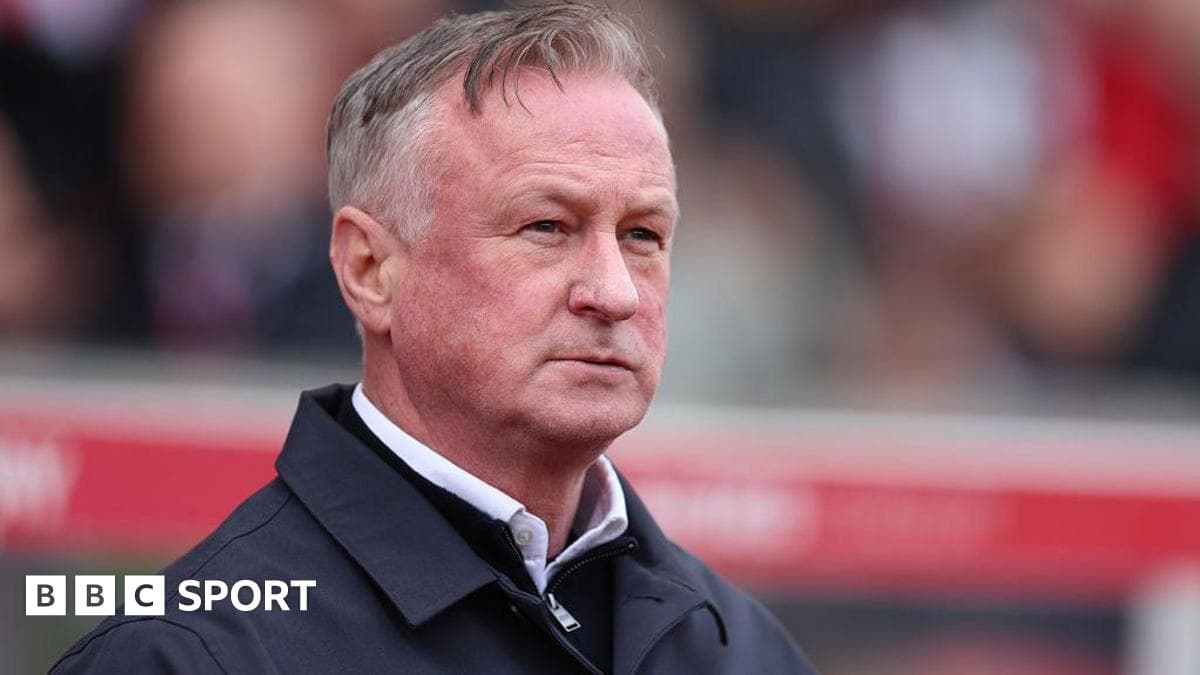
Michael O’Neill Chooses Northern Ireland Over Blackburn Rovers
Michael O’Neill has chosen country over club. The Northern Ireland manager will not take the Blackburn Rovers job on a permanent basis, ending weeks of speculation over whether he would split his future between Windsor Park and Ewood Park.
Instead, he stays where his legacy already runs deep.
Country First
O’Neill stepped into Blackburn’s dugout in February on an interim basis, tasked with steadying a listing side while still leading Northern Ireland. It was always a delicate balancing act. Fifteen games, five wins, five draws and five defeats later, Rovers survived in 20th place in the Championship and slipped away from the relegation trapdoor.
Job done. But not job accepted.
During his time juggling both posts, the 56-year-old never pretended the arrangement could last. He said repeatedly that he would eventually have to pick one role. The decision has now landed in Belfast’s favour.
“Following discussions with the club, Michael has decided to continue his long-term commitment to his role as Northern Ireland head coach, with a focus on leading the national team towards qualification for the Uefa European Championships in 2028,” Blackburn confirmed in a statement.
O’Neill’s own words carried a similar clarity. He called Blackburn “a historic football club with a proud tradition and passionate supporters” and spoke warmly of his spell there, but stressed that his “long-term focus must remain with Northern Ireland and the journey towards the European Championship campaign ahead”.
Blackburn Left Searching
For Rovers, the clarity comes with a cost. They must now start again.
The club have confirmed they will begin the process of identifying and appointing a new permanent head coach, with updates to follow. At least the timing gives them room to breathe: months remain before the 2026-27 season, and the Championship’s managerial carousel has barely started to spin.
O’Neill leaves Ewood Park having done exactly what was asked of him – stabilise, organise, survive. No flourish, no collapse. Just enough.
A Second Chapter With Northern Ireland
Back with Northern Ireland, O’Neill resumes a project he knows intimately. Across his two spells in charge, he has overseen 104 matches, winning 38, drawing 23 and losing 43. The high-water mark remains Euro 2016, when he guided the country to the finals and rewrote expectations of what a small football nation could achieve.
The aim now is to return to that stage in 2028.
An Irish FA statement captured the mood: they are “delighted” he has decided to stay, praising the “exciting squad of players” he has built and pointing directly at the Uefa Nations League this autumn and the Euro 2028 qualifiers with O’Neill “at the helm”.
That language matters. It signals continuity, not transition.
Building a Young, Fearless Side
O’Neill’s second stint began, as his first did, with a repair job. He inherited a struggling side from Ian Baraclough, one that had missed out on both Euro 2024 and this year’s World Cup. The results column still bears scars, but the performances and profile of the team have shifted.
Northern Ireland are younger, quicker, more ambitious with the ball. The average age of the starting XI in March’s World Cup play-off defeat to Italy was just 22.5 – the country’s second youngest team on record since World War Two. That figure came without three key players: Conor Bradley, Dan Ballard and Ali McCann. Even with them back, the age profile barely moves.
This is a squad built to grow, not to peak and fade.
The Irish FA will know that, given that foundation, the national job would have looked far more attractive to outside candidates now than when O’Neill returned in 2022. They also know that losing him on the eve of a new Nations League cycle would have risked tearing up months of work. Instead, they keep the architect.
Eyes on 2028
The short-term schedule is clear. Northern Ireland face Guinea in Cadiz and France in Lyon in June friendlies, before the Nations League begins in September. They have been drawn in Group B2 alongside Hungary, Georgia and Ukraine – a section that offers both threat and opportunity.
For O’Neill, those matches are more than fixtures. They are staging posts on a longer road towards Euro 2028, a chance to harden a young core, deepen the squad and sharpen the edge of a team that already looks more competitive and more watchable than the one he inherited.
Northern Ireland fans, wary in March when he spoke of “returning to the status quo” for the June games and then admitted in April that a decision on his future still loomed, can breathe again. The alarm bells have stopped ringing. The man who took them to France in 2016 will lead them into another qualifying campaign.
Blackburn move on. Northern Ireland move forward.
The question now is simple: can O’Neill turn this youthful promise into another summer on the big stage?