
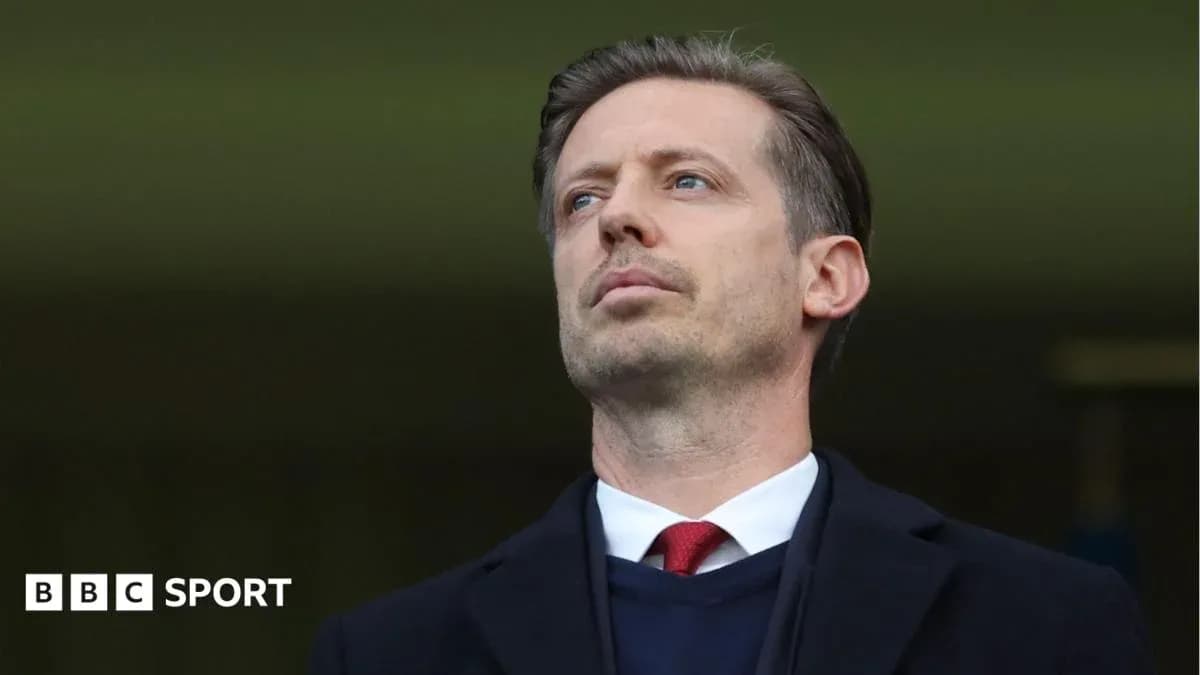
Michael Edwards Exits FSG Role as Liverpool Faces Uncertainty
Michael Edwards, the architect of some of Liverpool’s most transformative transfer business in the modern era, has stepped away from his position as chief executive of football at Fenway Sports Group, drawing a sharp line under another chapter of the club’s recent rebuild.
FSG framed the move as part of a “planned transition following the completion of key strategic priorities”, but the timing and the context tell a more complicated story. Edwards leaves just two years into a three-year contract, having only returned to the FSG orbit in March 2024 to help guide Liverpool through life after Jurgen Klopp.
The owners knew what they were getting when they brought him back. This was the deal-maker who, as sporting director, helped turn Liverpool from nearly-men into serial contenders, then champions. His remit this time was broader: steady the club through a seismic managerial change and help shape FSG’s wider football ambitions beyond Anfield.
That second part never fully took flight.
Edwards admitted as much in his statement. Liverpool, he said, is “in a strong position, with outstanding people, a clear direction and the foundations in place for continued success.” The club, in his eyes, is stable. The bigger FSG project, less so.
“When I returned, I was excited not only by the opportunity to help guide Liverpool through an important period of transition, but also by the chance to help shape FSG's wider football ambitions,” he said. The vision, though, “ultimately evolved differently to how we had originally envisaged,” even if he remains “proud of the work” done in presenting ownership with “a broad range of thoughtful and well-developed options for the future.”
Inside FSG, president Mike Gordon spoke of “natural disappointment” at his exit. That phrase alone hints at how central Edwards was to the plan. You do not lightly lose the man whose judgement underpinned one of the most effective recruitment operations in European football.
The challenge now? Liverpool must navigate another delicate summer without the quiet strategist who once gave them such an edge.
Salah gone, Edwards gone, questions mounting
On the pitch, the club already faces the daunting task of replacing Mohamed Salah, the talisman who reshaped Liverpool’s attack and left at the end of last season. Goals, aura, reliability — ripping that out of any team is brutal. Doing it while the senior architect of your football operation walks away only heightens the sense of jeopardy.
The pressure on sporting director Richard Hughes, already significant, now intensifies. His own future has become a talking point, with speculation swirling that he too could be on the move. For a club that has long prided itself on clear structures and joined-up thinking, the noise around two of its most important off-pitch figures feels uncomfortably loud.
Edwards’ legacy at Liverpool was built on decisive calls and smart bets. After arriving in 2011 and rising to sporting director in 2016, he helped assemble the core of Klopp’s title-winning side. Salah, Roberto Firmino, Sadio Mane, Andy Robertson, Virgil van Dijk — signings that didn’t just improve the squad, they changed the club’s trajectory.
Those deals powered Liverpool to the 2020 Premier League title, ending a 30-year wait for a top-flight crown. They also cemented Edwards’ reputation as one of the sharpest operators in the game.
Now, with Klopp gone, Salah departed and Edwards stepping away from FSG’s football helm, Liverpool enter another period of reinvention. The foundations he talks about may well be solid. The direction may be clear on paper.
But in the real world of dressing rooms, transfer windows and restless fanbases, the question is blunt: who writes the next great act of this story, and can they do it with the same conviction that defined the Edwards era?




