
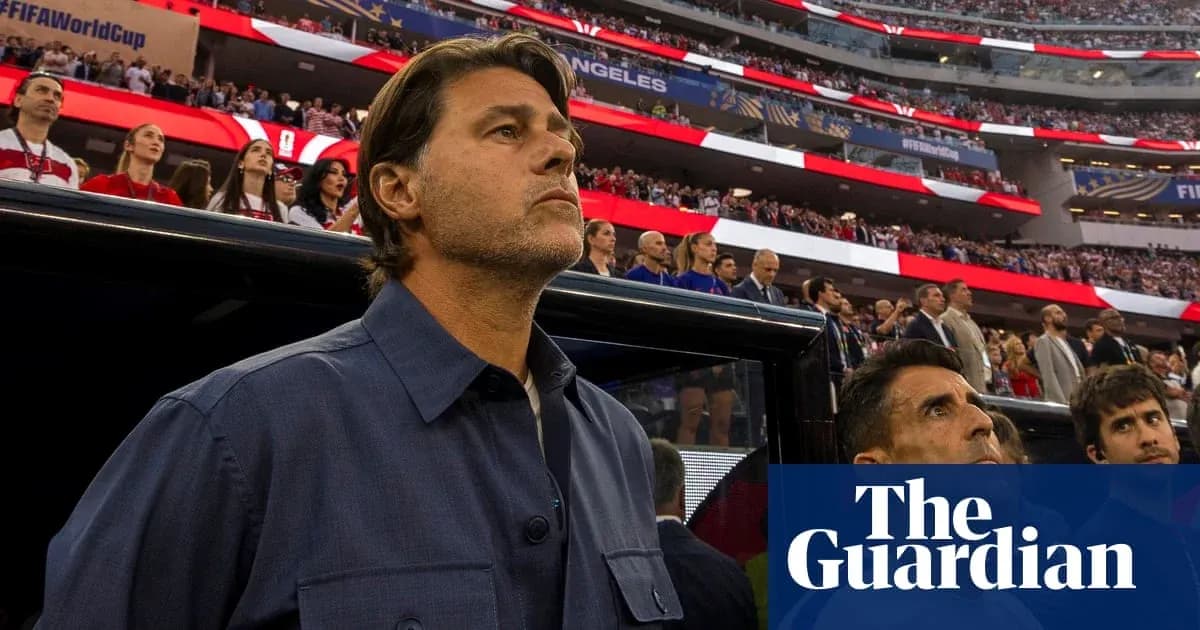
Mauricio Pochettino's Future with US Soccer: Aiming for 2030 World Cup
Mauricio Pochettino has been handed a clear message from US Soccer: they want this partnership to run all the way to the 2030 World Cup.
Multiple sources familiar with the talks confirmed on Friday that the Argentinian has been offered a contract extension that would keep him in charge of the US men’s national team for the next cycle, a move that underlines just how firmly the federation has tied its project to the 54-year-old. Those sources spoke on condition of anonymity because they were not authorized to discuss the negotiations publicly.
A long courtship, now at a decisive moment
This is not a sudden push. One source said Pochettino and the US Soccer Federation have been in active discussions over a new deal for roughly three months, a slow-burn negotiation that has played out in the background of a World Cup campaign that has steadily gathered credibility.
Pochettino and US Soccer CEO JT Batson have both acknowledged the talks in recent weeks. Around late May, just as reports surfaced of conversations between Pochettino and Serie A giants Milan, the coach kept his cards close to his chest. Batson did not.
The executive admitted that interest in Pochettino has been intense since he took the US job.
“[Pochettino], and the entire team, has been incredibly transparent [through] the entire process,” Batson said in May. “He had standing offers from other places to come [when we hired him initially], and he wanted to be here. He’s a big believer in what we’re doing at US Soccer. He’s a big believer in soccer in America, and he’s a big believer in this men’s team.”
The message was clear: they know others are circling, and they intend to keep him.
Decision on hold, stakes rising
Pochettino, though, has drawn a firm line. He has repeatedly said he will not decide on his future until after the World Cup, determined to keep contract noise away from a squad that has just delivered the best group-stage performance in US World Cup history.
The numbers underline his value. The most recent publicly available data on his salary places him among the highest-paid coaches in the sport at around $4m per year, with bonuses pushing that figure significantly higher. To tie him down through 2030, US Soccer will need to stay at – or above – that level.
The Athletic first reported the existence of the new contract offer.
Mixed tenure, emphatic World Cup
Pochettino’s 22 months in charge have not been smooth from start to finish. Results and performances in the build-up to this World Cup have swung between promising and frustrating, as he adjusted to international football for the first time in his career.
On the biggest stage, though, the picture has sharpened.
His team have produced a group stage that leaves little room for argument. The US swept aside Australia and Paraguay to claim top spot in their group with something to spare, playing with an authority that has so often eluded them at this level. A narrow, hard-fought defeat to already-eliminated Turkey did little to dent the sense that this side has grown under his watch.
Now comes the real test. A last-32 clash with Bosnia and Herzegovina awaits, and with it the chance to edge closer to history. By reaching the knockout rounds, the US under Pochettino sit just two wins away from matching their best-ever modern World Cup finish.
That is the context in which US Soccer has pushed its offer across the table.
Legacy, not just a contract
For much of his tenure, the prevailing assumption around Pochettino has been simple: he would come in, guide this generation through a World Cup, then return to the club game. The Argentinian himself has nudged that narrative in a different direction over the past few months.
“We told the federation we are open,” he said during a media roundtable this week. “But we don’t want to distract when all the energy needs to be with my players ... If the American people start to show passion in our sport too, why not be here being part of something that can create a legacy? For me, the most important legacy is the connection between the national team and the fans.”
That word – legacy – matters to him. It matters to US Soccer too.
The federation has been trying to signal a new level of ambition. Hiring a coach of Pochettino’s profile was the first major step. Building a $250m training facility in Atlanta, Georgia, was another statement, a physical monument to a long-term plan that stretches well beyond one tournament.
The offer on the table now is the next piece. Pochettino has the World Cup to finish, a knockout tie to navigate, and a squad to keep focused. After that, he must answer the question hanging over this entire project:
Does he want to be the architect of US Soccer’s next era, not just the man who guided them through this one?




