Martin O’Neill's Celtic: Time for a Reset or a Rupture?
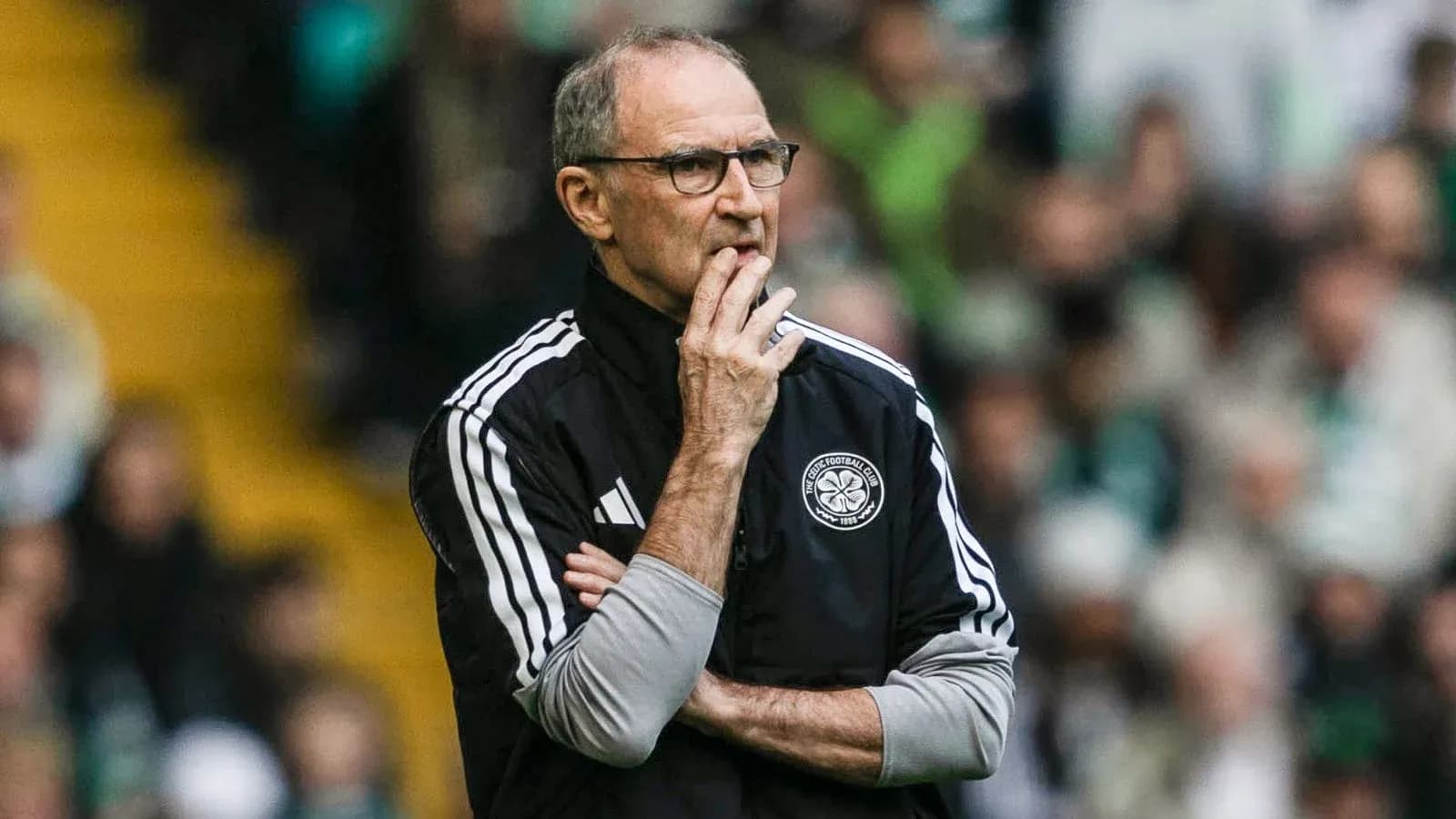
The songs still ring out for Martin O’Neill at Celtic Park. A banner, a chant, a memory of Seville. He is a legend here. That part is not up for debate.
What comes next is.
At 74, O’Neill has already admitted he will stop and decide if it is “time to wrap it up” after a brutal week that saw Celtic lose twice to Rangers and crumble in Europe. The latest blow, a 1-0 defeat to their Old Firm rivals in front of 60,000 at Parkhead, felt heavier than the scoreline. It felt like a warning.
This is not yet a crisis. But it is no longer just a wobble.
From perfect start to painful questions
Celtic opened their Scottish Premiership title defence with six straight wins. On paper, flawless. On the pitch, far from convincing.
The alarm bells truly started in Europe. In their Champions League play-off against LASK, Celtic raced into a 4-0 aggregate lead and looked home. Then they collapsed. Five unanswered goals conceded, 5-4 on aggregate, and out. A capitulation of that scale leaves scars. It also raises questions — about mentality, about management, about the direction of the team.
The response did not ease the tension. A heavy defeat to Rangers in the Scottish League Cup. A flat, abject display in a 3-1 loss to Ferencvaros in the Europa League. Then Rangers again, this time in the league, and another defeat.
Each performance has rattled the support a little more. Each one has chipped away at the early-season comfort.
Celtic still sit top of the Premiership heading into a three-week international break, but that matters less than it should. The gap is two points. It could have been eight. That is the kind of swing that changes the mood of a season.
Problems bigger than the dugout
When results turn, the spotlight always lands on the manager first. With O’Neill, that glare is now fierce. But Celtic’s issues run deeper than the man on the touchline.
The board faced protests last season, and the calls for change at the top have not vanished. If anything, this summer has sharpened the debate. Supporters are asking if the club’s recruitment strategy is fit for purpose.
Celtic spent big. They moved early for record signing Kasper Hogh and Camilo Duran before their Champions League exit. Then, as the window ticked down, they laid out close to £20m on Mika Baur, Haissem Hassan and Joel van den Berg before Deadline Day, along with five other late additions.
The money is not the problem. The timing and the fit might be.
O’Neill is still searching for a coherent shape that accommodates the new arrivals. Midfield combinations have been shuffled repeatedly, none of them convincing. Against Rangers on Sunday, he made his boldest tactical gamble yet: he abandoned wingers altogether, started with five defenders and pushed Kieran Tierney further forward.
The outcome did not change. The performance did not convince. The questions did not go away.
This is a club that has won 14 of the last 15 league titles without always properly replacing key players when they left. That dominance bred a sense, among some supporters, that the board had grown complacent — that the domestic landscape would remain forgiving no matter what.
It no longer is. Rangers are stronger. Hearts are a genuine threat. The safety net is gone.
Celtic have cash in the bank and have spent heavily, but a growing section of the support believes only a trophyless season will finally drive home the message: balance sheets do not win titles. The right players in the right positions do.
A legacy under strain
Scottish football can turn on its axis in a matter of weeks. O’Neill knows that better than most.
Twice last season he came back as interim manager to calm a club in turmoil. Twice he succeeded, steadying the ship and steering Celtic to a league and cup double that had looked improbable. It felt like a fitting final act.
Instead, he decided he was not done. Twenty-one years after his first spell at Parkhead ended, the Irishman took the job permanently again. The romantic return, the unfinished business, the idea that the old magic could be summoned one more time.
Back then, O’Neill’s Celtic were a snarling, relentless side. Seven major trophies. A UEFA Cup final in 2003. A team that opponents dreaded facing.
This version is the opposite. They are too easy to play against, too fragile when tested. The aura has thinned.
The supporters still adore O’Neill. They remember Larsson, Sutton, Hartson, the thunderous European nights. But even the most loyal voices are starting to ask the question no one wanted to say out loud: is it time for him to walk away before the memories are stained?
His recent decisions have not helped. After the loss at Ibrox in the League Cup, he made big calls for the Ferencvaros tie. They failed. He reacted again before Sunday’s Old Firm clash, changing shape, changing personnel. Same story. Same outcome.
He could yet match last season’s achievements. The fixtures are there, the points are there, the trophies are still there to be won. But if he cannot solve the structural problems in this squad, he risks ending this campaign empty-handed — and with a legacy that suddenly feels vulnerable.
A reset, not a requiem — yet
Amid the gloom, one basic truth remains: Celtic are still top of the league.
After Sunday’s defeat, O’Neill spoke to Sky Sports and insisted “there’s very much between the teams” and that “the history of the club proves it will fight back” from a week like this. He asked for perspective. “It’s concerning. Is it a disaster? I don’t think so. We have to rethink and reset.”
On that, he is right. Seven games into a 38-match Premiership campaign is not the point where titles are lost. There are seven Europa League fixtures still to come. There is time for this to flip, for a turbulent spell to become a turning point rather than a breaking point.
But the margin for error has shrunk.
The schedule after the international break is unforgiving. Motherwell away on October 11. Benfica in Lisbon four days later in the Europa League. Then Hearts at home, Celta Vigo at Parkhead, a trip to Hibernian, and Dundee United under the lights.
That run will not just test Celtic’s squad. It will test their resolve, their manager, and the board’s conviction in the path they have chosen.
O’Neill has already said he will pause and reflect. The club must do the same. Because the next few weeks will answer a brutal, unavoidable question: is this simply a stumble for a great manager in his second act, or the moment Celtic are forced to accept that even legends cannot outrun time?