
Marcus Rashford's Uncertain Future Ahead of World Cup
Marcus Rashford stands on the brink of a World Cup summer in the United States, yet his club future is as unclear as it has ever been. England expect him to start their opener against Croatia in Dallas on 17 June. He has no idea where he will be playing his club football a few months later.
For a forward of his profile and age, this is not normal. It is the latest twist in a career that has drifted into uncertainty since Ruben Amorim, then Manchester United head coach, froze him out of his first‑team plans in December 2024. That decision sent Rashford on the road: first to Aston Villa, then to Barcelona. He has impressed in flashes, scored big goals, hinted at a new home. Yet he is still living out of a suitcase.
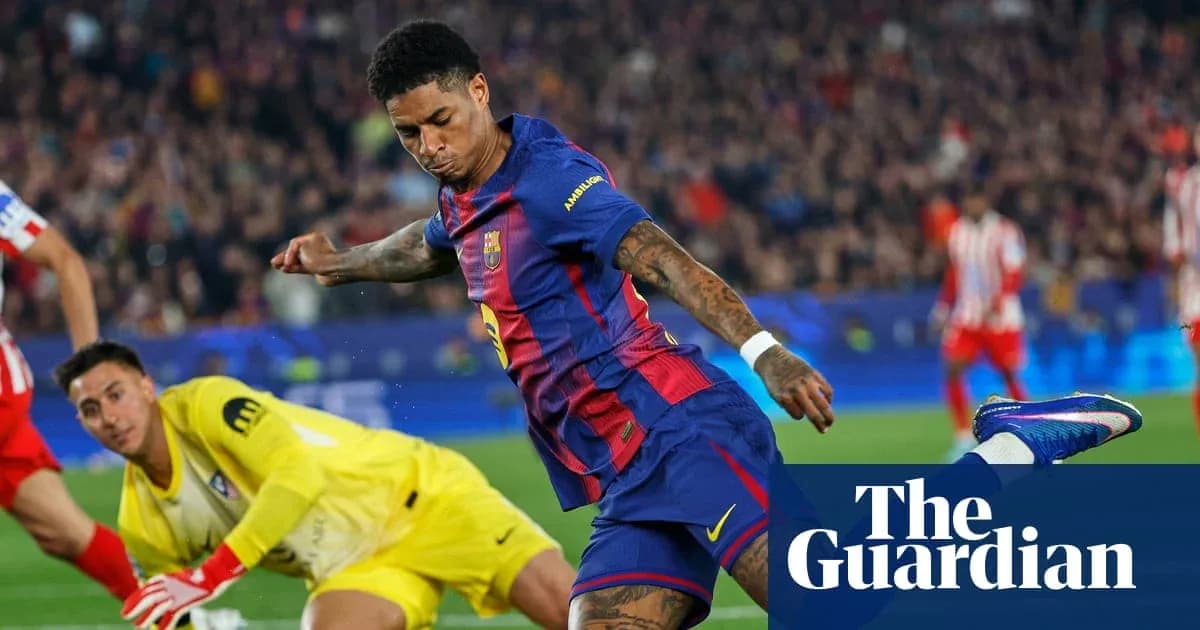
The moment that seemed to change everything came in the clásico earlier this month. Rashford bent in a free-kick against Real Madrid, a goal that proved pivotal as Barcelona clinched La Liga in that title-deciding game. A statement strike, in a statement fixture, for a club that looked like it might finally claim him.
He thought so too. Under Hansi Flick last season, Rashford’s loan spell in Catalonia was broadly successful. His preference is clear: he wants to stay. After scoring against Real on 10 May he said: “I am not a magician but if I was, I would stay. We will see.” It sounded like a plea wrapped as a joke.
The problem is Barcelona’s stance. Their interest in the 28-year-old is murky. The arrival of Anthony Gordon from Newcastle for £69m last week clouds the picture further. Gordon, like Rashford, operates primarily from the left. One big-money left-sided attacker has already walked through the door. A second, on a permanent deal, looks unlikely.
At present, if Barça want Rashford at all, it appears to be on the same terms as before: another loan. United are not keen. They want a clean break and would insist on a permanent fee of around £26m, a figure that looks suspiciously low for a player in his peak years, tied to Old Trafford until May 2028 and with a highlight reel that still carries weight in Europe.
The fee tells its own story. Behind that modest asking price sits a huge salary: Rashford earns £17.5m a year, with about £35m still due over the life of his contract. United’s motivation is obvious. They want the wage off their books. Any club that takes him on loan will be expected to shoulder all, or close to all, of that cost. A permanent transfer will almost certainly involve a pay rise on top. For Barcelona, already stretched and already stocked on the left, the numbers do not add up.
So what next? A return to United looks almost impossible. Amorim has gone, replaced permanently by Michael Carrick, but the issue runs higher than the dugout. Rashford remains firmly out of favour with Sir Jim Ratcliffe, the minority owner who controls football policy, and with his senior lieutenants: Jason Wilcox, the director of football, and Omar Berrada, the chief executive. The bridge appears burned at boardroom level.
That pushes the search elsewhere. When his loan at Villa ended last summer, Rashford’s camp targeted a Champions League club outside London. If that stance has softened, Arsenal immediately enter the conversation. Mikel Arteta would surely see Rashford as an upgrade on Leandro Trossard and Gabriel Martinelli as a left-sided option for the Premier League champions, while his ability to operate as a No 9 would give further variety alongside Kai Havertz and Viktor Gyökeres.
The logic is similar at Liverpool. Cody Gakpo is the only senior left-sided forward there and his output last season was, at best, modest. A fit, focused Rashford would change the dynamic of that flank. The question is emotional rather than tactical: would his dissatisfaction with United burn hot enough for him to cross one of English football’s fiercest divides and walk into Anfield?
Villa remain in the frame. Rashford lit up Unai Emery’s side during his spell there, particularly in the Champions League, where his pace and direct running suited their aggressive, front-foot approach. A permanent reunion would offer stability in a familiar environment, though Villa’s wage structure and transfer priorities will dictate how realistic that is.
There is always the lure of another move abroad. Paris Saint‑Germain have admired Rashford for some time, but their left side is now the domain of Khvicha Kvaratskhelia, a world-class presence in that role. Bayern Munich have Luis Díaz in situ on the left. Real Madrid have Vinícius Júnior. At the very top of the European game, the position Rashford prefers is already occupied.
The calendar will soon force decisions. The transfer window opens on 15 June, two days before England face Croatia, but clarity may arrive only slowly. Rashford’s case is tangled: high wages, a low fee, a powerful selling club, a player with options and his own preferences. United can block any deal they dislike. Rashford can reject any move that does not suit him. Every interested club must weigh the risk and reward of a player who helped Barcelona retain La Liga but comes with a heavy financial footprint.
On the pitch, he remains a puzzle. Eight goals and nine assists in La Liga last season is a solid return, not a spectacular one. Those numbers help explain Barcelona’s caution. They see the talent, they have benefited from it in key moments, but they also see the salary and the inconsistency.
That calculation could change in an instant. Imagine an England World Cup campaign lit up by Rashford, the same player who has made a habit of scoring in big games on the biggest stages. In that scenario, £26m for a 28-year-old with his pedigree, even on a high-end salary, would start to look less like a gamble and more like an opportunity someone, somewhere, will be desperate to seize.




