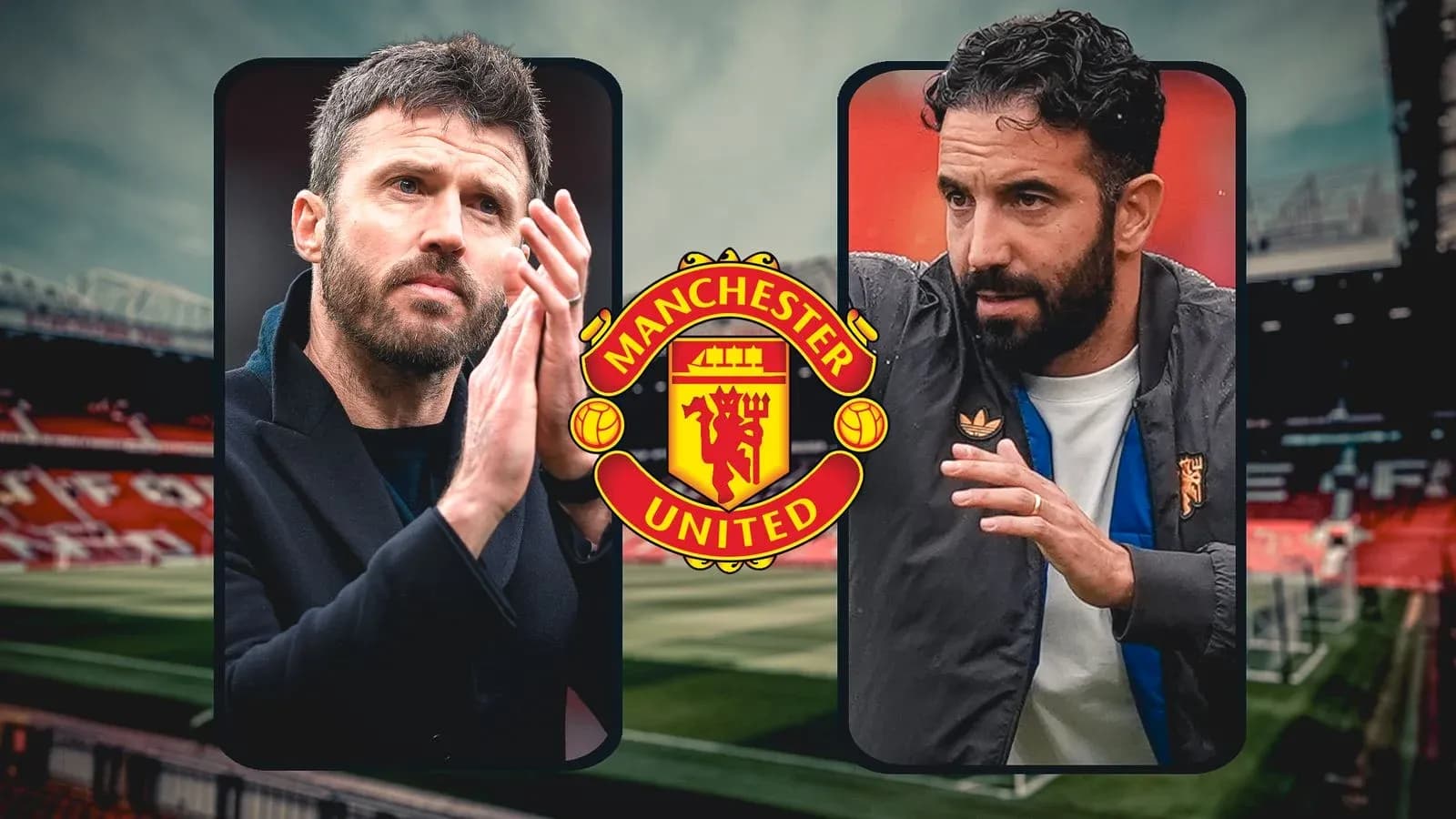
Manchester United's Transformation: Carrick vs Amorim
Ruben Amorim once told Manchester United fans they would have to suffer if they wanted success. Michael Carrick has told them something else entirely: there is still a United way to win.
Twelve months ago, Marcus Rashford was lighting up the Camp Nou, Carrick was out of work after his dismissal by Middlesbrough, and Amorim was preparing for his first full season at Old Trafford. Now all three converge again, in a different country and under very different spotlights.
Rashford, the prodigal forward, walks back into a club that has changed around him. Yet the man waiting for him is familiar. Carrick, his former team-mate and captain, now stands as United head coach, arms metaphorically open, offering the chance to rewrite a story that began a decade ago in the academy pitches of Manchester.
On the opposite bench, Amorim faces his past. Sacked five months into last season, he has resurfaced at AC Milan and is still chasing his first pre-season win. He meets the club that dispensed with him, with a point to prove and a system he refuses to abandon.
This is billed as a pre-season friendly. It feels nothing like one. Rashford’s return, Amorim’s grievances, Carrick’s quiet revolution – United’s meeting with Milan looks and sounds like the next episode of a long-running soap opera.
It also offers a neat vantage point to look back at a turbulent year at Old Trafford. United tore up their midseason plan, handed the keys to Carrick, and have emerged talking about titles instead of damage limitation.
Three things, above all, have changed.
From rigid to responsive
Amorim’s time at United will be remembered for one thing: the system that never shifted.
He arrived with a clear idea, a 3-4-3 he trusted above all else. Under pressure, he doubled down. When questioned, he famously told reporters that not even the Pope could convince him to change his formation. The line was memorable. It also became a millstone.
When the Africa Cup of Nations stripped him of key players, the structure stayed, the results dipped and the answers never came. There were late flickers of compromise, brief flirtations with tweaks, but he ultimately reverted to his preferred shape. That stubbornness, insiders say, lay at the heart of the tension between Amorim and the United hierarchy.
Fans felt it too. They saw goals – United could be thrilling in bursts under Amorim – but they did not see themselves in the team. Three centre-backs, wing-backs pinned high, midfield stretched. It was a long way from the front-foot, risk-embracing football they had grown up on and were prepared to wait for again.
The same complaints have followed him to Milan. Early murmurings from Italy suggest players are being bent to fit the system, not the other way round, and confusion has crept in as roles are redefined to serve the shape.
Carrick walked in and went the other way.
In his first game, a Manchester derby at Old Trafford, he tore up the caution. United pressed high, broke fast and hit Manchester City with wave after wave. The 2-0 scoreline flattered Pep Guardiola’s side. It could have been four.
That day set the tone. Carrick’s United play on the front foot, with an emphasis on speed and verticality. Summer signing Andrey Santos looks programmed to punch passes through lines, always seeking to move the ball forward rather than sideways. Bryan Mbeumo has been unleashed through the middle, constantly darting in behind, dragging defences into panic.
Bruno Fernandes, shuffled around under Amorim, has been dropped back into his natural habitat as a No 10. From there he went on a creative tear, racking up assists at such a rate he set a new Premier League record.
The debate over United’s style, so loud and divisive a year ago, has gone quiet. Under Carrick, everyone can see what this team is trying to be.
Belief restored
The shift has not just been tactical. It has been emotional.
Amorim’s press conferences were box office, but they cast a long shadow. He spoke of storms, of suffering, of a squad not ready for the demands in front of it. At one point he described his side in terms that left supporters wondering how bad things really were. Entertainment for the cameras, perhaps, but it fed a gloom around Old Trafford.
The irony is that the numbers were not disastrous. When he was sacked, United were still within touching distance of the top four. You would not have guessed it from the mood music.
Carrick changed that soundtrack. He took the same group, added a handful of smart signings, and guided them over the line into the Champions League – the very competition Amorim had publicly suggested they were not ready for.
Now, as the new season looms, the language has flipped. Leny Yoro and Mbeumo have openly talked about wanting to win the league. Carrick has not shut that talk down. He has leaned into it.
He believes this squad can do something special. That conviction lands harder when you remember where United were a year ago, skirting the edges of a relegation battle in both form and feeling.
Old Trafford, once braced for the next crisis, has started to dream again.
Second chances instead of dead ends
Under Amorim, the line felt clear. Fall out of favour and your story at United was basically over.
In a squad whose mentality had been questioned for years, that hard edge had its appeal. Standards needed to be raised, excuses stripped away. But the approach carried collateral damage.
Alejandro Garnacho felt it sharply. Kobbie Mainoo looked destined to follow. Rashford, once the poster boy of the club, was sent out on two loans after their relationship deteriorated beyond repair.
Amorim would argue he was vindicated on some calls. Garnacho’s move to Chelsea never caught fire, and he now finds himself on loan at Aston Villa, still searching for the consistency and maturity to match his talent.
Mainoo is a different story. Under Carrick, he became a pillar of the side. He did not start a league game until January, yet finished the campaign as a near ever-present and earned a nomination for PFA Young Player of the Year. The midfielder who looked expendable under one manager turned into indispensable under another.
Rashford sits somewhere between those extremes.
His quality has never been doubted. Amorim’s issue lay with his attitude, his conduct around the squad. Since leaving, Rashford has produced flashes of the old electricity at Villa and helped Barcelona to a LaLiga title. The question now is whether he is ready to align himself with the culture Carrick has built, if he is to remain at Old Trafford beyond the end of the transfer window.
Carrick has at least opened the door. Where Rashford’s United career once looked finished, there is now a route back. The head coach has shown a willingness to forgive, to reset relationships and offer redemption if the response is right.
It is a calculated risk, rooted in his belief that man-management, not just systems, defines a dressing room.
On Saturday, in a stadium far from Manchester, those philosophies collide. Amorim, still wedded to his structure, chasing a first win with Milan. Carrick, reshaping United in his own understated image. Rashford, caught between the two men who have defined his recent past.
Pre-season or not, the stakes feel clear enough. Which vision of Manchester United will carry them through the season that really counts?