Manchester City's Unsettling Transition: The Fall of Three Pillars
The Etihad has seen quieter nights, but few as unsettling as this.
Manchester City’s 3-0 defeat to Arsenal in the Community Shield did not feel like a pre-season blip or a bad day in a glorified friendly. It felt like a curtain being tugged down on a golden era, the stadium watching in uneasy silence as cracks finally appeared in a project that once looked untouchable.
This was not just about a scoreline. It was about timing, context and the unmistakable sense that the foundations that carried City to the top of Europe are being stripped away, one pillar at a time.
The First Pillar Falls: Txiki’s Quiet Exit
The ownership remains in place. Ferran Soriano is still steering the financial and operational ship. On the surface, the structure looks intact. But beneath that, the first great architect of this modern City has already walked out of the door.
Txiki Begiristain, arguably the defining sporting director of the Premier League era, decided more than a year ago that his time was up. He did not leave in a blaze of publicity. He stayed to smooth the transition, to guide his successor Hugo Viana through those first delicate months.
Time has already underlined the difference.
Begiristain built an expensive squad, yes, but always with a sharp eye on value and resale. He brought in Erling Haaland for around £60 million, Rodri for roughly £70 million, and balanced those out with smart exits that kept City both competitive and compliant.
Viana’s first summer tells another story. More than £130 million spent on just two signings. The numbers alone do not condemn him, but they do announce a shift: away from the precise, long-term squad building that defined City’s rise, towards something more aggressive, more reactive.
That is not an administrative detail. It is a change of philosophy. It is exactly the kind of drift Manchester United experienced once Sir Alex Ferguson – and the structure that supported him – walked away.
Pep’s Shadow and the Void Ahead
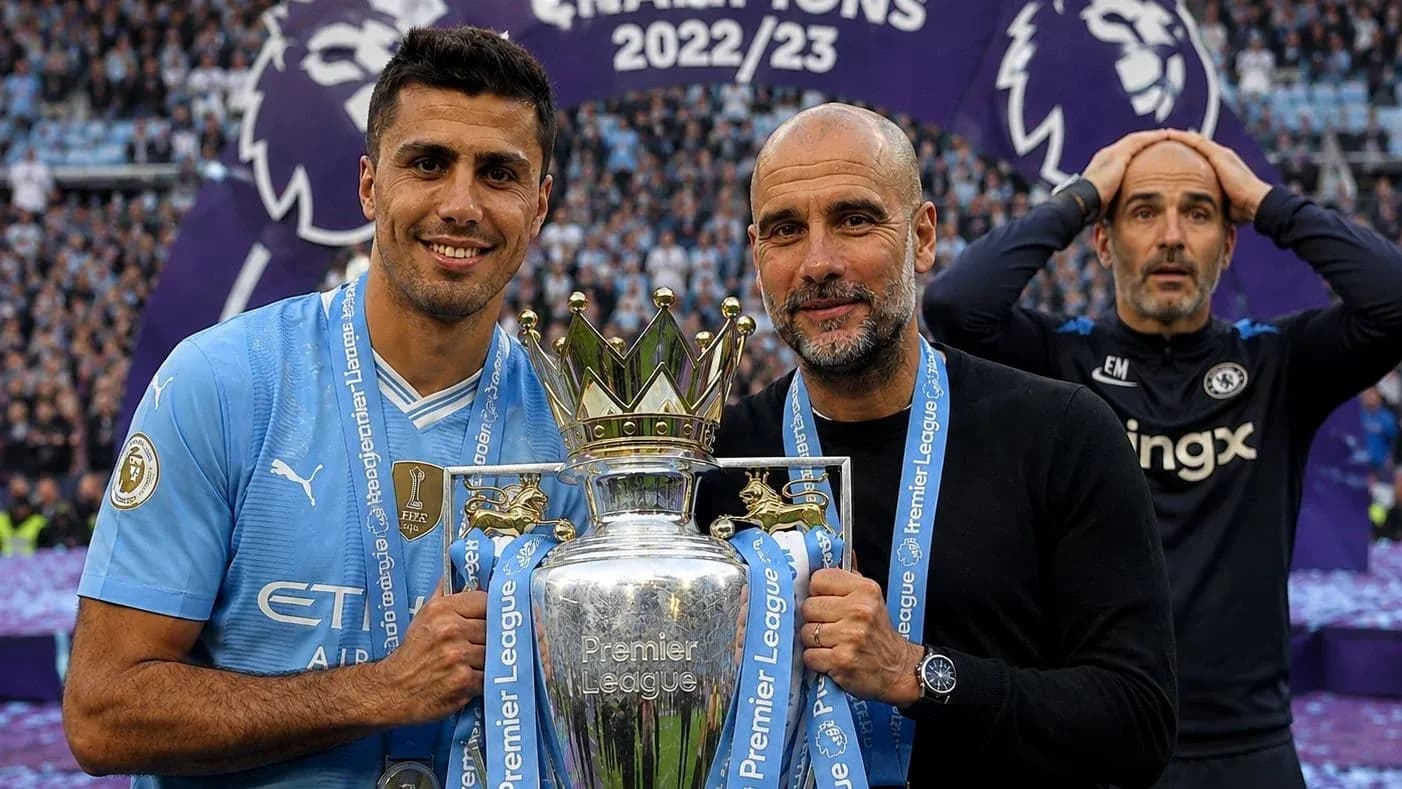
If Begiristain was the architect, Pep Guardiola was the master builder on the touchline. The second great pillar of City’s dominance is also on his way out, and the club knows it.
Guardiola did not just win. He controlled. He shaped every detail of the football department, from tactics to recruitment, from academy pathways to training culture. Inside City, Pep was untouchable. Win, lose, or draw, his authority never wavered.
No successor, including Enzo Maresca, will inherit that level of power.
That difference matters. A manager who knows he is secure for the long haul behaves differently, coaches differently, takes different risks. Guardiola imposed a style so clear and so relentless that opponents often felt beaten before kick-off. His presence alone carried a psychological weight across the league.
When he goes, that aura goes with him. So does the certainty. So does the guarantee that, over 38 games, City will almost always find a way.
United learned that lesson the hard way. Ferguson left and a revolving door of managers followed, each trying to impose a new idea on a club that had lost its core identity. The trophies slowed, then stopped. The money kept flowing, but the direction vanished.
City now stand close to that same crossroads.
Maresca’s Harsh Introduction
Into this landscape walks Enzo Maresca. Talented, ambitious, and already decorated from his work with Leicester City and Chelsea. He did not arrive as a novice.
But he has never managed a club of City’s size with this level of expectation and this weight of history pressing on his shoulders.
His first serious test brought him face to face with Arsenal at Wembley. It was a chance to make a statement, to reassure those who wondered what City would look like without Pep in the dugout and Txiki in the background.
Instead, he ran straight into a red wall.
Arsenal dominated. City looked vulnerable, unbalanced, stripped of the solidity and control that had become their calling card. The 3-0 defeat did not settle any arguments about the season ahead, but it did send a message: the margin for error has shrunk, and the comfort of the old certainties has gone.
For Maresca, the challenge is brutal. He must build a new identity at a club that has grown used to perfection, and he must do it while winning immediately. There is no grace period at the Etihad.
Rodri: The Third Pillar Under Threat
If Begiristain shaped the squad and Guardiola orchestrated it, Rodri was the on-pitch axis around which everything turned. His potential departure looms as the most dangerous blow of all.
Few midfielders in world football can drag a team’s level up quite like the Spaniard. With Rodri, City looked like champions-in-waiting. Without him, they looked exposed.
The evidence is already there. In previous spells when Rodri was missing, City’s midfield lost its balance. The pressing was less coordinated, the build-up less calm, the defensive shield far thinner. The team did not just lose a player; it lost its rhythm.
Now, with his farewell on the horizon, City face the prospect of trying to replace the irreplaceable. There is no obvious like-for-like solution, no guarantee that money alone can fill that void in the short term.
Football history is full of examples of clubs who lost their pivotal man and never quite recovered. City’s resources are vast, but they are not immune to that pattern.
Echoes of Old Trafford
The parallels with Manchester United after 2013 are impossible to ignore.
United lost Ferguson and the carefully constructed framework around him. What followed was a decade of missteps: confused recruitment, short-lived managerial projects, and a constant chase for a lost identity. The stadium stayed full, the money kept coming, but the direction was gone.
City are better placed to avoid that fate. Their ownership is stable. Their infrastructure is modern and aligned. Their financial planning has, for the most part, been meticulous.
Yet the warning signs are there. Three pillars – Txiki, Pep, Rodri – either gone or on the brink. A new sporting director spending differently. A new coach feeling the heat from day one. A heavy defeat in a showpiece game that, while not decisive, stripped away the illusion that this would be a seamless transition.
If early-season results follow the pattern of the Community Shield, the pressure to tear things up and start again will grow quickly. That is how a “transition” becomes a full-scale rebuild. That is how a superclub slips into the kind of long, dark tunnel United know too well.
The Next Few Months
City still have weapons most clubs can only dream of: money, facilities, global appeal, a squad stacked with quality. Those assets alone mean they are not doomed to repeat United’s mistakes.
But success at this level is about more than resources. It is about continuity of thought, clarity of purpose, and the ability to replace giants without losing yourself in the process.
The first real crack appeared under the Wembley lights against Arsenal. It was only one match, but it felt like the opening scene of a new chapter rather than the epilogue of the last.
Now comes the real test. Can Manchester City absorb the loss of Txiki, live without Pep, and survive a future without Rodri – all while staying at the top? Or is this the moment when the machine finally starts to look human, and the era that defined a generation gives way to something far less certain?