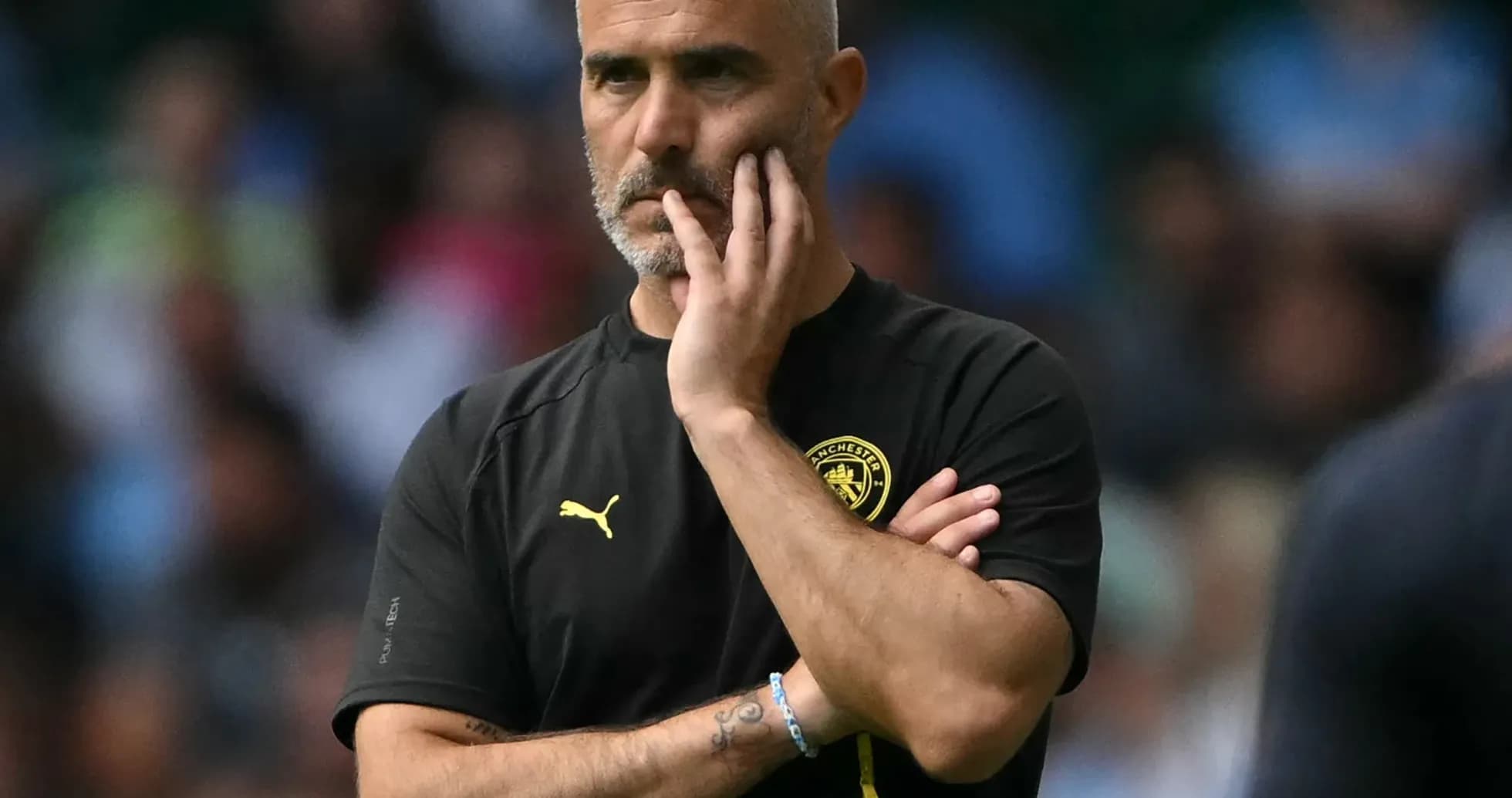
Manchester City Begins New Era Without Guardiola
For the first time in 10 years, Manchester City walk into a new season without Pep Guardiola prowling the touchline.
The Spaniard’s exit slams shut the most gilded chapter in the club’s history – six Premier League titles, one Champions League, and a decade in which City did not just win, they reshaped what winning in England looked like.
Into that space steps Enzo Maresca. He inherits Erling Haaland, a squad loaded with elite talent, and a club that now measures success only in silverware. He also inherits the burden of following a legend.
As City open their league campaign at home to Bournemouth on Sunday, the new era begins with more questions than answers.
Can Maresca really follow Guardiola?
City have been built, brick by brick, around one man’s idea of football. Every department, every age group, every signing has been tuned to Guardiola’s demands. When Manchester United lost Sir Alex Ferguson in 2013, the whole structure shuddered. That comparison hangs over the Etihad.
Maresca is not an outsider parachuted in. He was Guardiola’s assistant during the treble season, then went on to sharpen his own coaching credentials at Leicester and Chelsea. City’s hierarchy see him as continuity with a twist, not a clean break.
The football, on the ball at least, is expected to look familiar. Positional play, dominance in possession, control through structure – the Guardiola blueprint will not be ripped up. But Maresca still has to stamp his own identity on a dressing room that knows only one voice at the top.
There is another edge to this appointment. Maresca has a reputation for being demanding and, at times, combustible in his relationships with players and staff. At a club where expectations are sky-high and the squad finished as runners-up last season, that volatility could energise or destabilise.
The first competitive sign was ugly. Arsenal blew City away 3-0 in the Community Shield last Sunday. One game, one trophy gone, and already a reminder that following Guardiola will not be a gentle handover.
Who replaces Rodri’s heartbeat?
Rodri has been City’s metronome and shield. His passing, his positioning, his reading of danger – everything flowed through him. He then carried that form into Spain’s World Cup triumph, taking the Golden Ball as the tournament’s outstanding player. Losing him to Barcelona is not a setback. It is a structural shock.
City moved quickly to reinforce midfield, landing England international Elliot Anderson from Nottingham Forest for a reported £116m ($153m). Anderson brings energy, aggression, ball-winning and vertical running. He drives games forward. But he is not a Rodri clone.
His profile is more box-to-box, more progressive than anchoring. He can add bite and legs, but the calm orchestration Rodri provided is harder to reproduce.
City are also expected to push for 18-year-old Lille midfielder Ayyoub Bouaddi, a highly rated but raw teenager. He is one for the future, not a ready-made solution to one of the most specialised roles in world football.
The blunt reality: there is probably no like-for-like replacement for Rodri anywhere. City may have to spread his responsibilities across several younger players and trust that the collective can cover what one man used to do almost alone.
Can Maresca repair City’s game management?
Last season’s title bid did not collapse through a lack of talent. It frayed through lapses in control. City dropped 17 points from winning positions – a staggering number for a team that prides itself on suffocating games once in front.
Maresca’s reputation leans more pragmatic than Guardiola’s at times. He is not afraid to tilt towards control and risk management when needed. That mindset could help close the door in matches that previously slipped away.
But the squad has changed. John Stones, Bernardo Silva and Nathan Ake have all departed this summer. Those three were crucial to City’s ability to slow the tempo, keep the ball and manage transitions. The question now is whether the new faces can deliver the same level of calm under pressure.
Maresca might want more control. Whether the tools he has actually suit that approach is one of the most tangible tactical storylines of City’s season.
Is Haaland enough to carry a title challenge?
Haaland remains the focal point and the fear factor. When City function around him, few defences can live with his movement and finishing. His presence alone forces opponents to change shape and mentality.
But City learned last season how fragile it can be to lean too heavily on one striker. When the supply line stutters, or when Haaland is crowded out, the whole attacking plan can look one-dimensional.
Omar Marmoush offers support, but he is nowhere near Haaland’s level. He is a useful option, not a co-star. Maresca must find ways to diversify the threat – more goals from midfield, more unpredictability from wide areas, more variety in how City attack when the obvious route is blocked.
If the plan is simply “find Haaland and hope”, the title race will expose that.
Will the World Cup hangover drag into autumn?
City did not just send players to the World Cup. They sent a core. Haaland, Doku and others went deep into the tournament, with six first-team players still involved in the final week. Maresca has started pre-season with a thinner group than ideal, at a time when he needs every minute on the training pitch to install new ideas.
The early signs were worrying. Against a fresher, sharper Arsenal in the Community Shield, City looked flat, blunt and off the pace.
“I don’t know if it was physical condition, we had many players at the World Cup,” Maresca admitted afterwards. “After the first goal the reaction was very good, but after the second goal it was more complicated.”
The physical lag is one thing. The mental reset after a long summer and a turbulent transfer window is another. Maresca must knit together a squad that has lost leaders, added expensive new pieces and is still digesting the end of the Guardiola era.
Bournemouth at home is not the biggest fixture on City’s calendar. But it is the first real glimpse of what this new version looks like. Are they still the machine Guardiola built, or something more uncertain, more human – and more vulnerable – as the Premier League chases them down?