Manchester City’s Community Shield Struggles Under Maresca
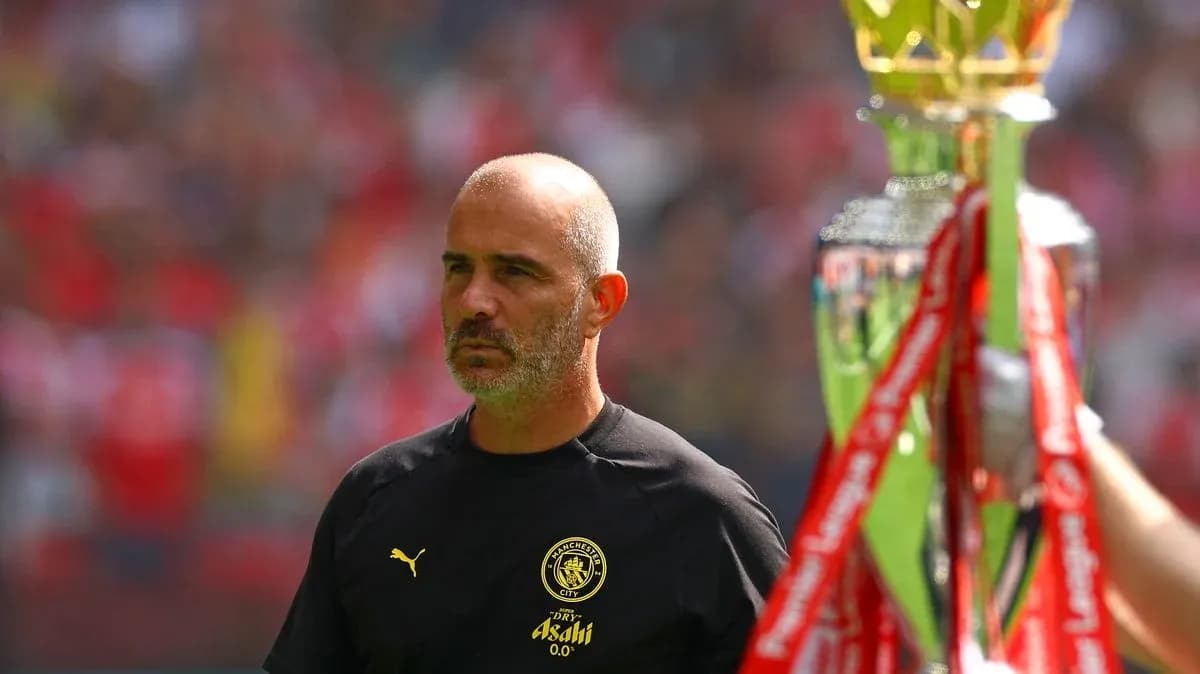
Manchester City looked nothing like a Maresca team at Wembley. Not in structure. Not in sharpness. Not in conviction.
After a pre-season that had quietly stitched together Enzo Maresca’s ideas, the Community Shield was supposed to offer a first real glimpse of the post-Pep era against elite opposition. Instead, it pulled at the seams. City were disjointed, predictable and, for long spells against Arsenal, far less than the sum of their lavish parts.
Yes, this was a step up from anything they faced on the Asia tour. Arsenal pressed harder, moved quicker, punished mistakes. But that alone doesn’t explain how flat City looked, especially with four of their best players thrown straight back into the starting XI despite only just returning from holiday.
On the surface, it felt like a red flag. A first hint that life after Pep Guardiola might bite sooner than expected. A worrying sign that the control and clarity of the past decade could give way to confusion.
Look a little closer and the picture becomes more complicated.
Maresca’s gamble with returning stars
Erling Haaland, Elliot Anderson, Nico O’Reilly and Jeremy Doku all started. All short of rhythm. All clearly not at full tilt.
It looked like a manager desperate to land his first piece of silverware. Why else would Maresca rush them back when others had banked more minutes and a better understanding of his demands?
His explanation afterwards painted a different motive.
"Sometimes players prefer to start doing the proper warm up and start from the beginning," he said. The plan, he stressed, was always to withdraw them after 45 to 60 minutes. This wasn’t about squeezing everything out of them to beat Arsenal; it was about accelerating their readiness for Bournemouth and the opening stretch of the Premier League season.
In short, he used a showpiece game as a conditioning tool. High risk, low rhythm.
It showed.
Anderson out of place, Kovacic exposed
No player embodied the confusion more than Anderson. Days after Maresca had been clear that the former Forest midfielder’s best roles are as a No.6 or No.8, he was shunted to an awkward, drifting role from the right.
It didn’t suit him. It didn’t suit the team.
There were flashes – two excellent deliveries into the box, one each for Haaland and Doku, hinting at his attacking range from that side. But they were isolated moments, not part of a coherent pattern. While Anderson floated, Mateo Kovacic was left to fend for himself as the lone holding midfielder, swamped by Arsenal’s runners and passing lanes.
City lost their usual control in the centre. The balance was off, and Arsenal exploited it.
The decision to leave out Matheus Nunes only deepened the puzzle. Maresca and the club have effectively anointed him as first-choice right-back, to the point that plans to bring in competition this summer have been shelved. Yet at Wembley, Nunes stayed on the sidelines.
In his place, Abdukodir Khusanov endured a difficult afternoon, caught in the same defensive turbulence as the rest of the back line. City’s right side, so carefully planned in theory over the summer, suddenly looked improvised.
Those two calls – Anderson out of position and Nunes omitted – dragged City into problems they had largely avoided in pre-season. They also jarred with the work Maresca has done so far, hinting that this might be a one-off tactical detour rather than a new template.
With Anderson restored to a central role and Nunes back in the defensive structure, City should look far more like the side Maresca has been building.
Grealish back in the shop window
Then came another surprise: Jack Grealish.
The £100m winger, fresh from a loan spell at Everton and having missed the summer tour with City still open to moving him on, emerged for the second half. On paper, those minutes might have been more valuable for someone like Rayan Ait-Nouri, who needs time to bed into Maresca’s system.
But Grealish’s cameo served a different purpose. Any club considering a move for him will have watched closely. He looked sharp enough, involved enough, to remind suitors of his pedigree. If City are serious about cashing in, Wembley will not have harmed their chances of sealing a deal.
A flunked test, not a finished verdict
As a first major examination of the Maresca era, this was a fail. City lacked fluency, their structure cracked under pressure, and the questions came quickly: Can he impose his ideas on this squad? Will those ideas hold up against the best? Is this team really ready to challenge for the Premier League and Champions League straight away?
But some of the most jarring decisions were so out of step with Maresca’s pre-season work that they point towards a longer game. A manager prioritising conditioning and experimentation over a one-off trophy. A coach willing to take a hit in August to be stronger when the real grind begins.
The reaction to a Community Shield defeat – and the manner of it – has been predictably fierce. Snap judgments, sweeping conclusions, declarations about the end of an era.
The truth is more likely to emerge not from those 90 messy minutes at Wembley, but from what comes next. Bournemouth, then the early league fixtures, will show whether this was a warning sign of deeper problems – or just an ugly, mistimed bump at the very start of something new.