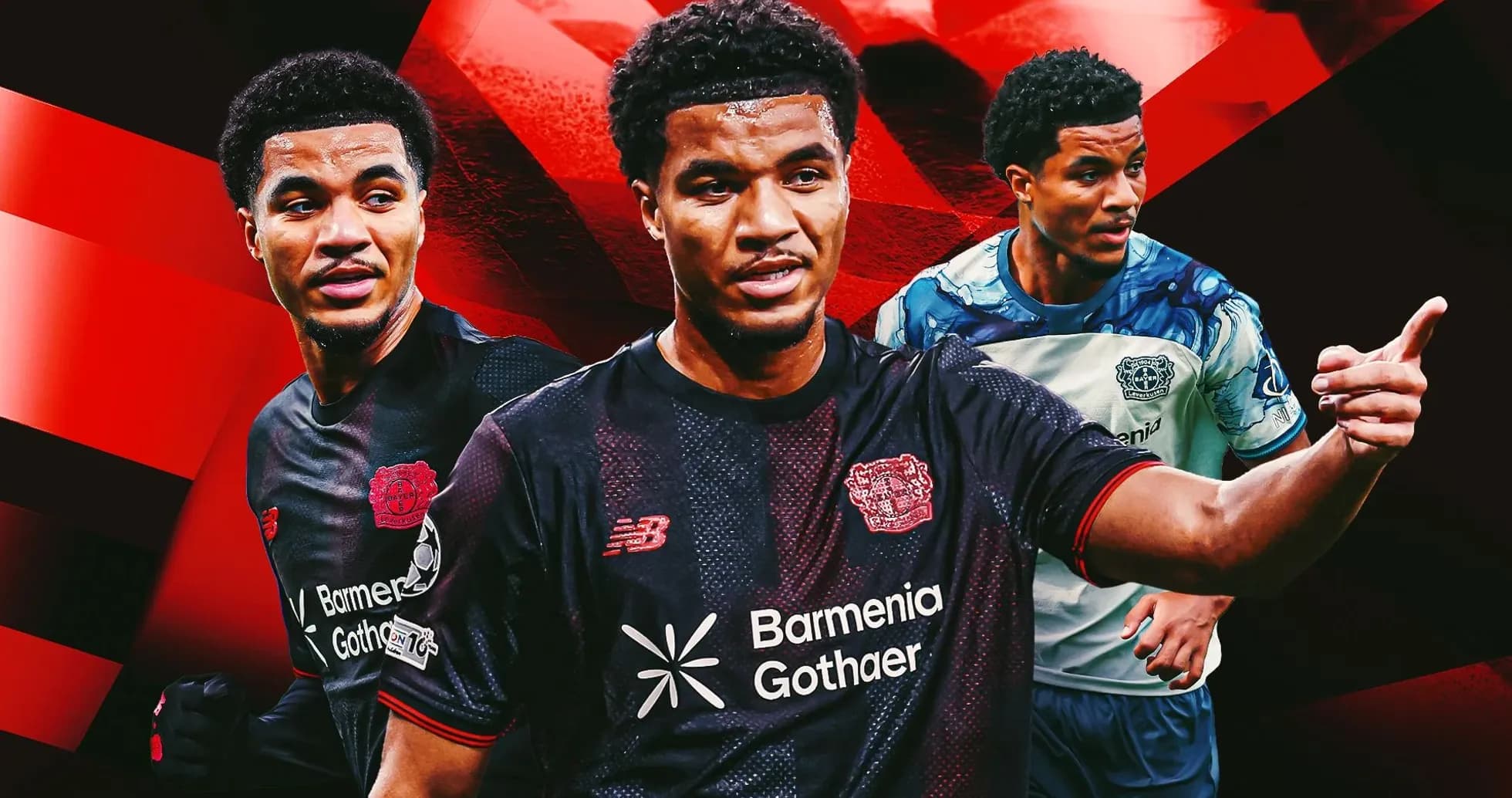
Malik Tillman: Rebuilding and Rising in Club Football
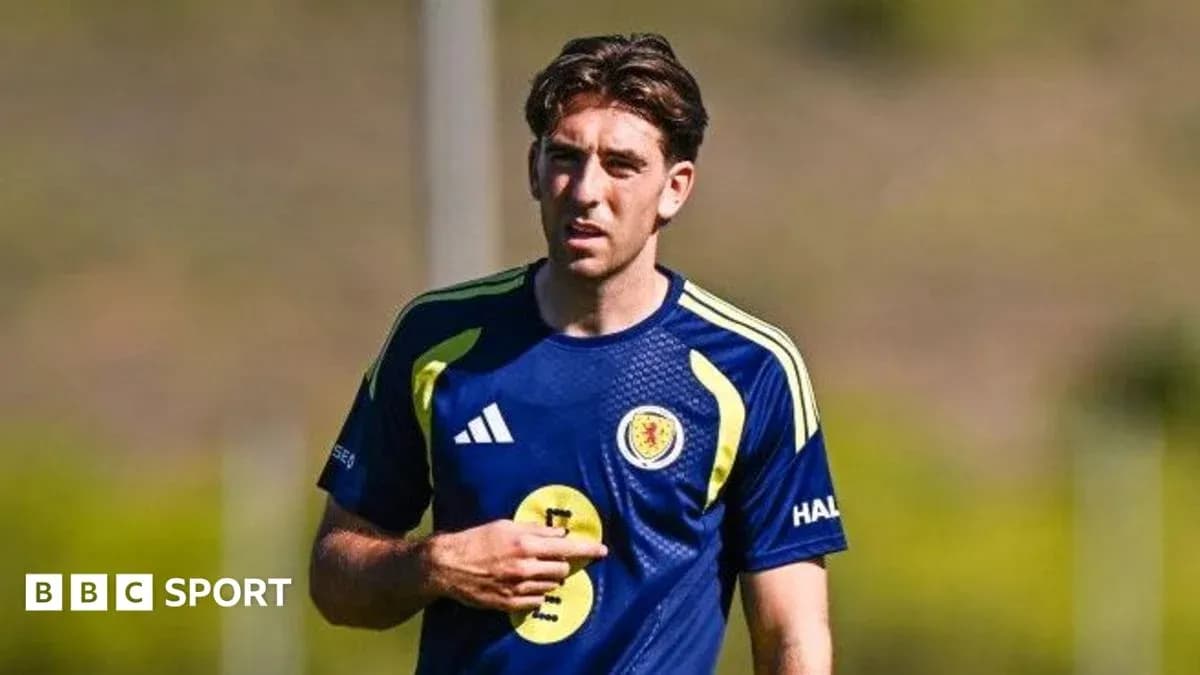
Malik Tillman walked out of the World Cup as one of its quiet revelations. Not because he suddenly discovered a new trick, but because Mauricio Pochettino tore up the scouting report and rebuilt him.
At PSV and in his early Bayer Leverkusen days, Tillman lived as a classic No.10 – floating between the lines, gliding on the ball, stitching attacks together with that soft first touch and eye for the final pass. Under Pochettino, that version was shelved. The American was dragged deeper, recast as a No.8 who hunted the ball, drove it through pressure and turned midfield into a pressing trap.
The elegance never disappeared. It just came with teeth. Two outrageous free-kick goals stamped his World Cup into USMNT folklore, the kind of moments that live on highlight reels long after the tournament dust settles.
Now comes the hard part: making all of that matter in club football.
Leverkusen are not the team he joined a year ago. Back then, they were fresh off ending Bayern Munich’s stranglehold on the Bundesliga and striding into the Champions League with a swagger. That energy has vanished. A flat, joyless campaign left them short, dumped into the Europa League and stripped of that title-winning aura.
Tillman got lost in the gloom. Six goals and one assist across all competitions is a thin return for a player of his talent at a club of that size. He never truly imposed himself on the season.
So this year becomes a reset. A new manager, Carles Martínez Novell, offers a new script. At Toulouse, he built competitive sides out of modest resources, leaning on progressive football and clear structure. He looks like the right profile for a club trying to climb back up, and his ideas should suit Tillman.
There’s room for the American here, whether as a Pochettino-style No.8 who presses and carries, or as an old-school No.10 with license to roam. The system won’t shut him out. It will challenge him.
And the first test is inviting. Elversberg, fresh to the Bundesliga, arrive as the kind of opponent against whom a creative midfielder can seize control, pad confidence and reintroduce himself as a difference-maker. If Tillman wants this Leverkusen chapter to feel more like his World Cup than last season’s slog, this is the sort of game where that transformation has to start showing on the stat sheet.
Brenden Aaronson, trusted but still under scrutiny
Brenden Aaronson remains one of those players who never stop running and never quite silence the doubters. High effort, high energy, forever buzzing around the ball. His numbers tell a different, more modest story: 33 goals and 31 assists in 268 league games. Respectable, not spectacular. The kind of output that keeps the question alive – is there another level in there?
Daniel Farke thinks there might be. Or at least, he trusts what Aaronson gives him. The American has ridden out his shaky spells at Leeds, the moments when his place felt fragile, and emerged as a genuine starter in this version of Farke’s team.
His season debut summed him up. Stationed on the left wing in a 1-0 win over Nottingham Forest, he didn’t create a single chance. Yet he never stopped working. Seven defensive contributions, 14 sprints, six ball recoveries – a winger as auxiliary full-back, pressing trigger and outlet all at once.
That’s Aaronson in a nutshell: relentless without always being ruthless.
The issue, as ever, is what happens in the final third. Leeds have tried to address that by bringing in Harry Wilson on the right, a signing designed to shoulder some of the creative and goalscoring burden that Aaronson can’t fully carry on his own. Wilson’s presence should free the American from having to be the primary playmaker.
But Leeds still need more punch. Against a disciplined Brentford side on Sunday afternoon, work rate won’t be enough on its own. The margins will be tight, the spaces small. This is where the conversation around Aaronson always circles back: can he turn all that running into more tangible attacking damage?
This season, with Farke’s trust and a defined role, he may not get a better platform to answer that.
Antonee Robinson, chaos, Cole Palmer and a needed response
Alvaro Arbeloa’s first league game in charge of Fulham was wild. A 3-2 defeat to Chelsea, yes, but the kind of chaos that felt strangely promising. The Cottagers have attacking talent everywhere, a cluster of young, inventive players who thrive when the game breaks open. Arbeloa, whose time at Real Madrid was marked by the difficulty of managing big egos and bigger expectations, might have found a more natural home here.
His Fulham want control until the final third, then something close to organised anarchy. Full-backs are encouraged to fly on, to overload, to stretch. That suits Antonee Robinson perfectly. His game has always been about explosive forward runs, aggressive positioning and creative passing from deep and wide.
Against Chelsea, that side of him was on full display. Robinson played more line-breaking passes than Fulham’s left winger, Cesar Palacios, a clear sign of how much responsibility he carried in progressing the ball.
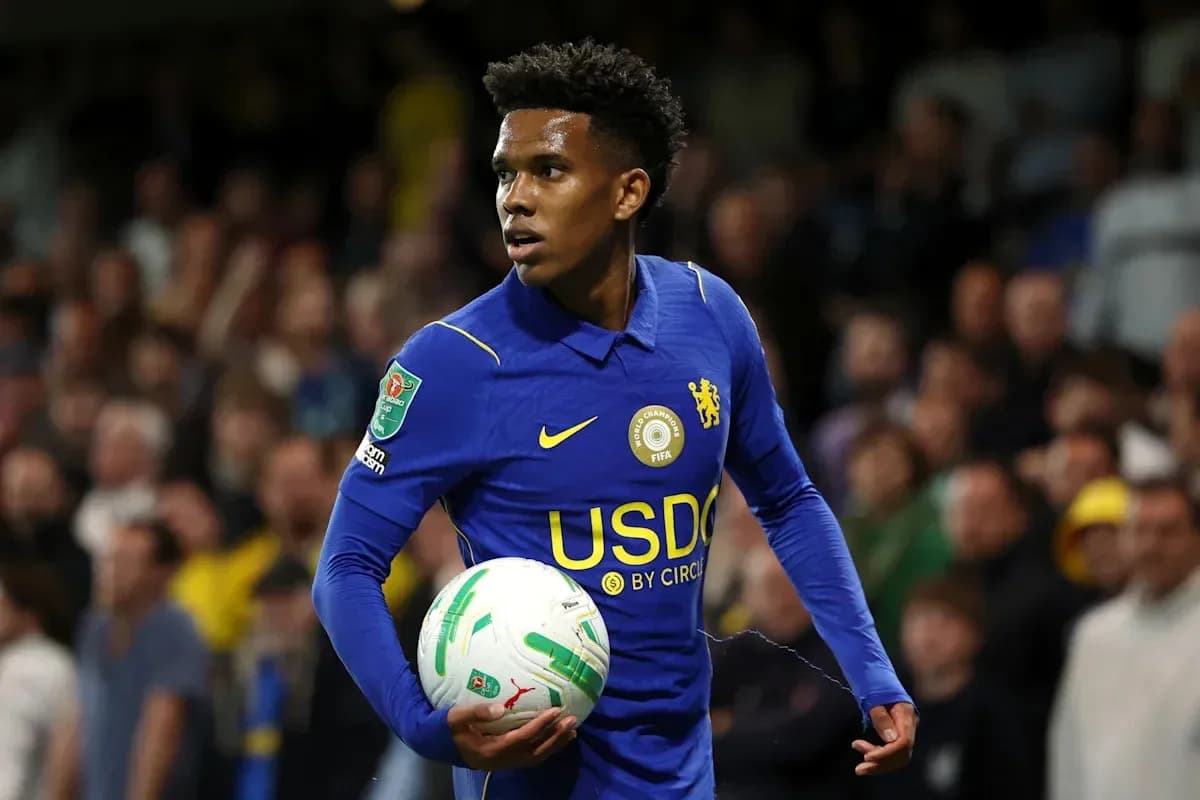
The problem? Fulham lost, and Cole Palmer turned the evening into a personal showcase. Palmer tormented Robinson, drifting into pockets, driving at him, pulling him around. For long stretches, the Fulham left-back simply couldn’t get close.
So he walks into the next game needing a defensive reset.
Sunderland offer that opportunity. The Black Cats are in an odd phase of their own, having improbably qualified for Europe last season and now facing the strain of a Europa League campaign. Rotation, fatigue and split focus loom. They look like a side that can be got at, especially by a full-back who thrives when he’s allowed to attack space and force mistakes.
For Robinson, the task is clear: keep the ambition, tighten the duels. If Arbeloa’s Fulham are going to live in this high-wire style, they need their left-back to be both weapon and shield, not just one or the other.
Ricardo Pepi, stuck in place but still central to PSV
Ricardo Pepi’s World Cup never ignited. He arrived expecting a straight fight with Folarin Balogun for the starting No.9 role, a chance to stake a claim on the biggest stage. Two hundred or so minutes later, he left with no goals, no assists and a lingering sense of a missed moment.
The months around it haven’t been simple either. In January, he stood on the brink of a Premier League move, only for a broken arm to halt the momentum. He went back to scoring for PSV, still productive, still dangerous, but clearly scanning the horizon for a step up.
That move never came in the summer. No big transfer, no fresh challenge. Instead, Pepi remains in Eindhoven, where he has quietly gone back to doing the thing that matters most to the club: scoring.
Two goals in his first three league games this season underline his importance. For PSV, he isn’t a stalled prospect. He’s the main man up front, the striker tasked with defending a league title and carrying threat into a looming Champions League campaign.
Next on the list is Utrecht at home. On paper, it’s exactly the kind of fixture where a centre-forward can keep the rhythm going, add another goal, feed the confidence that once had Premier League scouts circling.
Pepi may feel like he’s running in place on the transfer front. For PSV, though, every finish he tucks away this autumn will shape a title race, a European push and, just maybe, the next chapter of his career.