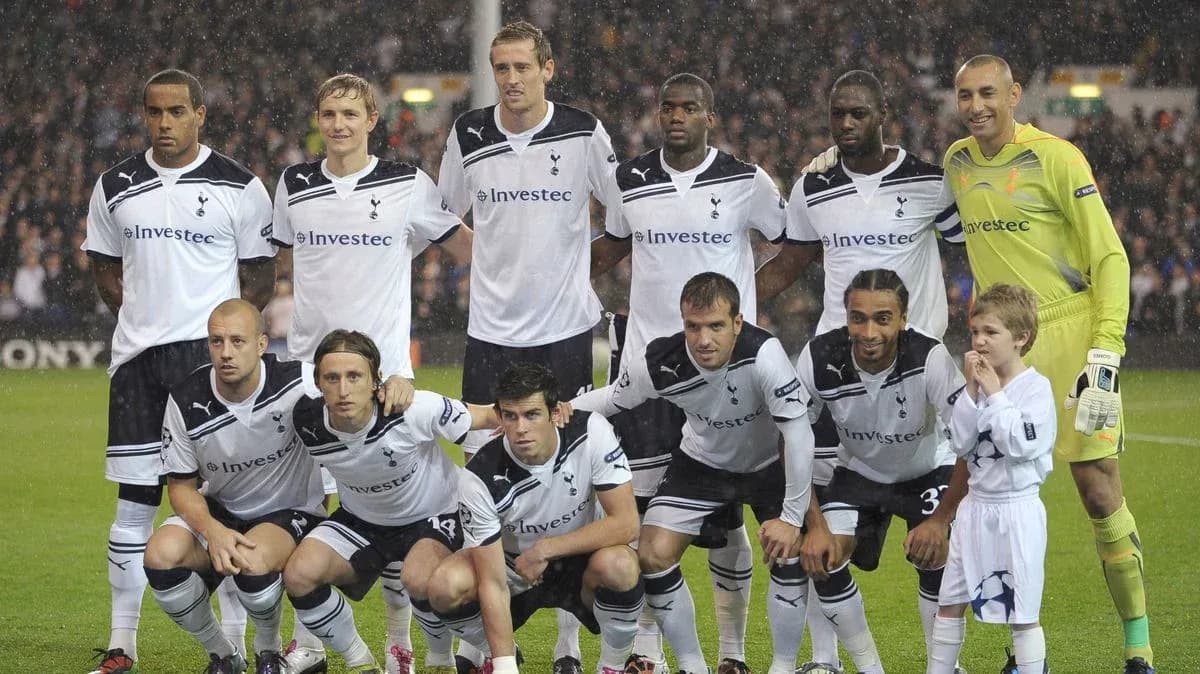
Luka Modric's Tottenham Exit: A Regretful Goodbye
Luka Modric should have been the uncomplicated modern idol of Tottenham Hotspur. A slight playmaker who arrived from Dinamo Zagreb, grew into one of the Premier League’s finest midfielders, and lit up White Hart Lane with a style that felt years ahead of its time.
Instead, his Spurs story carries a scar.
By the summer of 2012, Modric was 26 and approaching his peak. He had just led Croatia with distinction at Euro 2012, pulling strings on the international stage the way he had been doing in north London. Real Madrid, led by Jose Mourinho, didn’t just admire him; they targeted him. This was not a speculative glance. He was a priority.
Tottenham knew exactly what they had. A leader in the dressing room, a metronome on the pitch, and a player tied down to a long contract. They had already stared down one attempt to prise him away when Chelsea came knocking a year earlier. On that occasion, Spurs held firm. Modric stayed, played, and remained central to everything they did.
The second time, he pushed harder.
When Spurs boarded their flight for a pre-season tour of the United States in 2012, Modric was nowhere to be seen. He had refused to travel, a deliberate act to force the club’s hand and accelerate his move to the Bernabeu. For a player so often associated with grace and intelligence, it was a blunt, calculated move.
Tottenham hit back in the only way they realistically could. A fine worth two weeks’ wages landed on his doorstep. Publicly, they insisted they wanted to keep him. Privately, they knew the tide had turned.
The standoff dragged through the summer. Only at the end of August did the inevitable happen: a £33 million deal was agreed with Real Madrid, and Modric finally got the move he had pushed so hard to secure.
Andre Villas-Boas, then in charge at Spurs, spoke of regret over how the saga had unfolded. He revealed Modric had apologised for his behaviour, but the apology didn’t change the destination. The Croatian walked out of Tottenham as a wantaway star rather than a universally adored hero.
Years later, Modric himself would admit the cost of that choice. Speaking in 2018, he described that period as one of his greatest career regrets. He didn’t hide behind excuses. He acknowledged the damage.
“My one regret is that I didn’t win a trophy with Tottenham, despite us being a strong team who played good, attractive football,” he told FourFourTwo. “I’m sorry for the way I left. I wish we had parted in a nicer way. I hope fans understand that I followed my dreams.”
Those dreams were not small. In Madrid, he built one of the most decorated careers of his generation. Six Champions League titles. Four La Liga crowns. Five FIFA Club World Cups. Two Copas del Rey. A body of work that puts him in any serious discussion about the greatest midfielders of the modern era.
From Tottenham’s perspective, it is almost impossible to argue he was wrong to back himself. The move transformed his career, his status, his place in football history. The boy from Zadar became the conductor of Real Madrid’s greatest European symphony.
Yet in north London, the emotions remain mixed.
For some Spurs fans, the memory that lingers is not the outside-of-the-boot passes or the way he glided away from pressure, but the image of a star refusing to get on a plane. The no-show. The fine. The sense that the club had been strong-armed by a player they had helped elevate.
Others see it differently. They remember the years of service, the transformation of Tottenham’s midfield, and a player whose ambitions simply outgrew what the club could offer at the time. They see a world-class footballer staring at a once-in-a-lifetime opportunity and taking it, even if the method left bruises.
From a boardroom angle, one regret still bites: the price. Modric left with four years remaining on a six-year contract, yet Spurs banked just £33m. Twelve months later, Gareth Bale – another Spurs superstar and Modric’s former team-mate – followed him to Madrid for around £89m. Same destination, very different fee.
The contrast still stings when you consider what Modric went on to achieve in Spain. Tottenham sold an all-time great for what now looks like a bargain.
More than a decade on, Modric continues to stretch the limits of a footballer’s lifespan at the elite level. Now at AC Milan, he has extended his stay at San Siro with a new one-year contract, edging towards his 41st birthday and still operating in the rarefied air of top-tier European football. Longevity, like everything else in his career, has become part of his legend.
Back in north London, the landscape has shifted. Tottenham are no longer the club reluctantly surrendering their stars to richer predators; they are the ones spending heavily, having thrown close to £250m at new signings this summer. The power dynamic feels different. The scars of the past have shaped a harder edge.
Yet the Modric saga still offers a lesson. When a player’s ambitions and a club’s trajectory drift apart, something has to give. Spurs learned that the hard way in 2012, both emotionally and financially.
The question now is whether the current regime has truly absorbed that history – and whether, when the next world-class talent starts eyeing the exit, Tottenham will handle it with more control than they managed with the quiet genius who once refused to board a plane.