Luis Diaz's Goal Drought: A Striker's Struggle at Bayern Munich
The music was still thumping through the walls when Harry Kane finally stepped out into the Munich night, a gingerbread heart dangling from his hand, the iced “100” on the front glinting under the floodlights. Bayern had just smashed Union Berlin 7-0. Inside the dressing room, the speeches had flowed almost as freely as the goals.
“The coach had us give a few speeches in the dressing room,” Kane said just after midnight on Friday, still grinning. He rattled off the roll of honour: Michael Olise with his first Bayern hat-trick. Ismael Saibari with his first goal for the club. Kane himself reaching 100 goals. Serge Gnabry back after injury. When asked whose speech was the shortest, he laughed and nodded towards Olise.
No surprises there.
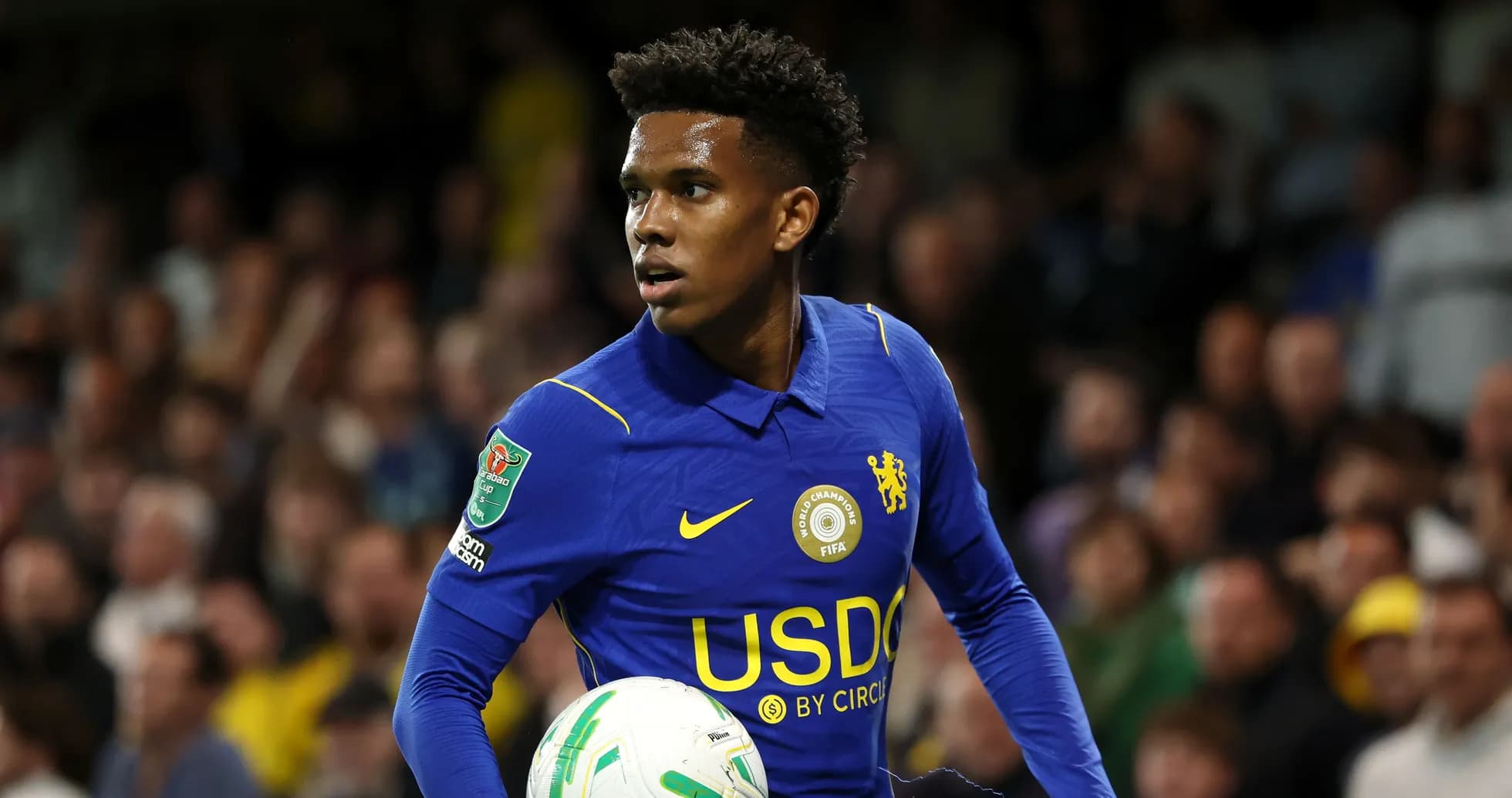
Amid the noise and the jokes and the clatter of studs on tiles, one man slipped away quietly. Luis Diaz left the Allianz Arena without a word. No gingerbread, no photo, no lingering in the mixed zone. Just a striker walking through a corridor that suddenly felt very long.
In a night full of good-news stories, Diaz was the one jarring note. The sad figure among so many fortunate souls.
A striker stuck on pause
His last goal for Bayern? You have to go back to the Bundesliga opener against VfB Stuttgart, when he made it 5-1. Since then, five games, no goals, no assists. For a player who usually lives on the edge of the penalty area and the scoreboard, that is a long, uncomfortable silence.
It is not just the numbers. It is how they have piled up.
Against Schalke, Osnabrück in the cup and Bodö/Glimt in the Champions League, Diaz passed up some excellent chances. Last weekend at Elversberg, he drew the ire of Josip Stanisic after Olise had slid him in perfectly in the box. Instead of pulling the trigger, Diaz seemed to search for a highlight-reel moment, juggling ideas in his head, and finished with nothing more than a tame backheel.
This time, his clearest contribution came when he finished off Bayern’s best move of the night. The net rippled, the stadium roared, and then the flag went up. Offside. Again, nothing on the scoresheet.
Another blank outing meant Diaz failed to deliver on the promise he had made in an interview with Sky/RTL. “I think that goal will come in the next game,” he had said. “You also have to stay calm mentally so it does not weigh on you. The important thing is to keep working on it, to improve. I know that it is only the chance conversion. It is only the finish that is missing – and then it will be fine.”
The finish is still missing.
While others feast, Diaz fasts
The contrast with his team-mates could hardly be sharper. According to Sofascore, Diaz has already missed six big chances in the Bundesliga alone. After the first four league matchdays, his expected-goals tally stood at 3.1. On paper, he should have scored several times. In reality, the column stays at one.
Kane, by comparison, has three Bundesliga goals from an xG of 2.17. Olise, the man of the moment, has four from an xG of 2.65. Across all competitions, Olise is already on eight goals and three assists, surfing a wave Diaz can only watch from the shore.
Even Saibari, who replaced Diaz in the 63rd minute against Union, has one goal and three assists from just 178 Bundesliga minutes. His productivity stands in brutal contrast to Diaz’s drought.
The numbers sting more because everyone knows what Diaz can do. Last season he played 51 times for Bayern, racking up 26 goals and 23 assists. Add another 16 games for Colombia – seven goals, three assists – and you have a player who spent the entire year living at full tilt.
That workload is now catching up with him.
A break instead of a boarding pass
Diaz will not get the chance to put things right until 10 October, away at FC Augsburg. First come the international fixtures. For him, though, there will be no long flight, no anthem, no national team camp.
Colombia coach Nestor Lorenzo, in agreement with Diaz, has left him out. Special leave. A pause button in the middle of the storm.
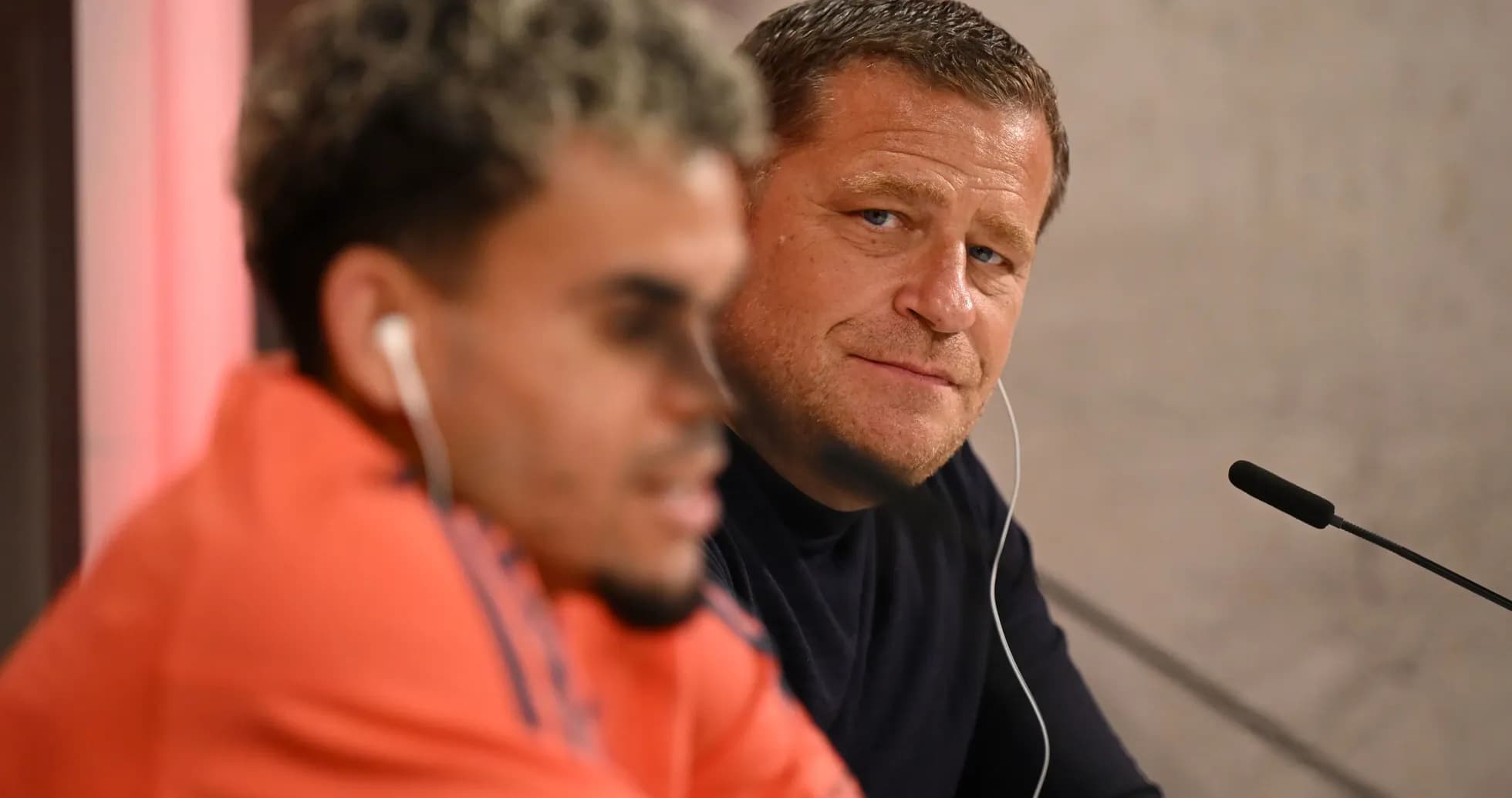
“Some would be glad if they had a dip like his,” Bayern’s board member for sport Max Eberl said on Friday, before explaining the decision. For Eberl, the break is a logical step after an “extremely energy-sapping” season. “In South America, the international matches are not absolutely necessary now and it is simply good for the player. He has just had a lot of games. So in that respect it is nice.”
Diaz, Eberl added, will “first have a bit of a holiday and then get going again. He will have his programme. There is no need to worry that he will not come back fit.”
This is not a punishment. It is a reset.
A dip he almost predicted
Curiously, Diaz himself had hinted that a rough patch might come. In that same Sky/RTL interview, he admitted he would have welcomed a genuine back-up in his position.
“Of course I always want to play. But if someone is there who can help in my position: welcome. That helps a lot when things are not going well. Then the team-mate is there to help you – and that way you alternate. That is very important. I would have liked it. But fine, it did not happen. We are still good as we are.”
Bayern had, in fact, planned to go into the season with exactly that kind of support. Then, shortly before the transfer window closed, they loaned Arijon Ibrahimovic to FC Augsburg – a move that surprised the 20-year-old as much as anyone.
So is a winter signing back on the table?
“Where did Isi score his goal from today?” Eberl shot back when asked if Bayern might revisit the idea of a left-wing back-up in January. The answer was obvious: Saibari had struck from the left side of the penalty area.
The Moroccan is not a classic winger. He does not have the pure pace for the touchline. But his vision, intelligence and technique allow him to pop up almost anywhere across the front line. Gnabry, too, can slide into Diaz’s role when needed.
For now, Diaz’s starting spot is not under immediate threat. Vincent Kompany has been rotating heavily and will continue to do so, especially with several midweek fixtures looming after the international break. There will be minutes for everyone. There will be chances.
The question is what Diaz does with them.
A familiar prescription
This is not the first time Bayern have sent Diaz away mid-season. In December 2025, suspended in the Champions League after a red card and banned in the Bundesliga due to his fifth yellow, he suddenly found himself with a free calendar.
Kompany seized the moment.
The coach sent him away “for a few days,” arguing it was “simply sensible now that he is away for a few days and then comes back mentally and physically at one hundred per cent.”
It worked. Diaz returned refreshed and produced a strong second half of the season.
Now, the club are effectively repeating the formula, only much earlier in the campaign. The stakes are different, but the logic is the same: clear the head, recharge the legs, rediscover the instincts that once made every half-chance feel like a goal waiting to happen.
Bayern’s dressing room is buzzing, the goals are flying in, and the competition around him is growing sharper by the week. When Diaz walks back through that tunnel in October, will he still be the man on the fringes of the party – or the one they are handing the microphone to?