Loudoun United's Statement Win Over Richmond Kickers
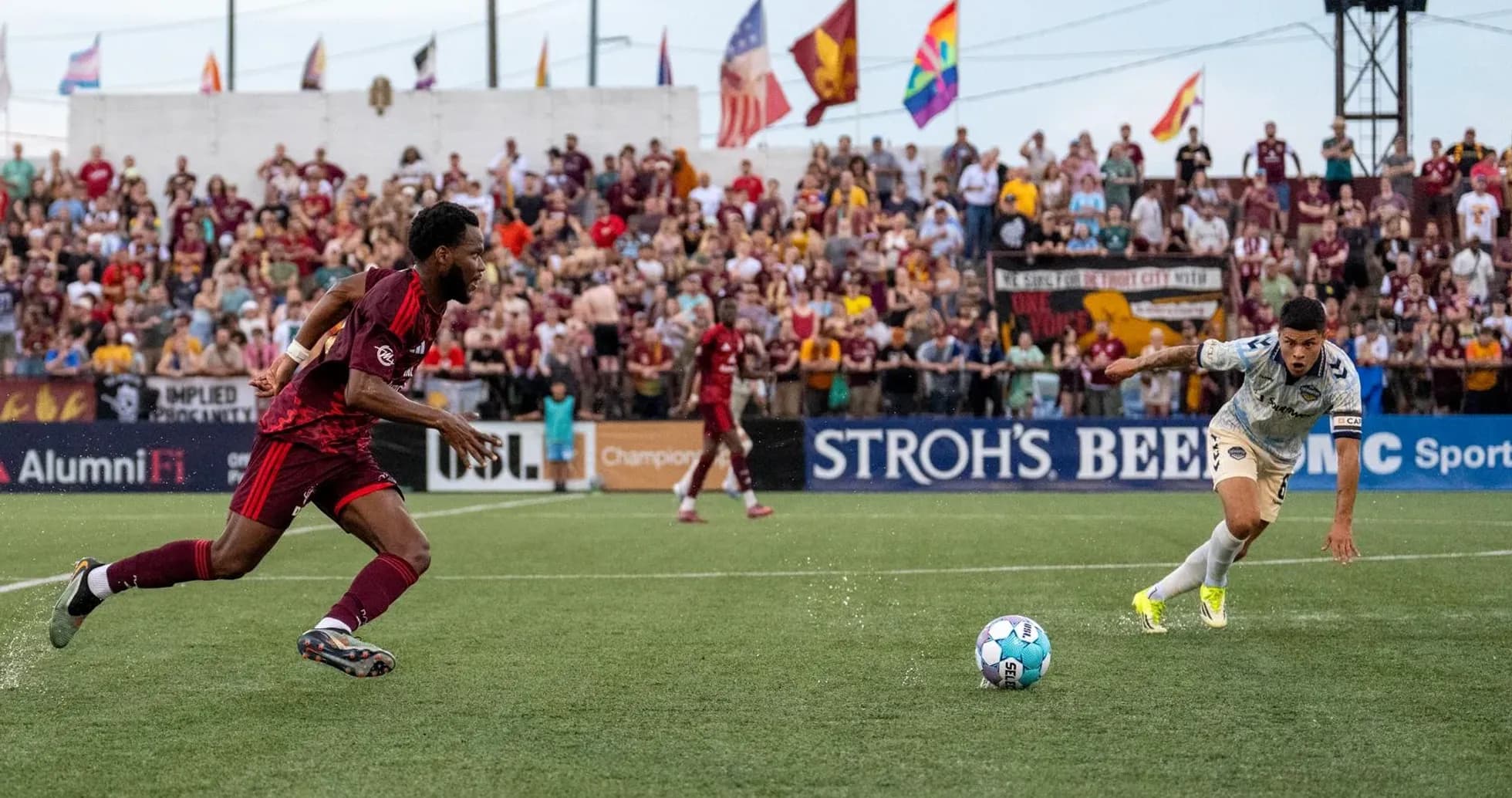
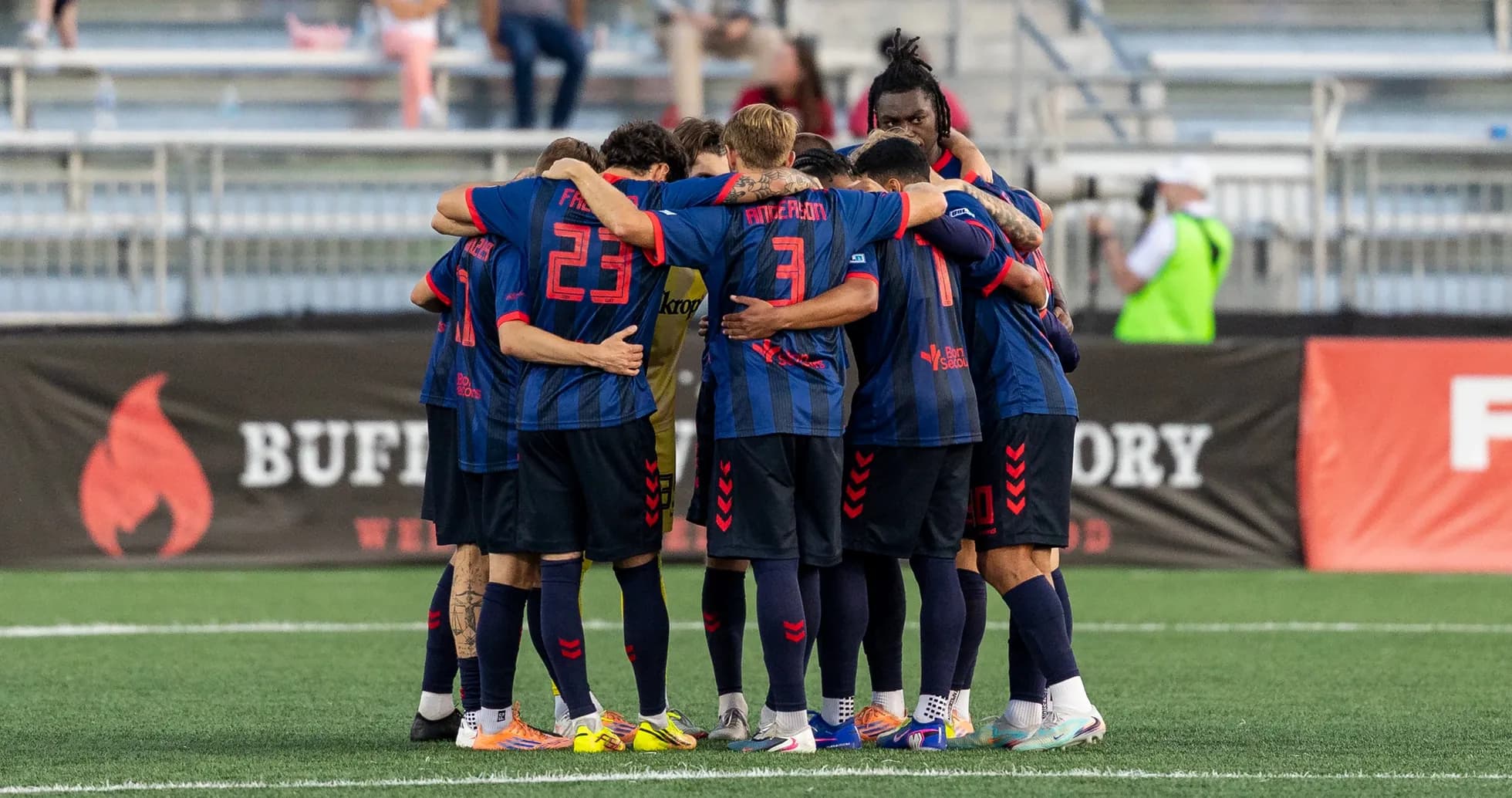
Under the lights at Segra Field, Loudoun United’s 2–0 win over Richmond Kickers felt less like a routine group-stage result and more like a statement about where these two squads stand in the USL League One Cup’s Group 6 hierarchy.
I. The Big Picture – A Group Tilt With Opposite Trajectories
Following this result, the table tells a stark story. Loudoun sit 4th in Group 6 with 3 points, a goal difference of +1 built from 3 goals for and 2 against over 2 matches. At home they have mirrored that record exactly: 2 games, 1 win, 1 defeat, 3 scored, 2 conceded. Their cup identity is emerging as a front-foot side at Segra Field, averaging 1.5 goals for and 1.0 goal against at home.
Richmond, by contrast, are marooned in 6th. Following this result they remain pointless: 0 points from 3 matches, with 1 goal for and 8 against for a goal difference of -7. The pattern is brutal. At home they have played 2, lost 2, scoring just 1 and conceding 6. On their travels, they have played 1, lost 1, scoring 0 and conceding 2. Overall, the Kickers average only 0.3 goals for per match while shipping 2.7, a spread that has defined their “LLL” form line.
II. Tactical Voids – Discipline, Edges and the Hidden Story of Control
Injury and suspension data are unavailable, but the squad sheets themselves hint at continuity. Anthony Limbrick’s Loudoun XI is stable, with the spine of J. Farr, S. Mazzaferro, B. Akinyode and T. Ulfarsson anchoring the structure. Darren Sawatzky’s Richmond side, meanwhile, leans heavily on a core of J. Sneddon, B. Howell, N. Seufert and J. Kirkland, but the statistical context shows a group still searching for balance.
Discipline is where the underlying tactical voids emerge most clearly. Loudoun’s yellow-card distribution this campaign is concentrated in the second half: 60.00% of their bookings arrive between 46–60 minutes, with a further 40.00% from 76–90. That late-game spike suggests a team that defends aggressively once the tempo rises, often protecting a lead or wrestling back momentum. It is calculated risk-taking, but risk nonetheless.
Richmond’s card map is more evenly spread and more troubling. They pick up 12.50% of their yellows in each of the 0–15 and 16–30 windows, 25.00% between 31–45, then a peak of 37.50% from 46–60, before another 12.50% in the 61–75 band. That pattern paints a picture of a side that starts slightly ragged, becomes increasingly stretched as the first half wears on, then often loses control early in the second half. For a team already conceding 3.0 goals per game at home and 2.0 away, those moments of indiscipline compound structural fragility.
Neither side has yet faced the psychological swings of penalties: both Loudoun and Richmond have taken 0 penalties in total, with 0 scored and 0 missed. There is no shootout drama in their statistical profile—this is a story of open-play and structural superiority rather than set-piece roulette.
III. Key Matchups – Hunter vs Shield, Engine Room vs Enforcer
The absence of explicit top-scorer data forces us to read roles from the lineups and team trends. For Loudoun, the attacking “hunter” unit is built around T. Ulfarsson leading the line, supported by the creative triangle of P. Santos, J. Murphy and A. Aboukoura. With Loudoun averaging 1.5 goals at home and never failing to score in this cup run, that front four represents a multi-angle threat rather than a single talisman.
Their “shield” begins with J. Farr in goal and the central defensive duo of S. Mazzaferro and A. Essengue. Across the campaign they have conceded only 2 goals in total, all at home, for an average of 1.0 per match. That defensive platform has already produced 1 clean sheet overall, and it underpins Limbrick’s willingness to commit numbers forward.
Set against them is a Richmond attack that has yet to ignite. Across 3 matches they have scored just 1 goal in total—0.5 per home game and 0.0 away. J. Kirkland as the nominal spearhead, flanked by L. Johnson and T. Pannholzer with N. Seufert and O. O’Malley offering support, has been starved of service and space. The “hunter” here is more theoretical than real: the numbers say this is an attack still in rehearsal.
Defensively, Richmond’s shield has been porous. They have conceded 8 goals in total—6 at home and 2 away—at an overall rate of 2.7 per match. The back line of M. Murana, S. Vinberg, B. Howell and D. Moore, in front of J. Sneddon, is under near-constant duress. Their biggest away defeat (2–0) matches the scoreline at Segra Field, reinforcing the sense that once they go behind, they struggle to adjust.
In the engine room, Loudoun’s B. Akinyode and J. Panayotou form the crucial axis. Akinyode’s role as enforcer—screening the back four, breaking up play, and accepting those mid-second-half bookings that show up in the 46–60 band—is complemented by Panayotou’s link play into Santos and Murphy. Richmond counter with N. Seufert and A. Amer as their central fulcrum, but the team’s card profile suggests they are often chasing shadows, forced into reactive fouls rather than dictating tempo.
IV. Statistical Prognosis – xG Shadows and Defensive Gravity
Expected Goals figures are not provided, but the shot profile implied by these records is clear. Loudoun’s 3 goals from 2 matches, coupled with a clean sheet and a best home win of 2–0, indicate a side that creates enough high-quality chances to justify a positive xG differential, especially at Segra Field. Their failure-to-score record—0 matches in which they have drawn a blank—reinforces the idea that they consistently generate opportunities.
Richmond’s 1 goal from 3 matches, with 2 games in which they failed to score, points to a chronically low attacking xG. Defensively, conceding 8 in 3 matches at 2.7 per game overall suggests they are routinely allowing opponents into high-value shooting zones. Their biggest defeats—0–4 at home and 2–0 away—speak to matches in which the defensive structure has collapsed rather than merely bent.
Following this result, the tactical narrative is simple but unforgiving. Loudoun United are evolving into a compact, assertive cup side whose home performances are built on a solid defensive spine and a flexible, multi-pronged attack. Richmond Kickers, by contrast, are trapped in a cycle where early indiscipline, a leaky shield and a blunt attack conspire to drag their xG balance deep into the red.
For Richmond to reverse this arc, the engine room must harden and the back line must reduce the volume and quality of chances conceded. Until then, fixtures like the one at Segra Field will continue to tilt decisively toward a Loudoun squad whose numbers and narrative are finally aligned.