Liverpool's Chaotic Summer and Villa's Uneasy Transfers
Liverpool’s summer window was always going to be a test of the new regime. It’s starting to feel like a trial.
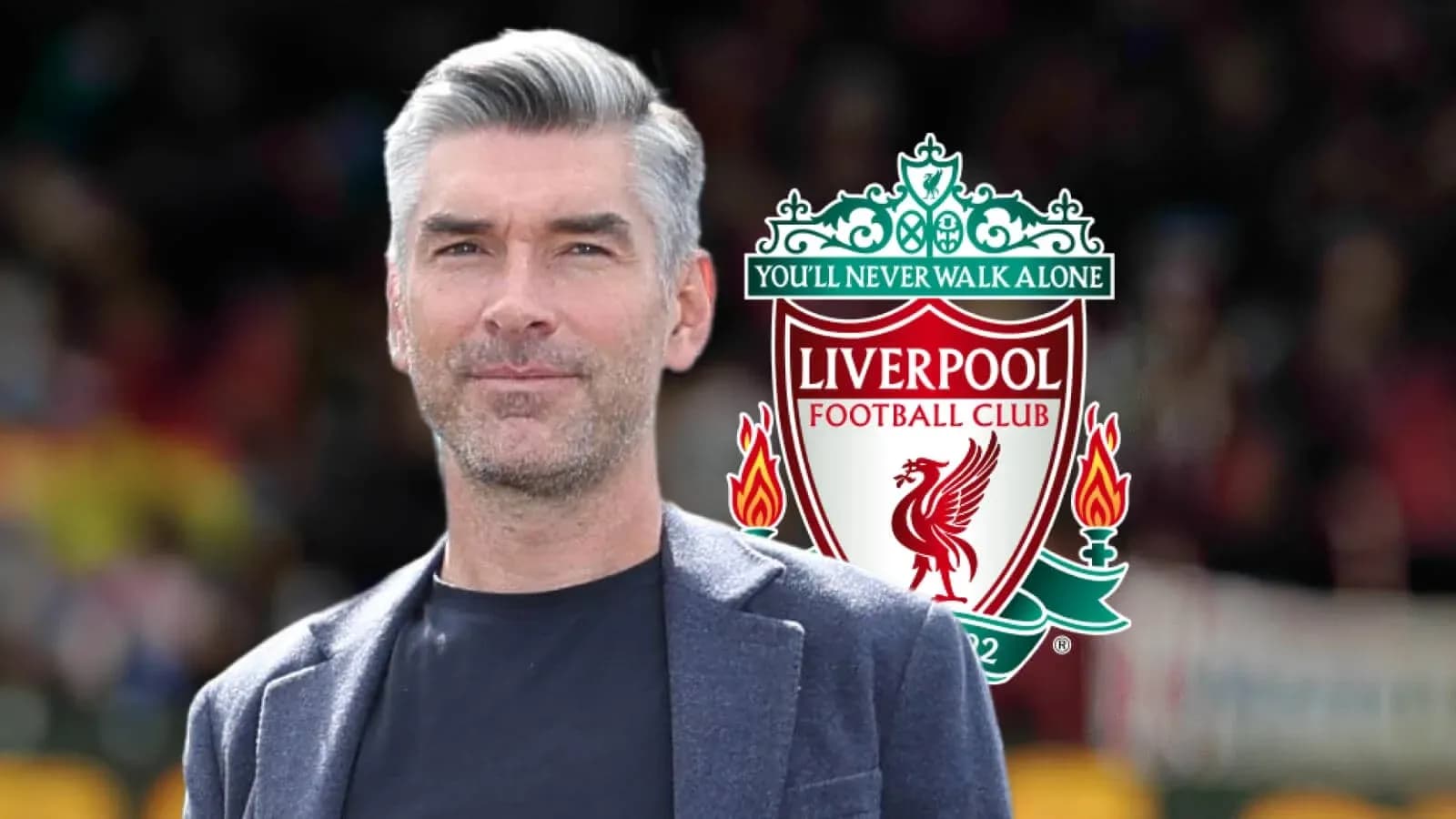
Richard Hughes, barely through the door as sporting director, already finds himself squarely in the crosshairs of a fanbase that watched a title‑winning squad get lavishly reinforced a year ago, only to see this summer drift into something far more chaotic.
Last year Liverpool were champions and bullish. The club threw its weight around the market: Florian Wirtz and Jeremie Frimpong arrived as Bundesliga winners, Hugo Ekitike was plucked from under Newcastle’s nose in what felt like a pointed statement, and Alexander Isak – at that point arguably the Premier League’s standout centre‑forward – was dropped on top of an already fearsome attack. Rival fans were spooked. The title was being handed over before a ball was kicked.
Reality, as one Liverpool supporter dryly notes, had other ideas.
Now the pendulum has swung violently the other way. Instead of targeted aggression, supporters see a club selling freely and planning sparsely. Even Stefan Bajcetic has gone. Behind the first‑choice midfield three? A void. Mohamed Salah, a once‑in‑a‑generation wide forward, has finally departed with six months of warning on the clock and no elite replacement in place.
The frustration is not subtle. Fans, ex‑players, pundits and even the captain, they argue, have all been saying the same thing for months: this squad needs a holding midfielder and two wingers. Instead, Liverpool are deep into the season trawling through names like Bradley Barcola, Yankuba Minteh and Ismaïla Sarr while the games tick by.
“Get out of our club,” one letter rages at Hughes and his recruitment team, accusing them of leaving Andoni Iraola “handicapped” in the final days of the window and turning Liverpool into “headless chickens”. The same writer hails Victor Muñoz as the sort of low‑key, value signing that once defined the club’s transfer nous – “looks decent for the money, has all the potential, yet no pressure to deliver” – and asks why that intelligence has deserted them when it matters most.
Another long‑time supporter, writing in after two decades of following the club and the discourse around it, can’t believe the lack of succession planning. Everyone knew Salah was going. Everyone could see the midfield’s structural issues last season. Yet Liverpool have reached August scrambling for a right‑sided forward, a defensive midfielder and help at full‑back while rivals sharpen their squads.
Newcastle’s energetic display has only heightened the anxiety. The midfield again looked easy to run through, the full‑backs again looked exposed. Arsenal, Manchester City, Chelsea, Tottenham and Aston Villa all appear to be moving with clarity in the market. Liverpool, in the eyes of many of their own, are standing still with “their proverbials in their hands”.
There is still time to land three or four high‑impact signings and flip the mood. But until that happens, the warning is stark: a club that “strolled to the league the season before last” now has fans openly doubting whether Champions League qualification is realistic, and bracing themselves for a long, Spurs‑under‑Pochettino or late‑Wenger‑Arsenal kind of season. Either Iraola produces something miraculous, or Liverpool’s summer will be remembered as a jarring misstep for the new hierarchy.
Villa’s uneasy trade with Chelsea
If Liverpool’s business feels confused, Aston Villa’s dealings with Chelsea have supporters reaching for a calculator and a stiff drink.
On the outgoing side: Morgan Rogers, a player Villa fans see as a genuine game‑changer on his day, English, young and tied down to a long contract. The fee is huge – far above what he has yet proven – but that “English premium” is precisely why some believe he should have been the sort of asset Villa build around, not cash in.
Then there is Austin MacPhee. A set‑piece coach is rarely a headline departure, but Villa fans know what he brought. Their threat from corners and free‑kicks under him was obvious, Youri Tielemans’ Europa League final opener the poster moment. Players regularly sprinted to him to celebrate choreographed routines. Losing that edge to a direct rival is not going down well.
And looming over everything: Emi Martínez. The Argentina goalkeeper has not moved yet, but with Zion Suzuki arriving and Chelsea’s current No.1 under heavy scrutiny, Villa fans can feel the ground shifting. Two straight years as FIFA’s best goalkeeper, still only 33, still a dominant presence. If Chelsea get him, one fan writes, it “would be an absolute game changer” and could propel them right back up the table.
Coming the other way? Far less convincing on paper.
Alejandro Garnacho is viewed with suspicion by at least one Villa supporter, likened to another Jadon Sancho situation – a winger with huge hype who might not fit the graft and precision Unai Emery demands. Villa have already moved on from one underwhelming wide man in Jhon Durán Guessand and still have the mercurial Leon Bailey to work out. Swapping proven assets for another high‑variance winger feels like an avoidable gamble.
Then there’s Nicolas Jackson. Signed by Chelsea for £32m, now apparently worth £65m. The numbers don’t add up for fans who see a club paying a premium for a forward their rivals are happy to move on.
The broader fear is strategic. Villa want to smash through the glass ceiling and become a regular Champions League side. Yet they appear to be selling some of their best pieces to a club they are trying to catch, while sending money back the other way for players Chelsea no longer trust as starters.
“The maths ain’t mathing,” as one Villa fan puts it, while still insisting Emery retains his full backing. Before anyone shouts about FFP or PSR, he argues, Villa should stop actively strengthening the teams they are supposed to be hunting down. If they are serious about staying at Europe’s top table, this is not how you behave.
United, Emery and a strangely upbeat fanbase
As the debate rumbles on about what happens if Michael Carrick doesn’t work out at Manchester United, one name keeps cropping up: Unai Emery. The logic is clear. He is a serial winner, has a track record of making teams greater than the sum of their parts, and may not tolerate watching key players sold from under him forever.
For United, that profile is attractive. They have spent a decade looking like less than the sum of their lavishly assembled squads. Emery, in theory, offers the opposite. For Villa, the thought of losing the architect of their resurgence just as they return to the Champions League is grim.
While the speculation swirls, one United fan writes in with something rare: a bit of calm.
He is realistic enough to admit the 3-0 defeat to Hull punctured some of the early optimism. But he sees a club that has finally ripped up and rebuilt its midfield and accepts that such a drastic change will take time. New players need to learn each other’s movements. Carrick needs to work out the right combinations. Don’t, he pleads, use Youri Tielemans as one half of a double pivot – he doesn’t have the legs for it. Use him as Bruno Fernandes’ rotation option, keep both fresh, and the structure will hold.
From this vantage point, United are a work in progress rather than a basket case. Secure a left‑back and a back‑up striker before the window shuts and the squad will look balanced enough for a decent season. The group is, in his words, “a likeable bunch”, and Marcus Rashford’s return offers hope that Carrick can coax back the form that once made him one of Europe’s most devastating forwards in transition.
Nobody is talking about titles. The bar is set at progress, a credible Champions League campaign and a sense of direction. After the chaos of recent years, that alone feels like a step forward.
The weight of time and the pull of the game
Not every letter is about tactics and transfers. Some are about time, and what football means when the mirror starts asking hard questions.
One United fan responds to another, who had written from New York about the dread of turning 40 and watching a once‑dominant club flounder. The reply is blunt: this is when life choices come due. You’re probably beyond halfway in a reasonable lifespan. Songs like “Forever Young” suddenly hit differently. And all you want, at the end of a long week, is for your team to give you something to feel – not 1990s dominance, just a jolt of joy or anger that reminds you you’re still in it.
If they can’t, he suggests, go back to the gym. Pick up an old sport. Find that feeling somewhere else. Football can’t carry everything.
The Saudi money debate rumbles on in the background of all this. One writer, responding to a defence of players taking huge offers from the Saudi Pro League, makes a sharp distinction. He doesn’t begrudge anyone securing their family’s future, especially those from poverty. But he struggles to sympathise with already‑rich players chasing one more payday in a league funded by a regime he calls “the devil’s work”.
He points to N’Golo Kanté as the kind of figure he admires: a genuinely great player who drove an old car, lived modestly and poured a huge portion of his wealth into helping others. That, he implies, is a more compelling legacy than another zero on a bank balance. Jordan Henderson, by contrast, is used as the emblem of a different, more uncomfortable choice.
And then there is the darker side of sport’s obsession itself. One final letter links Raheem Sterling’s recent car crash and the NFL’s stark findings on brain damage – with one in four former players suffering serious issues – to a wider question: what happens to the many who don’t make it?
In American football, the odds of progressing from high school to college to the pros are minuscule. The writer suspects football is no different. For every Sterling living large and crashing a Lamborghini, there are countless players who went all‑in chasing the dream, fell just short, and were spat out by a system that demands total commitment and offers no guarantees.
Natural talent, hard work, even luck – you can have all three and still miss. Some go on to build new lives. Others don’t. We celebrate the tiny fraction at the top and rarely stop to think about the bodies and minds left behind.
It’s a sobering note to end on in a week dominated by transfer rows and tactical gripes. Liverpool fans rage at a botched window. Villa supporters fear they are arming a rival. United followers argue about managers and midfield shapes. All of it matters, in its way.
But beneath the noise sits a more basic question: in a sport that chews up so many, which clubs are actually building something sustainable – and which are just gambling that the next big move will somehow make it all make sense?