Liverpool and Chelsea Share Points in Tactical Stalemate
Liverpool 1–1 Chelsea at Anfield, a result that keeps Liverpool’s Champions League push on track but stalls their momentum, while Chelsea’s point away to a top-four rival steadies them in mid-table without significantly improving their late-season slide.
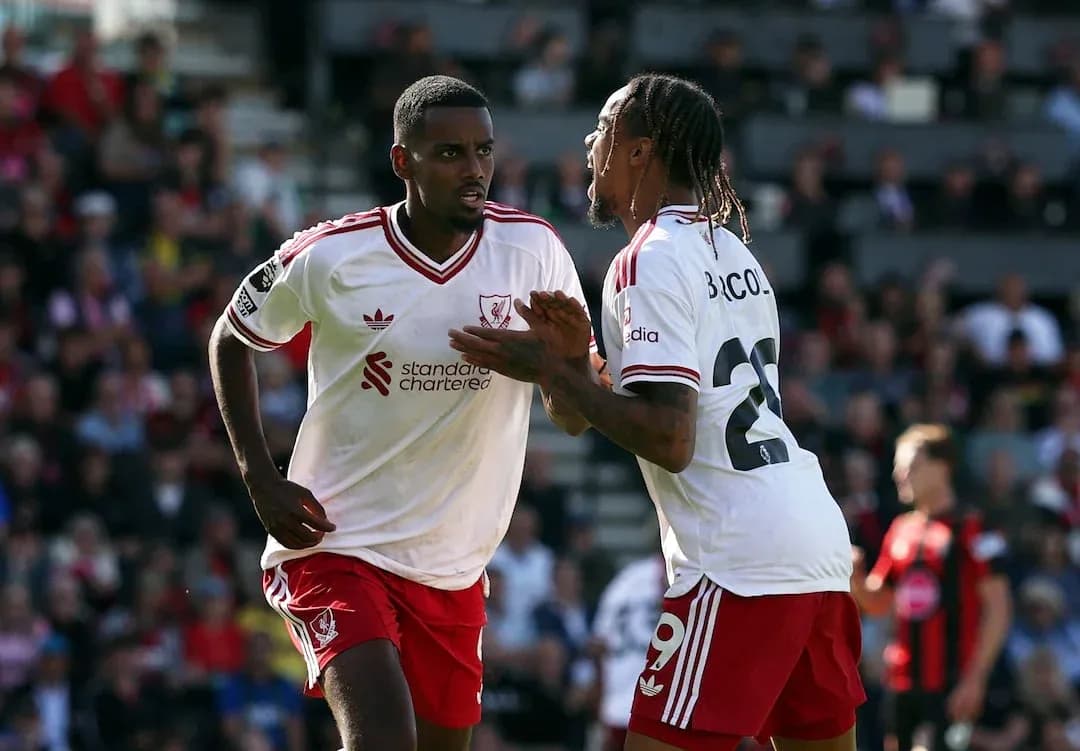
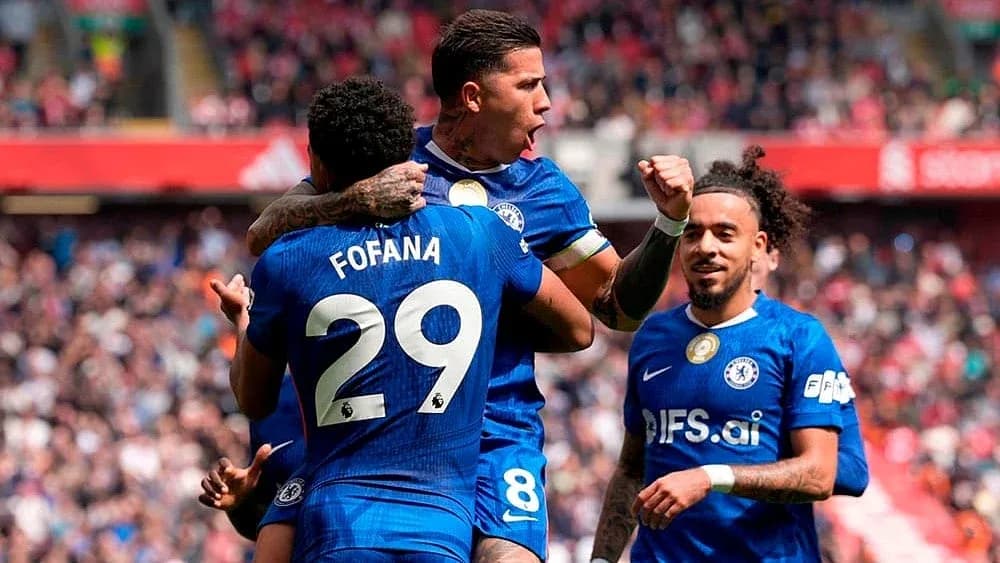
Liverpool struck first after just six minutes, Ryan Gravenberch finishing a move created by Rio Ngumoha to give the hosts an ideal start. Chelsea responded on 35 minutes when Enzo Fernández produced an unassisted strike to level the match, capitalising on a rare lapse in Liverpool’s defensive structure.
Early in the second half, Chelsea thought they had turned the game around on 49 minutes, but Cole Palmer’s effort was ruled out by VAR for offside, a pivotal moment that preserved parity and reset the tactical balance.
The first substitution arrived on 63 minutes for Chelsea, as Reece James replaced Andrey Santos to add more thrust from right-back and push Malo Gusto higher in phases. Liverpool made their first change on 67 minutes, Alexander Isak replacing Rio Ngumoha, a like-for-like switch aimed at adding penalty-box presence after Ngumoha’s early assist.
That same minute, Jorrel Hato went into the book for holding, reflecting Chelsea’s increasing need to break up Liverpool transitions. On 71 minutes, Chelsea coach Calum McFarlane was shown a yellow card from the touchline, underlining the tension as marginal decisions went against his side.
Enzo Fernández then collected a yellow card for tripping on 73 minutes, as Liverpool tried to quicken the tempo through midfield. Liverpool responded with a double defensive reshuffle on 77 minutes: Joe Gomez replaced Ibrahima Konaté to freshen the back line, while Federico Chiesa came on for Cody Gakpo to inject direct running and creativity in the final third.
Marc Cucurella was booked for holding on 83 minutes, another sign of Chelsea’s increasingly reactive defending as Liverpool probed for a late winner. Joe Gomez himself was cautioned on 88 minutes for delay of game, a small but telling indication that Liverpool were also content to manage the draw in the closing stages once their pressure had not translated into clear chances.
Moises Caicedo received a yellow card for handling on 89 minutes, breaking up another Liverpool attack, and in added time (90+4’) Alexis Mac Allister was booked for tripping, the final incident of a match that ended with both sides forced to settle for a point.
Fixture Statistics & Tactical Audit
- xG (Expected Goals): Liverpool 0.51 vs Chelsea 0.47
- Possession: Liverpool 49% vs Chelsea 51%
- Shots on Target: Liverpool 3 vs Chelsea 3
- Goalkeeper Saves: Liverpool 2 vs Chelsea 3
- Blocked Shots: Liverpool 1 vs Chelsea 1
The underlying numbers point to a balanced contest where a draw is broadly in line with the performance levels (xG 0.51 vs 0.47). Chelsea shaded possession (51%) and were slightly cleaner in their passing (86% vs 84%), using Enzo Fernández and Moisés Caicedo to control central zones, but they did not convert that into sustained shot volume (6 total shots to Liverpool’s 8). Liverpool’s attacking structure under Arne Slot produced marginally more attempts, yet only three efforts on target and a modest xG underline a lack of high-quality chances rather than wasteful finishing (3 shots on target, xG 0.51). With both teams registering three shots on goal and each keeper making key interventions, the 1–1 reflects a tactical stalemate more than missed opportunities.
Standings Update & Seasonal Impact
For Liverpool, the draw adds one point to their tally, moving them from 59 to 60 points. Their goals for rise from 60 to 61, and goals against from 48 to 49, shifting their goal difference from +12 to +12 again after the 1–1 scoreline. They remain in 4th place, still in a strong position for Champions League qualification but missing a chance to tighten the gap to the teams above in the title and top-two conversation.
Chelsea move from 49 to 50 points, with goals for increasing from 55 to 56 and goals against from 49 to 50, keeping their goal difference at +6. They stay 9th, and while a point at Anfield is creditable, it does little to close the gap to the European places, leaving them still looking up at the cluster of clubs in the race for continental qualification.
Lineups & Personnel
Liverpool Actual XI
- GK: Giorgi Mamardashvili
- DF: Curtis Jones, Ibrahima Konaté, Virgil van Dijk, Miloš Kerkez
- MF: Ryan Gravenberch, Alexis Mac Allister, Jeremie Frimpong, Dominik Szoboszlai, Rio Ngumoha
- FW: Cody Gakpo
Chelsea Actual XI
- GK: Filip Jørgensen
- DF: Malo Gusto, Wesley Fofana, Levi Colwill, Jorrel Hato
- MF: Andrey Santos, Moisés Caicedo, Cole Palmer, Enzo Fernández, Marc Cucurella
- FW: João Pedro
Expert's Post-Match Verdict
Arne Slot’s Liverpool delivered a controlled but ultimately conservative home performance, with their structure in a 4-2-3-1 limiting Chelsea’s transition threat yet failing to generate enough high-quality chances (xG 0.51 from 8 shots). The early goal from Ryan Gravenberch, created by Rio Ngumoha, showcased the fluidity between the lines, but as the game wore on Liverpool’s attacks became more predictable, relying on half-spaces rather than incisive runs in behind. The introductions of Alexander Isak and Federico Chiesa added mobility but did not materially change the shot profile (3 shots on target overall), suggesting more of a systemic creation issue than an individual finishing problem.
Calum McFarlane’s Chelsea can point to their marginal edge in possession and passing accuracy (51% and 86%) as evidence of a coherent build-up plan, anchored by Enzo Fernández’s influence in both phases. However, with only 6 total shots and an xG of 0.47, their control rarely translated into sustained pressure. The disallowed goal for Cole Palmer underlined the threat they posed in moments, but the lack of clear-cut chances and the flurry of yellow cards late on (four bookings) hinted at a side increasingly focused on containment rather than a full-scale push for victory. Overall, this was less a clinical performance from either side and more a tactically disciplined draw, where both managers prioritised structural stability over risk in the final third.