Key African Players Shaping the Premier League 26-27 Season
The Premier League’s African core is as rich and varied as ever for 26-27: established stars, big-money gambles, late bloomers and youngsters on the brink. Careers will be made, reputations repaired, some perhaps broken. Here are 12 storylines that will shape the season.
Carlos Baleba – Brighton & Hove Albion (for now)
Same player, same saga. Another August, another summer of Carlos Baleba waiting to see if Manchester United finally make their move.
The Brighton midfielder looked destined for Old Trafford a year ago, only for the deal to collapse. His form dipped, his focus wavered, and head coach Fabian Hürzeler did not hide his frustration, accusing the Cameroon international of letting the failed transfer derail him.
He never quite rediscovered the sharp, dynamic level he showed in 24-25. Now the context has changed. Casemiro has gone, United’s need for a central midfielder is far more urgent, and Baleba is still only 22.
If he does get that move, he’ll walk into a more stable Old Trafford and a manager in Michael Carrick who knows the position better than most. The question is simple: does he finally kick on, or does this transfer saga define him again?
Amad Diallo – Manchester United
The World Cup reminded everyone what Amad Diallo can do. The Ivory Coast forward returned from the tournament with key moments on his highlight reel: a fine winner against Ecuador, then the equaliser in that chaotic, ultimately doomed last-16 clash with Norway.
Some felt Emerse Faé underused him, but Diallo still left his mark.
Now he’s 24. The “promising prospect” label no longer fits. Under Ruben Amorim he produced flashes, moments of real quality, but this season he has to become something more: a regular, a reference point, a starter who can be trusted every week.
Technically superb, slippery in tight spaces and capable of outrageous finishes, he has the tools to become one of the league’s box-office players. This is his window. Either he grabs a permanent place in United’s attack, or the club will look elsewhere.
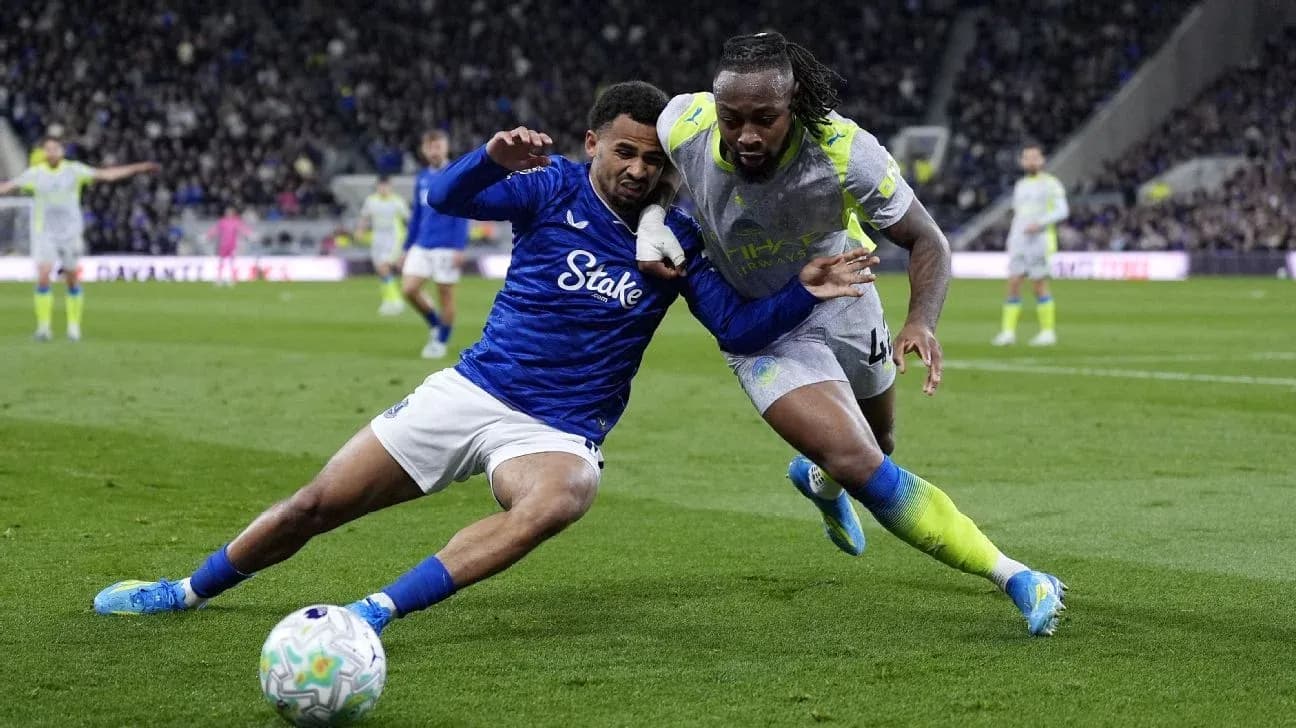
Iliman Ndiaye – Everton
Give Iliman Ndiaye 113 minutes and he’ll still find a way to light up a tournament. That’s what he did at the World Cup: one goal, two assists, and a reminder that few players in the league are as bewitching with the ball at their feet.
Yet Everton still feel like a half-finished story for him.
The Senegal international remains one of the Premier League’s most watchable creators, but there’s a lingering sense that David Moyes hasn’t worked out how to unlock him fully – or even what his best position is.
Off the pitch, the noise is growing. Saudi Arabian clubs are circling. Reports suggest the 26-year-old has turned down a new contract. If he stays at Goodison Park, he must improve on last season’s modest return of nine direct goal involvements.
If he goes, Everton lose their most natural magician.
Nicolas Jackson – Chelsea (and beyond?)
Nicolas Jackson’s future looked relatively straightforward at the start of the summer. Loan at Bayern Munich done, a second chance at Chelsea seemingly on the table.
Not anymore.
Xabi Alonso spoke warmly about the striker, even after a World Cup in which he struggled to impose himself. Yet this week the Telegraph reported that Jackson is among up to 12 Chelsea players told to train away from the first team.
That is as clear a message as the club can send. There will be no late redemption arc at Stamford Bridge.
At 25, and at 6-foot-2, Jackson is too valuable a profile to drift. A move to Aston Villa has been heavily discussed, a switch that would reunite him with former Villarreal boss Unai Emery at Villa Park.
For a player whose career has felt stuck between potential and proof, this season will decide which side he lands on.
Antoine Semenyo – Manchester City
Antoine Semenyo arrived at Manchester City and behaved as if the stage belonged to him. Goals, intensity, a seamless adaptation to the demands of a European superpower. Then came that delicious FA Cup final winner, the kind of moment that cements a reputation.
Now the landscape has shifted.
Pep Guardiola has gone, taking with him one of the game’s great attacking tutors. For the Ghana forward, that’s a loss. The flip side? A fresh slate under new management and the chance to expand his role.
Competition will be brutal, as always at City, but the bar he can realistically set is high. Surpassing the 20-goal mark across competitions is not an outrageous target, especially if he continues to refine his relationship with Erling Haaland.
He’s already shown he belongs. This season is about proving he can lead.
Brandon Thomas-Asante – Coventry City
Brandon Thomas-Asante has climbed English football the hard way. Lower leagues, long trips, small crowds. Now, at 27, he finally steps into the Premier League with Coventry City.
The World Cup gave a glimpse of his nerve at the highest level. Just 51 minutes for Ghana, yet he still delivered the decisive assist in the opener against Panama.
Speaking to ESPN, he did not hide how much this moment means to him: years of “holding out and holding out, pushing, pushing,” and a belief that he was always destined to reach this stage.
Coventry will lean on his pace, aggression and eye for goal as they try to survive. But this is a jump in class. Can he turn that hunger into consistent output, and will he get enough minutes in a suddenly crowded attack?
We’re about to find out.
Taiwo Awoniyi – Coventry City
Taiwo Awoniyi arrives at Coventry with something close to final-chance energy.
The Nigeria striker joins from Nottingham Forest for £9 million, tasked with giving the Sky Blues the penalty-box presence they need to stay up. He has the tools: intelligence in his movement, power in duels, natural goalscoring instincts.
What he hasn’t had recently is numbers.
Awoniyi hasn’t hit double figures in the Premier League since 2022-23. Last season he managed just four league goals, albeit in a campaign punctured by injuries. Coventry can’t afford a repeat.
At 29, this feels like a last shot at proving he can be a reliable top-flight No. 9. If he fires, Coventry’s survival prospects rise sharply. If he doesn’t, both club and player could pay a heavy price.
Yoane Wissa – Newcastle United
Yoane Wissa walked into Newcastle United with a £50 million price tag and left his first season in the North East with a single league goal.
Injury slowed him early. An EFL Cup strike in December hinted at a turning point that never truly arrived. For a 29-year-old signed as a ready-made attacker, it was a brutal debut campaign.
This year, there are no excuses.
Eddie Howe has gone, the squad is being reshaped, and Wissa stands at a crossroads. He is one of the more experienced heads in a new-look side, and Newcastle need him to play like it.
The raw ingredients that made him so dangerous at Brentford have not vanished. But the patience that once surrounded him has.
Bryan Mbeumo – Manchester United
Bryan Mbeumo left Brentford and never looked overawed by the step up. In his first season at Manchester United he showed he belongs at that level, easing the club through the turbulence of Ruben Amorim’s final weeks with his movement, intelligence and relentless work rate.
Now the bar rises.
He hit 20 Premier League goals for Brentford in 24-25. That should be his target again. The problem? A worrying drought last season, when he failed to score at all between early February and late May.
United cannot afford a repeat of that kind of slump from a key attacker.
If Mbeumo finds his finishing touch over a full campaign, he becomes one of the league’s most complete forwards. If the goals dry up again, the scrutiny will be unforgiving.
Omar Marmoush – Manchester City
Omar Marmoush looked like a perfect Guardiola forward on paper: versatile, clever, a proven scorer from his Eintracht Frankfurt days. On the pitch last season, it never quite clicked.
Three league goals. Only eight starts. His influence faded as the months rolled on.
Guardiola’s departure might hurt Semenyo, but it could revive Marmoush. Enzo Maresca’s arrival offers a reset and the Egyptian has already made a point in pre-season, scoring twice in a win over Atletico Madrid.
There is a catch. Talk of a potential move to Tottenham Hotspur refuses to disappear.
So Marmoush stands in a familiar modern-football limbo: valuable enough to attract interest, yet still searching for the right stage to become a regular match-winner. City or Spurs, this season has to be about minutes and impact, not cameos.
Frank Onyeka – Coventry City
Frank Onyeka returns to the Premier League with unfinished business.
His first spell at this level with Brentford never fully took off. Trusted at times, sidelined at others, he struggled to impose himself as a guaranteed starter under Thomas Frank.
Drop him into the Championship with Frank Lampard, though, and he looked reborn. Now Coventry have brought him back up, convinced he can anchor a midfield in the top tier.
Onyeka knows relegation fights. That experience, and his physical presence, should be crucial for a newly promoted side bracing for a long season.
At 28, he’s also playing for more than club survival. Nigeria’s Africa Cup of Nations campaign looms next summer. A strong year in the Premier League could secure his place at the heart of the Super Eagles’ midfield.
Ousmane Diomande – Nottingham Forest
Ousmane Diomande doesn’t just arrive at Nottingham Forest with hype. He arrives with expectation.
The Ivorian centre-back looked so comfortable at Sporting Lisbon that, by the end, he appeared to be cruising through the Portuguese league. The Premier League will not allow that kind of comfort.
Forest’s recent stability has been built on a solid defensive base. It’s an ideal setting for a young defender with Diomande’s profile: athletic, composed, and built for the modern game.
At 22, he has the raw materials to become Africa’s next great centre-back. Now he must show he can do it week after week, against the most relentless attacking talent in world football.
If he passes that test, the conversation around him will change from potential to inevitability.