José Mourinho's Return to Real Madrid: A New Era Begins
José Mourinho insists he is calmer now. On the evidence of his first night back in charge of Real Madrid, he might be right.
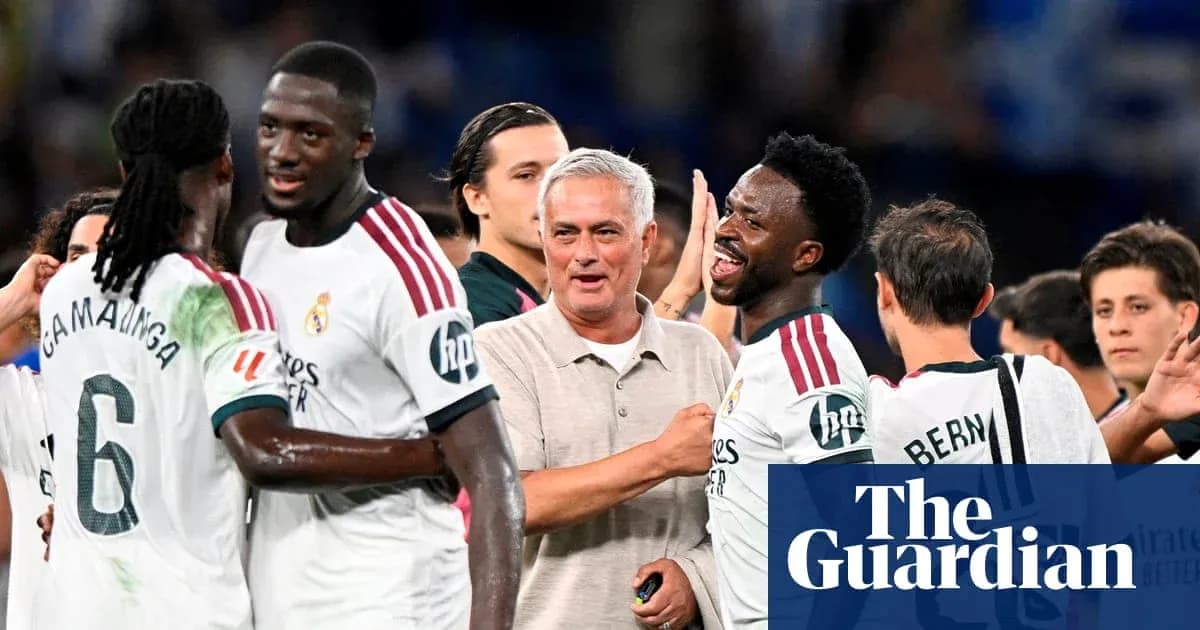
When the bench exploded past him, substitutes and staff sprinting down the touchline to celebrate a 90th‑minute winner that had taken 4,380 days to arrive, he stayed back. No charge, no knee‑slide. He rose slowly, fists clenched, and walked behind them, watching the pile‑on in the corner where Carlos Espí disappeared beneath a heap of white shirts. On the way, he stopped Fede Valverde and pulled his captain in close for a quick word. It could have been anything. It felt a lot like: finally.
Mourinho’s second coming, decided by an unlikely No 9
For all the galáctico wattage on the pitch, for all the talk that Mourinho’s big tactical puzzle would be how to fit Kylian Mbappé, Vinícius Júnior and Jude Bellingham into the same attacking frame, the man who decided his return was a 21‑year‑old who barely registered on Madrid’s radar six months ago.
Espí arrived from Levante as a curiosity, not a headline act. His goals had dragged Levante away from relegation last season; now he lives at Valdebebas, like his new coach, the pair sharing breakfast in the training ground canteen. Madrid bought him for a specific purpose: a different kind of striker, an old‑fashioned No 9 who lives in the area and makes defenders uncomfortable.
That is exactly where he was when a scruffy, broken move reached its messy climax. The ball squirmed away from Mbappé in the box and there, lurking, Espí pounced and forced it over the line. No finesse, no flourish. Just a centre‑forward’s finish and a question hanging in the air: is this a profile Madrid need more often than as a late‑game emergency?
On this night, the answer was obvious. It had worked.
A circus at kick-off, a grind in between
Mourinho’s last official act as Madrid manager had been a 4‑2 win over Osasuna in May 2013. His return began with the familiar theatre. Photographers abandoned their positions behind the goals to swarm around the bench, lenses trained not on the pitch but on the man in black, back where he had once made himself the centre of everything.
By full time, the scene was different. Mourinho embraced Espanyol coach Manolo González, slapped hands with the referee and disappeared down the tunnel, head bowed, result secured but reality already biting. The spectacle had been loud; the performance less so.
Espanyol had been warned. Mourinho had said they were a good side, and they played like one. Madrid created more chances, but Manolo’s team frustrated them for long spells, pinching space, slowing rhythm, forcing errors. Old flaws flickered back into view. For all the talent on the pitch, this was not yet a finished product.
It is, after all, only day one. The doubts will return. So will tougher nights, and sterner examinations of Mourinho’s football and his famously combustible temperament.
Nostalgia, power and a president who never let go
In the spring, when Madrid faced Benfica, Mourinho had described his first spell at the Bernabéu as “three hard, intense, sometimes violent years”. Time sands down the edges. The rows, the storms, the civil wars fade. The trophies, the fights with Barcelona, the feeling of siege – that is what remains.
Mourinho calls himself a man without regrets, someone who does not miss anything. Others missed him for him. Florentino Pérez most of all. In the president’s world, coaches are often a necessary evil, tolerated rather than loved. Mourinho is the exception, the one manager Pérez truly warmed to, the one he never quite let go.
There has always been a faction at Madrid that craved exactly this kind of return. The iron surgeon. The hard man to restore edge, to go to war with rivals, to impose a personality on a squad that had, in their eyes, gone soft. Even when the first cycle had clearly run its course, Pérez held on to the idea that the six Champions League titles in the 11 years after Mourinho left were, in some way, his legacy too. He had laid the groundwork. He had shown the way.
On the eve of this game, Mourinho told a story. After every trophy Madrid won, he said, Pérez would call him. He always replied the same way: no, no, no, it was nothing to do with me. Which, of course, was his way of saying it had everything to do with him. Pérez has said much the same in public. It took 13 years for the president to indulge that urge and bring him back. He finally has.
And why not? The last great comebacks – Zinedine Zidane, Carlo Ancelotti – delivered more silverware. The others, the experiments and the idealists, fell away. At one point, as he talked about those trophies, Mourinho name‑checked Zidane and Ancelotti as the men who had actually won them and then paused, as if to confirm they were the only ones. The implication was clear: Madrid’s current problems, like those of 2010, required his diagnosis and his knife.
The context is familiar too. Madrid have slipped behind Barcelona again. They have gone two years without a major trophy, and the issues feel cultural as much as tactical.
Non‑negotiables and a squad asked to suffer
Effort alone will not fix that, but it is where Mourinho wants to start. “We have to try not to negotiate things that are non‑negotiable,” he said. “Commitment can’t be missing.” He has the authority, the myth, to demand that. At least, that is the theory. Habits have already been challenged. Training sessions, players say, are sharper. Or maybe they simply know they have to treat them that way.
Yan Diomande, the club’s record signing, has already declared he is ready to “die” for his coach. Mourinho dismissed it as a turn of phrase, but he did not hide his satisfaction. This is his language: sacrifice, suffering, lines you do not cross.
There are other reasons for optimism. Vinícius’s future is finally settled, the contract noise gone, the status questions parked. The World Cup is done, no international distraction looming over the season. Mourinho pointed out that Brazil, France and England have all found ways to get the best out of Vinícius, Mbappé and Bellingham individually. Doing it with all three at once is another challenge entirely.
“I don’t think they’re incompatible,” he insisted. Last year, it often looked the opposite. Bellingham admitted they sometimes ended up in the same zones, stepping on each other’s toes.
Here, all three started. Bellingham took up the No 10 role, Vinícius held the touchline. “For me this is his [Jude’s] position,” Mourinho said. “The connection with the forwards, he can score goals. He has to play close to the goal. Playing at 6 or 8 we’re losing his closeness to the goal.”
A flying start, then the drop
The new era’s first goal arrived early, and it felt scripted. Nine minutes in, Vinícius drew yet another foul on the left – Alex Calatrava had already left a boot in his back, prompting Mourinho to fling his arms in protest – and Arda Guler stood over the dead ball. His delivery was perfect, whipped and tempting. Bellingham climbed, hung and thumped his header past Marko Dmitrovic.
On the bench, Mourinho barely reacted. Sitting at the far left, he rose, slid his hands into his pockets and wandered along the technical area towards the other end, where the overflow of his sizeable staff sat in the stand. He shook hands with Sami Khedira, the club’s in‑house assistant assigned to him, and analyst Roberto Merella. That was it. No wild celebration. No grand gesture.
For a few minutes, it looked like the gulf between the teams might be too big to bridge. Madrid pressed high, Espanyol struggled to escape, and there was a glimpse of what this might become: a high, suffocating block, turnovers, waves of attacks.
Then the intensity dipped. Just a little. Enough.
Espanyol stepped forward and Madrid’s control began to slip. When Dean Huijsen went down with a cut and needed treatment, Madrid’s players drifted towards Mourinho for instructions, but the rhythm had already changed. Espanyol sensed it.
Thibaut Courtois had to save from Riedel, Roberto Fernández slicing the rebound over. The warning went unheeded. Soon, a slick move cut Madrid open: Tuy Dolan and Javi Hernández combined neatly, Calatrava arrived and finished. Mourinho stayed almost completely still.
Chances missed, and a late reprieve
The game opened up. Twice Mbappé broke clear, once down each side, and forced Dmitrovic into sharp stops. Yet Espanyol should have led before the interval. They worked the ball wide again, Omar El Hilali arcing in a superb cross from the right. Dolan stretched but could not reach it inside the six‑yard box, and Fernández, beyond him, could only head it into his own feet when the goal seemed to be begging.
After the break, the chances kept coming – and kept going begging. From another Guler corner, Bellingham rose again and powered a header against the bar, Dmitrovic getting a touch. The ball dropped to Mbappé, alone at the far post, a finish he would usually make in his sleep. Somehow, he dragged it wide.
Valverde smashed a shot against the post. Mbappé curled another effort past the far upright. The clock ticked down, the frustration grew. On the touchline, Mourinho turned to the cavalry behind him: Marc Cucurella, Diomande, Eduardo Camavinga, Trent Alexander‑Arnold, Espí. One by one, he sent them into the fray.
At last, they came back past him at full speed, substitutes transformed into a celebrating mob, racing towards the corner flag where Espí had just bailed them all out.
Later, in the press room, Mourinho allowed himself a rare, gentle line. “I think we deserved to win, but Espanyol didn’t deserve to lose,” he said.
On a night built on nostalgia and noise, it was the most telling reminder of what lies ahead: this is going to be a fight, and it has only just started.