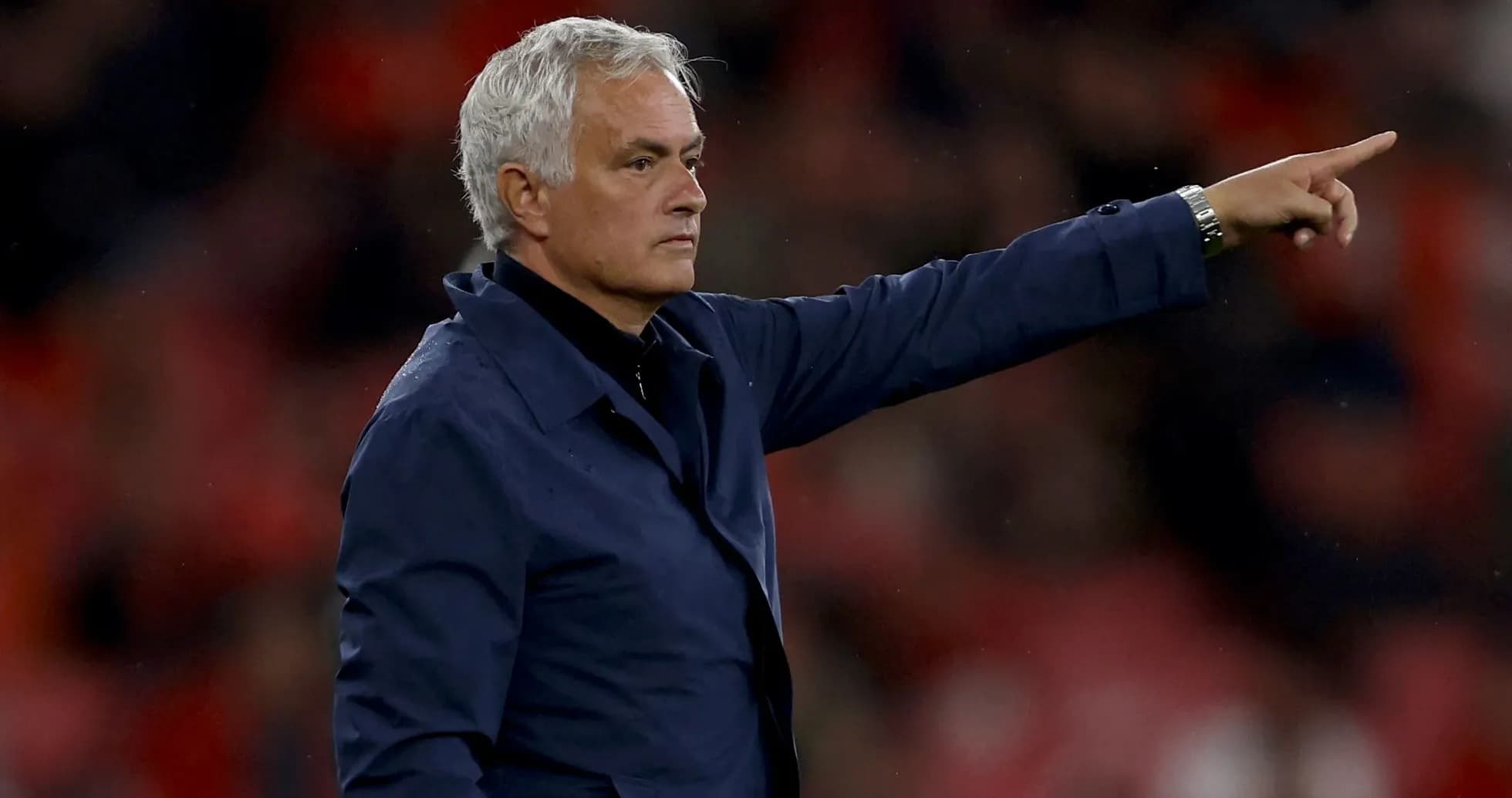
José Mourinho's Future at Benfica: A Miraculous Battle for Second Place
José Mourinho walked into the press room still fighting for second place, but the real battle hung in the air: his future.
Back on March 1, he had sounded like a man ready to build an era at Benfica. “I want to stay, respect my contract with Benfica, and if they want to renew it for another two years, I'll sign it without arguing a single word.” Clear. Absolute. Classic Mourinho when he wants to send a message upstairs.
That message has changed.
After Monday night’s draw with Braga, the same question was put to him: does that commitment still stand? This time, the answer cut in a very different direction.
“No,” he replied. “Because March 1st is March 1st, and because the last week of the championship, the last two weeks of the championship, is not for thinking about the future, it's not for thinking about contracts. It's for thinking about the mission we had, which was to perform the miracle of finishing second.”
The word “miracle” was not thrown in lightly. Mourinho knows exactly what he is saying and why. He pushed the narrative towards the struggle, the late surge, the context of a season where second place has felt like a rescue act rather than a triumph.
“And when I say miracle, I think you understand what I mean by miracle,” he added. From that moment, he explained, once Benfica entered the decisive phase of the season, he shut the door on everything else.
“I decided that I didn't want to listen to anyone, that I wanted to be, so to speak, isolated in my workspace.”
One game remains, against Estoril on Saturday. Only after that, he insisted, will he open the door to the future.
“As I said a couple of weeks ago, there's a game against Estoril on Saturday, and I think that from Monday onwards I'll be able to answer that question, the question of my future as a coach and the future of Benfica.”
Until then, he is building a shield around his players.
Mourinho used the media session not to talk about Madrid, not to talk about contracts, but to talk about the dressing room he has lived with all season.
“It's a group I had a lot of fun with, a group I always went to training with happy to be with. I always left training happy to have worked with them. It's a good group of men.”
That line matters. This is not a coach distancing himself from a squad he plans to leave behind. It is a coach making sure that if criticism comes, it hits him first.
The Madrid noise, though, will not go away. Asked directly why he refuses to clarify the links, Mourinho bristled, but stayed in control.
“Of course, it's up to me to give that answer. Have you ever seen me hide my decisions, my responsibilities? Now, nobody can force me to decide, much less communicate decisions, because I'm the one who decides when.”
He framed the last few weeks as a test of professionalism, of what he calls respect.
“In my head, since the talk of possibilities began, I've only seen one thing: to work and do my best, and I won't stop until the game against Estoril. That's the respect Benfica deserves, that's the respect my profession deserves, and nobody should touch that. Unless some idiot does, but in my professional dignity, my honesty, and my respect for a club like Benfica, nobody should touch that. Therefore, I have the right to remain isolated.”
Then came the denial that will be replayed and dissected until Monday.
“I continue to say that I haven't spoken to anyone from another club; now there's talk of Real Madrid, but it could be any other club. I haven't spoken to anyone from any club. But from the moment we entered this final phase of the season, I think it made absolutely no sense to do anything other than concentrate on my job. Starting Sunday I'll have that opportunity.”
The suggestion that his words sounded like a farewell drew another sharp response. For Mourinho, this was not goodbye. This was insurance for his players.
“When you say it sounded like a farewell, it doesn't sound like a farewell at all. It sounds like the respect I have for them and it sounds like a pre-emptive defence, because football has these things, football is very ungrateful many times, and for them to be criticised today seems unfair to me...”
He even revisited one of the season’s flashpoints, his public criticism of the team after the game against Casa Pia.
“When I criticised them after Casa Pia, it came from my heart, it came from my soul, I was heavily criticised for it, but that's my nature, my nature is to always try to be fair to my players.”
On a night when Benfica’s grip on second place looked fragile, he decided the narrative had to change. Away from the table. Away from the what-ifs. Onto him.
“And today, the day when it's thought that Benfica won't finish second, is the day I have to step aside and defend them because I think they deserve it.”
Then, with a familiar flash of self-awareness about disciplinary committees and touchline bans, he pulled the handbrake.
“And I'll stop here because I don't want to start next season punished. I've decided to stop here. There's only one game left, only eight days left, normally suspensions are for 20 days, 30 days, 40 days, five games, four games, I don't know what.”
One more match. One more week. Then the decision he insists only he will time, only he will announce.
If March 1 was the day he promised to stay, Monday felt like the night he opened every door.