
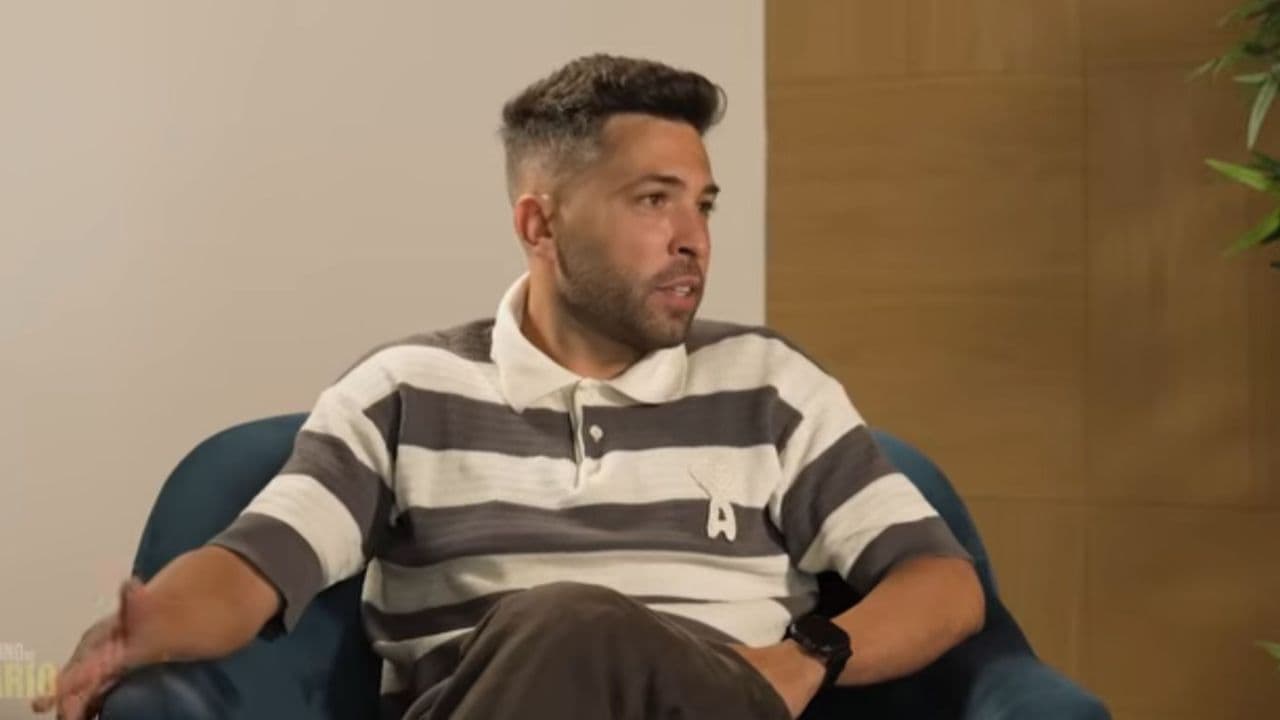
Jordi Alba Reflects on Career, Titles, and Unai Emery's Influence
Jordi Alba has never been shy on the pitch. Off it, he’s usually chosen his words more carefully. Not this time.
Sitting down with Mario Suarez on the podcast El Camino de Mario, the former Barcelona left-back opened up on a career that swung between euphoria and anguish, from Champions League glory to a wrenching exit from the Camp Nou.
I owe my career to Unai Emery
Alba started where his story truly changed: Valencia, and a coach who saw something different.
“I owe my career to Unai Emery. I was playing as a winger until Unai converted me,” he recalled. “Initially, I didn't take to the full-back role particularly well, but Emery is world-class. He has a knack for extracting the absolute best from his players at every club he leads.”
That switch from winger to full-back reshaped his life. It turned a promising wide player into one of the defining attacking full-backs of his generation, and eventually into a cornerstone of a Barcelona side built on relentless width and precision.
It was stolen! – the 2014 title race
The conversation then moved to one of the most painful domestic memories of his Barça years: the 2013-14 La Liga title decider at the Camp Nou, when Atletico Madrid came to town and left as champions.
Reflecting on that day, Alba didn’t bother to soften his view. “It was stolen! Mateu Lahoz was the official that day, wasn't he? My word…” he said, still stung by the way the title slipped away on home soil.
It was a snapshot of the rawness that still lives under the medals. Even a decade later, the sense of injustice clearly hasn’t faded.
Luis Enrique, the genius who made Barça untouchable
If that season left scars, the one that followed under Luis Enrique brought immortality.
“For me, Luis Enrique is the standout,” Alba said. “He ensures every player is pulling in the same direction, even those on the fringes. You feel a genuine sense of joy for your teammates and the collective. Not many managers can foster that environment; in that sense, he's a genius.”
His most treasured memory? No hesitation.
“2015, when we secured the Champions League under Luis Enrique, was the only year I felt we were truly untouchable. Before the final, I told my agents: ‘Relax, we're going to win.’ It wasn't arrogance; it was pure conviction. We were invincible.”
That treble-winning campaign, with Luis Enrique at the helm and Alba flying down the left, remains the high-water mark of his Barça career. For once, the swagger matched the results.
Respect for Xavi in turbulent times
If Luis Enrique represented peak Barcelona, Xavi Hernández walked into something very different. Alba was keen to underline what his former teammate achieved in the dugout during a chaotic era for the club.
“Xavi Hernandez inherited the reins during a very turbulent period,” he said. “He stepped up to the plate and did a fantastic job. We secured La Liga and the Supercopa against Real Madrid, and he managed the dressing room expertly during my time there.”
Titles in the middle of financial crisis and institutional turmoil do not sparkle quite like a treble, but for Alba they still carried real weight.
Anfield 2019: I felt physically sick
The brightest years at Barcelona are forever shadowed by one night at Anfield. Alba did not run from it.
He went straight to his error in the 2019 Champions League semi-final second leg against Liverpool. “I made a mistake with a header back for the opening goal. It was a golden opportunity to reach the final, and I'm certain we would have won it.”
The collapse from a 3–0 first-leg lead has become one of the defining traumas of the Messi era. Alba, often pointed to as a symbol of that night, wanted to clear up one detail.
“People claimed I was in tears at half-time, but that wasn't the case. I just felt physically sick,” he explained.
The distinction matters to him. Not for image, but for honesty: this was not melodrama, just a player crushed by the sense of a chance slipping away.
A brutal goodbye: With 24 hours left…
If Anfield hurt professionally, his Barcelona exit cut deeper on a human level.
“With only 24 hours left in the transfer window, they informed me I had to go on loan to Inter Miami,” he revealed. “Without any prior warning, and with my children already settled in school... it was a deeply difficult moment.”
No long farewell, no carefully managed transition. Just a sudden ultimatum.
“I eventually terminated my Barcelona contract without having another move lined up,” Alba said. He walked away from the club he had served for more than a decade, with no next step agreed, purely to take back control of his future.
He then did something ordinary, almost jarringly so for a player of his stature: he went on holiday.
“I went on holiday with Busquets, who had already committed to Inter Miami. In Ibiza, I met with Jorge Mas, the club's owner, and he quickly sold me on the project. At that stage, we still had no idea Messi was joining too,” he revealed.
The move that would later be framed as a reunion project in Miami actually began in uncertainty, on an island, with no guarantee that the greatest of them all would follow.
The COVID pay-cuts and a campaign of misinformation
Alba also wanted to tackle a subject that has hovered in the background for years: the captains’ role during Barcelona’s financial crisis in the COVID-19 pandemic.
“The captains deferred our salaries and waived earnings of our own volition,” he insisted. According to Alba, the dressing room leaders stepped forward to ease the club’s burden.
What followed left a bitter taste.
“A campaign of misinformation was leaked to tarnish our reputations. It felt as though the captains were being scapegoated for the club's financial troubles.”
For a player who grew up near the Camp Nou, lifted trophies there and bled for that shirt, the idea of being painted as part of the problem still clearly stings.
From Unai Emery’s positional masterstroke to Luis Enrique’s invincibles, from Anfield’s nightmare to a last-minute push out of the door, Alba’s story runs through the modern history of Barcelona. The medals tell one tale. His words, stripped of politeness and nostalgia, tell another: of a career shaped as much by wounds as by wins, and of a club that still hasn’t fully made peace with either.




