Jeff Bezos Joins Liverpool's New Investor Consortium
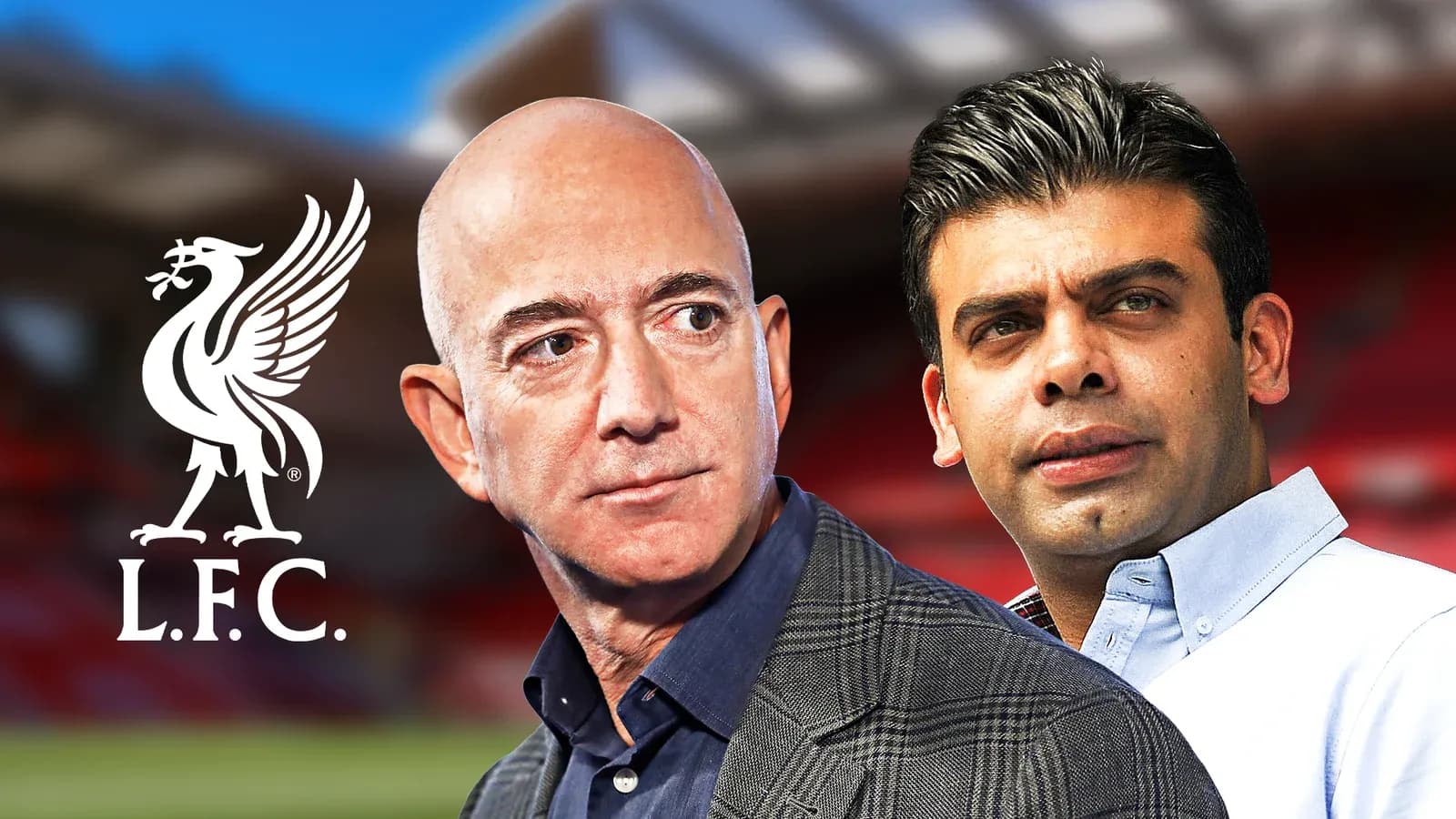
Jeff Bezos has stepped into English football – and straight into Anfield.
Liverpool’s owners Fenway Sports Group (FSG) have agreed to sell around a third of the club to a heavyweight consortium that includes the Amazon founder, in a deal that values the Reds at close to £6bn ($6–7bn). It is one of the richest transactions the sport has ever seen.
A new power bloc at Anfield
The investor group is led by Amit Bhatia, the 46-year-old British Indian entrepreneur and son-in-law of steel magnate Lakshmi Mittal. Bhatia, who previously held a stake in Queens Park Rangers, will become Liverpool’s vice-chair as part of the agreement.
Bezos joins as part of Bhatia’s syndicate rather than as a lone buyer. Forbes estimates his personal fortune at over £207bn ($280bn), but this is his first move into sports ownership. Despite his profile, he will not sit on Liverpool’s board; the day-to-day levers of power remain with FSG.
What the deal does do is place some of the world’s wealthiest individuals alongside FSG as co-owners of one of English football’s most storied clubs. Liverpool, already a global giant, now has a financial backing that matches its history.
FSG keep control – and the philosophy
For all the noise around the numbers, the core structure at Anfield does not shift. FSG retain majority ownership and full operational control. There is no change to the leadership team and no shake-up of the sporting hierarchy.
In a statement, FSG framed the move as a strategic step rather than a bailout, saying the investment “supports Liverpool's long-term growth ambitions by bringing together experts from across global business, technology, and investment”.
“The consortium partners will work with FSG and the club's leadership team to evaluate opportunities that enhance the club's objectives on and off the pitch,” the group added, underlining that the Boston-based owners are still steering the project.
Mike Gordon, FSG president, stressed the continuity of their approach: “Liverpool has always been built by thinking beyond one season and making decisions with the club's long-term interests in mind. That approach continues to attract interest from respected investors and business leaders around the world.
“As we considered this opportunity, it became clear that Amit and the consortium shared our long-term philosophy and appreciation for what makes Liverpool special. Their experience and perspective will complement the strong foundation already in place, and we look forward to working together.”
Bhatia called the group “proud to be investing in Liverpool”, underlining the appeal of the club to global capital.
No transfer war chest – and no quick fix
The headline figures might scream “new money”, but the football department will not suddenly be operating with a separate, Bezos-branded transfer fund.
Sky Sports News’ Vinny O’Connor explained that the deal, which gives the consortium a stake of around 30 per cent and values Liverpool at just over $7bn, is “a minority investment and a long-term partnership”.
The key point: Liverpool were not driven to the table by financial distress. FSG sought what they saw as the right partners, not a rescue package.
“There is no new or separate transfer budget associated with this investment at all,” O’Connor said. Transfer decisions and budgets will continue to be set by Liverpool’s sporting operation and within the financial sustainability model already in place.
So the transaction does not alter Liverpool’s transfer strategy or football philosophy. No sudden spending spree. No ripping up of the plan.
Who are the new players behind the scenes?
Bhatia brings a deep financial background. He runs AyBe Capital, a multi-asset investment firm with interests across technology, media, property and real estate, consumer retail, and health. His links to Lakshmi Mittal place him at the intersection of global industry and high finance, and his previous experience at QPR gives him at least a taste of English club ownership.
Bezos needs little introduction. He built Amazon from a garage in Seattle in 1994 into one of the world’s most powerful companies. His portfolio now spans aerospace firm Blue Origin and venture capital vehicle Nash Holdings, which owns The Washington Post.
Now his name sits, indirectly but unmistakably, on Liverpool’s ownership roster.
A supercharged future – on familiar terms
This is not a revolution at Anfield. It is an escalation.
FSG keep the wheel. The sporting model stays intact. Yet Liverpool now carry the financial clout of a club valued in the top bracket of world sport, backed by a consortium of global business heavyweights.
The question is no longer whether Liverpool can attract that level of investor. It is what they choose to do with that power from here.